algorithm trading

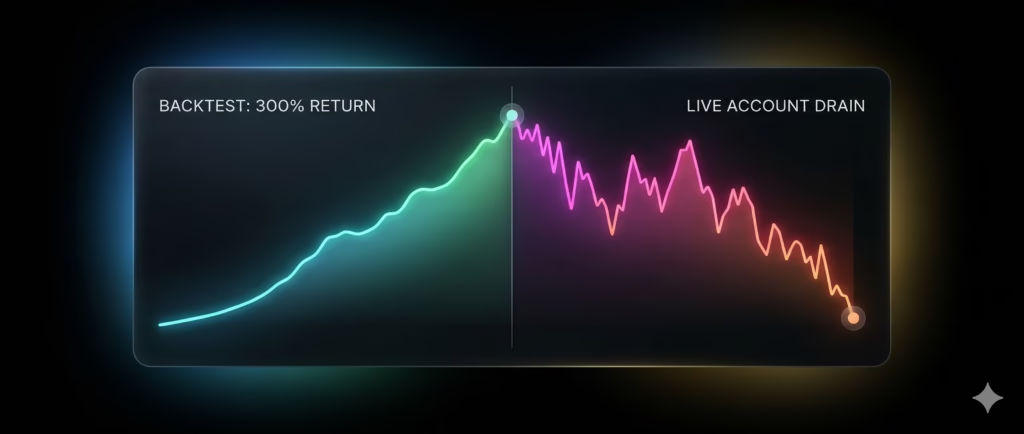
The Divergence (Backtest vs. Live Drain)
algorithm trading, Automated Trading

Backtest vs Live Trading: Why 300% Returns Fail in Real Markets

The Institutional Guide to Strategy Validation and Execution Integrity Executive Summary Every algorithmic trader encounters the same haunting experience: a strategy that backtests with triple‑digit returns proceeds to lose money in live markets within weeks. According to a 2025 Stanford study, 58% of retail algorithmic strategies collapse within three months of going live. The primary […]

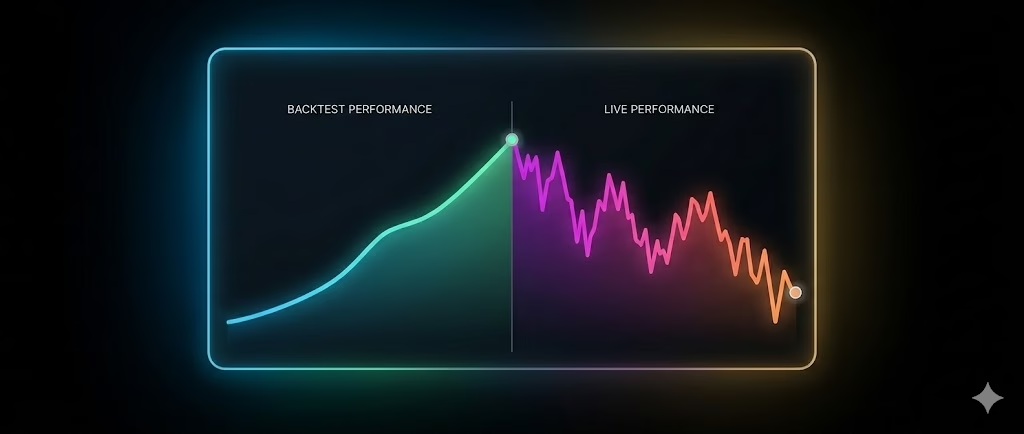
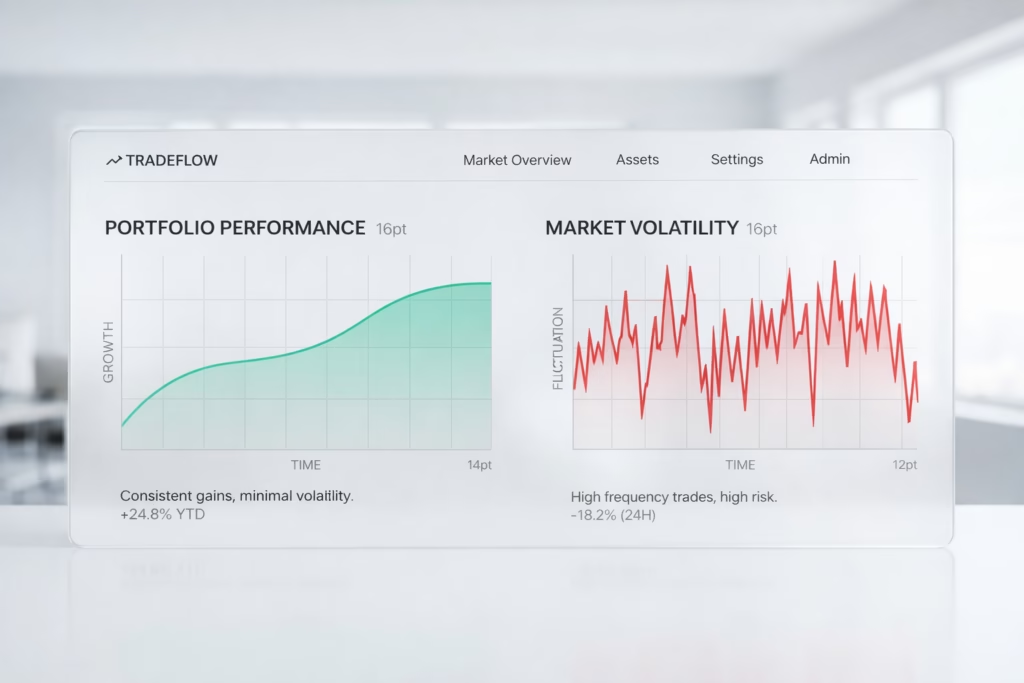
Trading strategy validation dashboard showing backtest overfitting divergence in live performance
AI and Machine Learning, algorithm trading

The Ultimate Guide to Trading Strategy Validation: Detecting and Mitigating Backtest Overfitting

A rigorous examination of robustness testing methods for algorithmic trading strategies, drawing on established quantitative finance research and empirical evidence. Introduction: The Persistent Challenge of Backtest Overfitting Algorithmic trading strategies frequently demonstrate strong performance in historical simulations (backtests) but fail to replicate those results in live or out-of-sample environments. This discrepancy arises primarily from overfitting:

Algorithmic trading overfitting - why backtests fail in live trading environments
algorithm trading, Trading

Algorithmic Trading Overfitting: Why Backtests Fail in Live Markets

Many algorithmic trading strategies exhibit strong performance in historical backtests high returns, favorable win rates, elevated Sharpe ratios, and limited drawdowns yet deteriorate significantly when deployed live. This discrepancy often stems from overfitting: the strategy captures noise or idiosyncrasies in the historical data rather than persistent, generalizable market inefficiencies. Empirical studies of large cohorts of

Chart illustrating why algo strategies fail in intraday trading with 5-minute rule pitfalls and red decline arrows.
algorithm trading

Why Algo Strategies Fail in Intraday Trading: The 5-Minute Rule

In the fast-paced world of intraday trading, many traders turn to algo strategies hoping for consistent profits. Yet, statistics and real-world experience show that most algo strategies fail when deployed live, especially in intraday setups. One overlooked factor is the “5-minute rule”—a principle highlighting how ultra-short timeframes like 5-minute charts amplify noise, overfitting, and execution

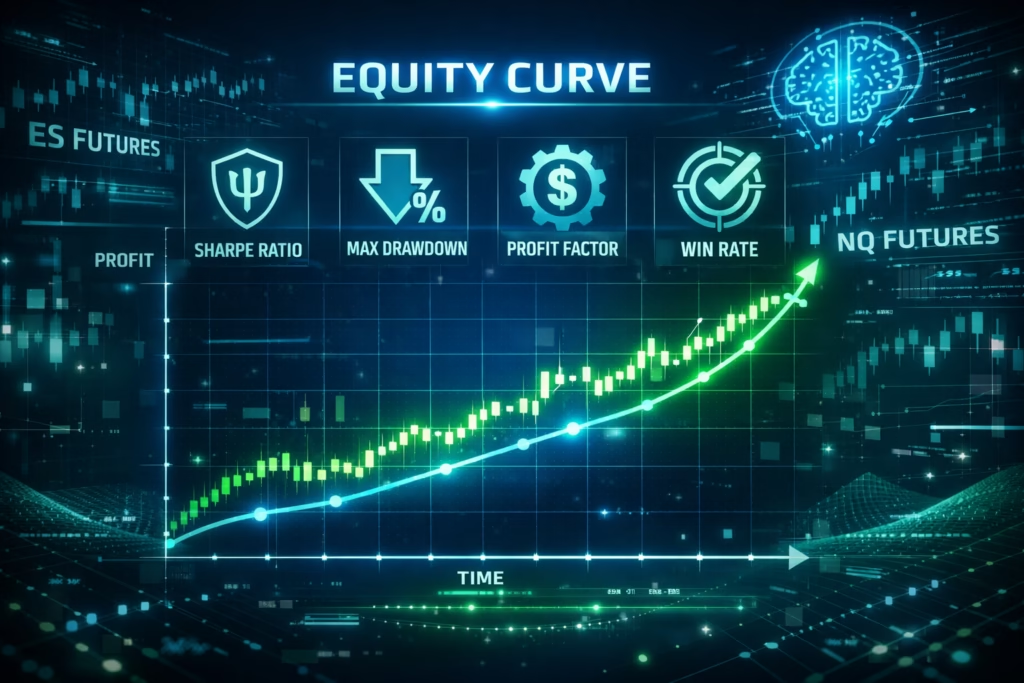
Performance Metrics dashboard for algorithmic trading evaluation with key indicators like Sharpe Ratio and Drawdown in 2026
algorithm trading, Automated Trading

Mastering Performance Metrics in Algo Trading 2026

In the fast-evolving world of algorithmic trading, raw profits alone don’t tell the full story. Performance Metrics provide the objective lens to assess strategy quality, risk management, and long-term viability. As markets in 2026 incorporate more AI-driven adaptations, volatility from global events, and high-frequency execution, understanding these Performance Metrics is essential for traders—whether manual or

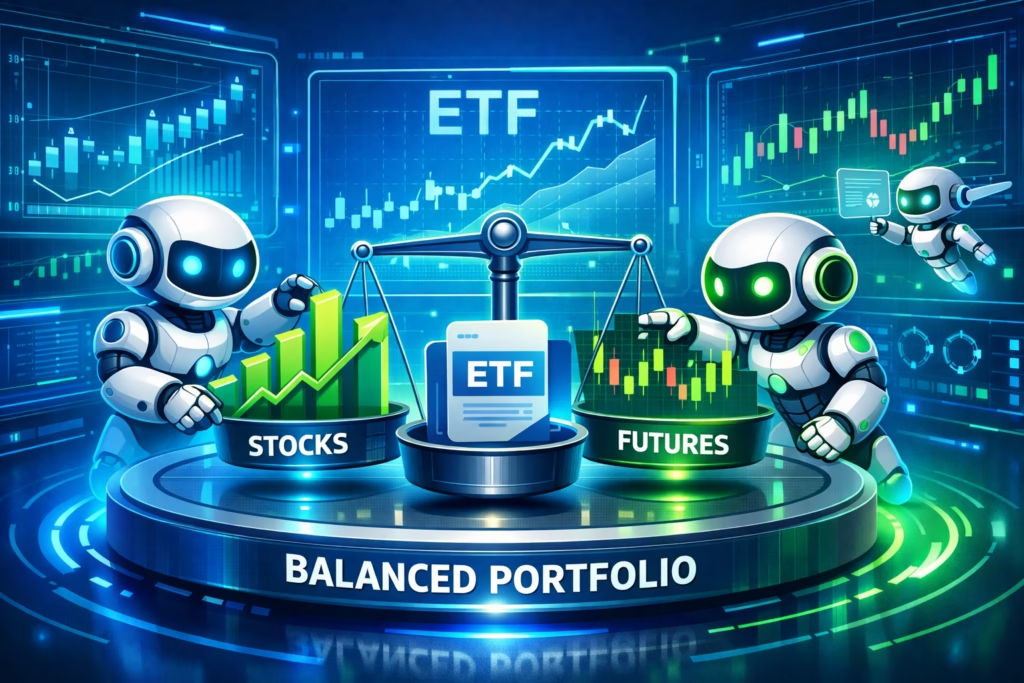
Portfolio rebalance bot automating asset allocation for retail traders in 2026.
algorithm trading, Automated Trading, Global Market

Portfolio Rebalance Bot: Ultimate Guide for Retail Traders in 2026

In today’s fast-paced markets, maintaining optimal asset allocation is key to long-term success. A portfolio rebalance bot automates this process, ensuring your investments stay aligned with your goals without constant manual intervention. Whether you’re trading stocks, ETFs, or futures, these bots minimize risk and maximize returns. As of 2026, advancements in AI and automation have

Graph illustrating algo trading profitability in 2026 with automated futures trading dashboard and PickMyTrade platform.
algorithm trading

Algo Trading Profitability: Key Insights for 2026

In 2026, algo trading profitability remains a hot topic among traders worldwide. With markets evolving rapidly due to AI advancements, increased volatility from geopolitical events, and the democratization of tools, automated trading—especially in futures—offers significant potential. But is it truly profitable? The short answer: Yes, algo trading profitability can be achieved, particularly in futures markets,

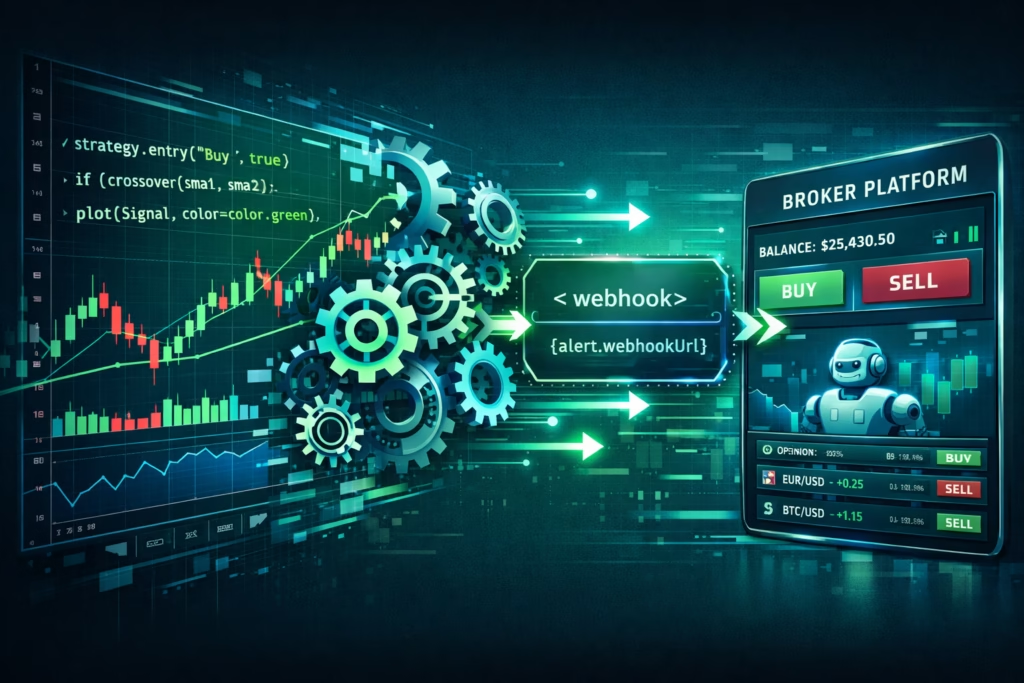
TradingView strategy automation guide 2026 with PickMyTrade integration
algorithm trading, AUTOMATED TRADINGVIEW STRATEGIES

Why TradingView Strategy Automation Matters in 2026

TradingView strategy automation eliminates emotional decisions, enables 24/7 execution, and scales across markets like stocks, forex, futures, and crypto. With volatile markets, automation ensures consistent rule-following while backtesting refines performance. TradingView doesn’t execute trades directly (except simulated in Strategy Tester), so automation relies on: Step 1: Convert Any TradingView Indicator into a Strategy Most start

automated Portfolio Rebalance Bots in progress, with colorful pie charts adjusting in real-time.
algorithm trading, Automated Trading

Portfolio Rebalance Bots: Automate Your Investments in 2026

In today’s volatile markets, maintaining an optimal asset allocation is essential for long-term success. Portfolio rebalance bots have emerged as game-changing tools, automating the process of adjusting your holdings to match your target strategy—whether in stocks, bonds, ETFs, or cryptocurrencies. These intelligent systems monitor drifts, execute trades efficiently, and eliminate emotional decisions, helping investors stay

error

Follow us for more insights and updates

Scroll to Top
Verified by MonsterInsights