Automate TradingView Indicators with Tradovate Using PickMyTrade
Discover how to automate TradingView indicators with Tradovate using PickMyTrade. Streamline your trading strategy and react to market conditions in real time.

Discover how to automate TradingView indicators with Tradovate using PickMyTrade. Streamline your trading strategy and react to market conditions in real time.
Unlock the Power of Automated Trading with Tradovate and PickMyTrade Are you looking to elevate your trading game? Tradovate’s advanced automation tools, combined with PickMyTrade, allow you to effortlessly execute your trading strategies. Sign up now to unlock the power of automated trading: PickMyTrade. Effortless Trading with Advanced Automation In the fast-paced world of trading,
Pending orders can remain active after the TradingView alert that created them has fired. A limit order waits for an acceptable price; a stop order waits for its trigger. Until the broker confirms a fill, cancellation, rejection or expiry, check whether the order can still change your position. This guide explains how pending orders work
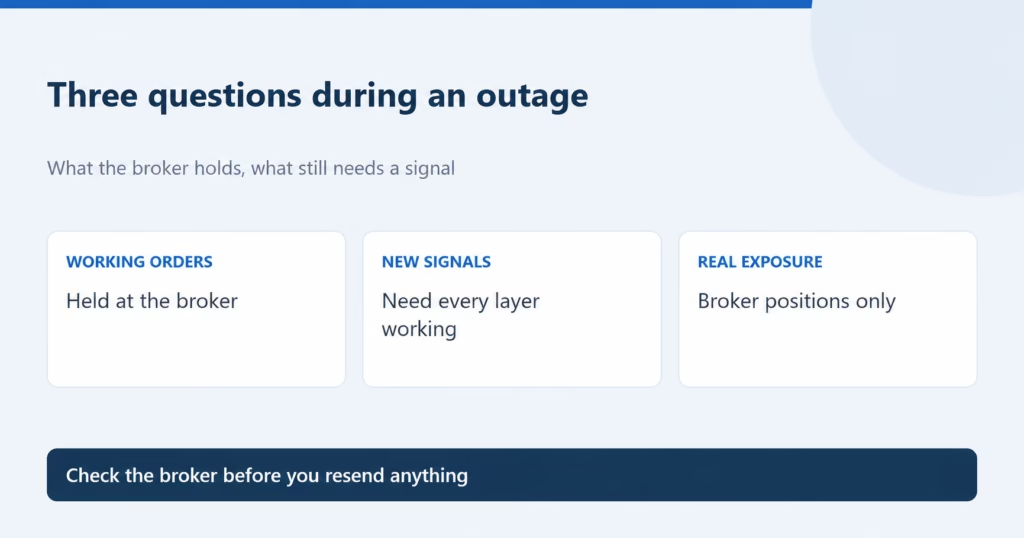
During a Tradovate outage, do not assume that an open position has closed. First distinguish a local internet or device failure from a TradingView/webhook failure and from a broker or exchange disruption. Tradovate says orders already held at the exchange or on its servers do not depend on your device. That does not guarantee execution
Some prop firms allow automated trading, but permission depends on the account stage, strategy ownership, execution platform and location of the order-routing software. MyFundedFutures and Tradeify publish conditional automation policies. Topstep permits conditional automation in Express Funded Accounts but lists separate API and Live Funded restrictions. None of those statements alone approves every TradingView webhook
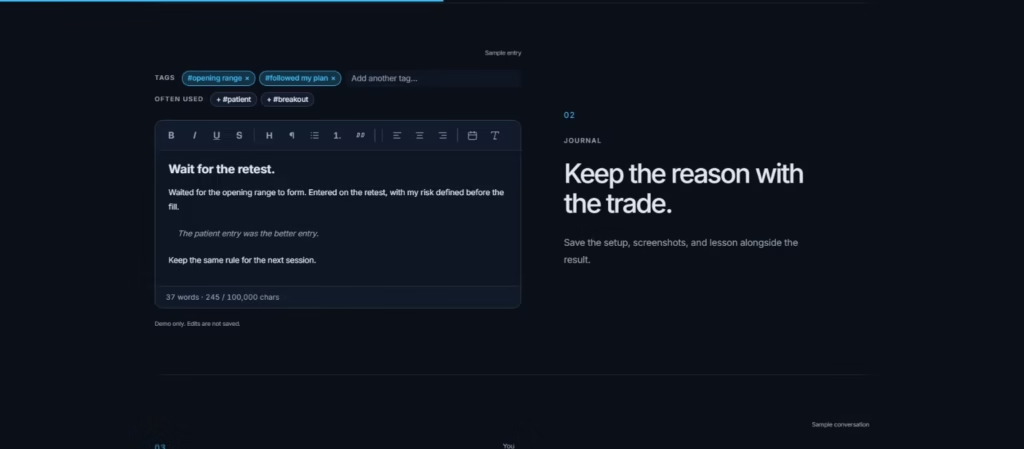
Trading automation · Trade journaling Trade journaling helps connect each result with the decision behind it. PickMyTrade helps route supported TradingView alerts toward broker accounts. MyTradeLens helps traders bring completed trades into a journal, add decision context, and review the patterns behind their results. That makes the two products relevant to traders at different points
A funded account change requires checking the whole automation route: broker connection, destination account, subscription assignment, running TradingView message, and copier selections. A successful login only confirms one part of that route. Before the next signal, verify where an order will go and how any existing position will be managed. Passing an evaluation, receiving a
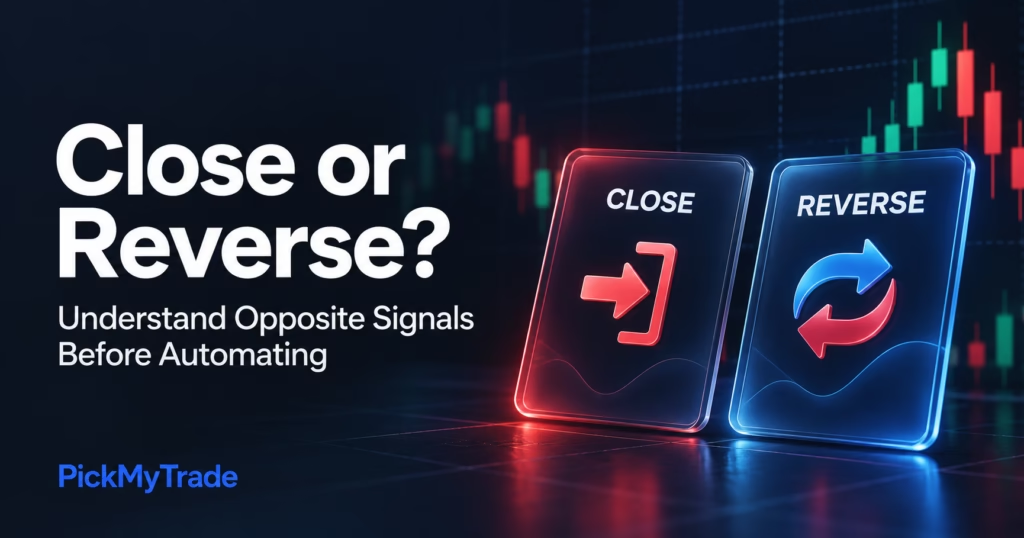
PickMyTrade reverse order close controls how an opposite signal is handled, but you should define the desired final position before enabling it. A sell signal while you are long might mean close the long, reverse into a short, or follow an explicit strategy order. Those intentions need different execution rules. This guide explains the distinction
Conceptual illustration; not a product screenshot or performance result. Prop Firm Pine Scripts develops TradingView strategies and indicators for futures prop firm traders. For traders exploring automation, its scripts provide the trading logic; a compatible PickMyTrade setup connects TradingView alerts to a supported broker account. That connection starts with the particular script you choose. Its
Tradovate not connecting to PickMyTrade? First check whether the problem is sign-in, account selection, or an order rejection. Open pickmytrade.trade, confirm the intended Demo or Live environment, and reconnect using the correct Tradovate login. Then check that the account your automation targets is available on that connection. A red connection indicator and a rejected trading
Changed your strategy settings? Recreate the strategy alert to apply those changes to your automation. TradingView keeps a separate copy of the strategy when you create an alert. Editing the chart doesn’t refresh that copy. The chart can use your revised settings while the running alert keeps sending signals from the earlier version. For traders

When troubleshooting trades not copying to follower accounts, start with one specific master order. Confirm the correct source account, the copier’s running state and the follower’s active configuration. Then compare the copy event with the follower’s broker order status. A filled master order does not prove that every follower filled. Do not diagnose a copying