
The retail algorithmic trading space has exploded in 2026. Pine Script v6, prop firm capital, and automation platforms like PickMyTrade have made systematic trading more accessible than ever. But there’s a problem: most strategies traders deploy still fail within months — not because the markets changed, but because the methodology behind them was never sound to begin with.
Table of Contents
- The State of Retail Algo Trading in 2026
- Three Reasons Strategies Fail (And How to Fix Them)
- 1. Performance Numbers Without Context
- 2. No Serious Validation Layer
- 3. The Bridge from Backtest to Live Is Fragile
- What a Modern Trading Workflow Looks Like
- 1. Strategy Development
- 2. Validation
- 3. Execution Automation
- 4. Risk Management
- Why Execution Infrastructure Matters
- The Bottom Line
- You May also like:
In this post, we’ll break down the three biggest reasons systematic strategies fail, what serious validation actually looks like in 2026, and how to build an end-to-end workflow that bridges the gap between strategy development and live execution.
The State of Retail Algo Trading in 2026
Three forces have shaped the current landscape:
- Prop firm capital from FTMO, Apex, MyFundedFutures, and others has put significant buying power into the hands of retail traders.
- Pine Script v6 has become one of the most popular tools for retail strategy development and backtesting.
- Automation platforms such as PickMyTrade have made it possible to route TradingView alerts directly to supported brokers without custom development.
The infrastructure to deploy strategies has never been better.
So why are most retail algorithmic strategies still failing?
The answer isn’t usually the technology. It’s the methodology.y.
Three Reasons Strategies Fail (And How to Fix Them)
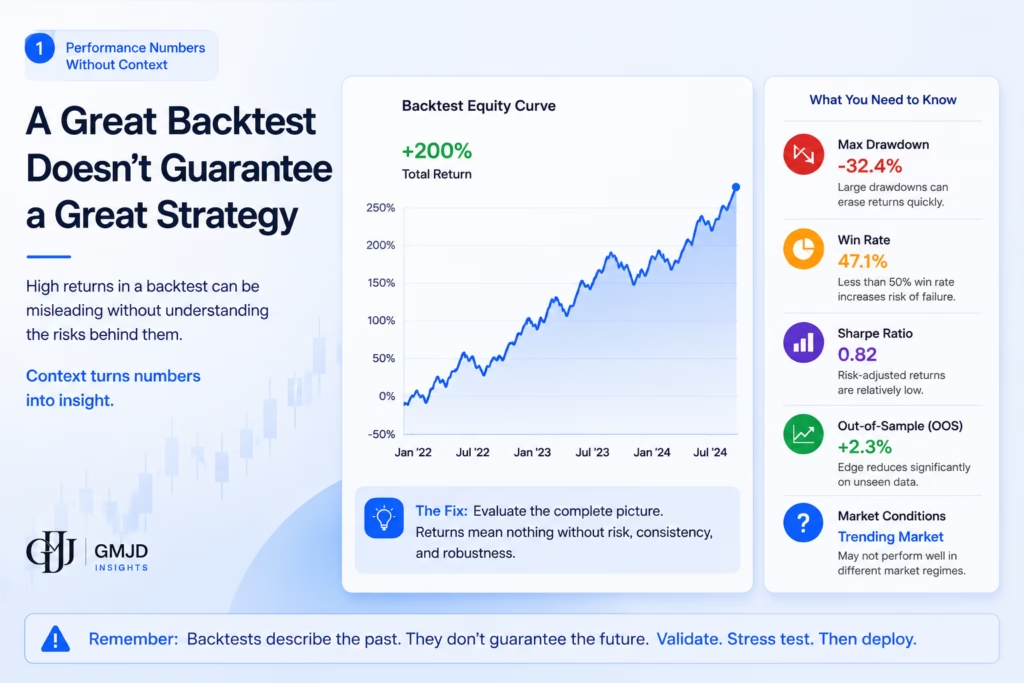
1. Performance Numbers Without Context
A 200% backtest result means very little without understanding the risks behind it.
Important questions include:
- What was the maximum drawdown?
- How did the strategy perform out-of-sample?
- Does the edge survive changing market conditions?
- What assumptions does the strategy make about volatility, liquidity, and market regime?
Many traders focus solely on net profit while ignoring the factors that determine whether a strategy can survive in live markets.
The fix: Evaluate the complete picture. Performance should always be viewed alongside drawdown, consistency, robustness, and risk-adjusted returns.
2. No Serious Validation Layer
One of the most common mistakes in retail algorithmic trading is deploying a strategy immediately after a successful backtest.
A backtest is only the starting point.
Professional validation often includes:
- Walk-Forward Analysis
- Out-of-Sample Testing
- Monte Carlo Simulations
- Robustness and Sensitivity Testing
These processes help determine whether a strategy’s performance is based on a genuine edge or simply curve fitting.
As validation standards continue to evolve, many traders are turning to specialized research and validation platforms to evaluate strategy robustness more effectively. Companies such as GMJD provide tools and workflows focused on Walk-Forward Analysis, Monte Carlo simulations, Out-of-Sample testing, and quantitative strategy research, helping traders gain greater confidence before moving to live deployment.
The fix: Treat every strategy as a hypothesis until it has been validated across multiple market conditions and datasets.
3. The Bridge from Backtest to Live Is Fragile
Even a validated strategy can encounter problems when moved into a live trading environment.
Common challenges include:
- Latency between signal generation and execution
- Symbol mapping differences between platforms
- Manual order-entry errors
- Missed alerts during volatile market conditions
- Duplicate executions caused by workflow mistakes
These operational issues can significantly impact real-world results.
The fix: Automate the execution process wherever possible. Reliable automation reduces manual intervention, minimizes execution errors, and creates consistency between strategy signals and broker execution.
tomation reduces manual intervention, minimizes execution errors, and creates consistency between strategy signals and broker execution.
What a Modern Trading Workflow Looks Like
The era of connecting multiple disconnected tools with manual processes is rapidly disappearing.
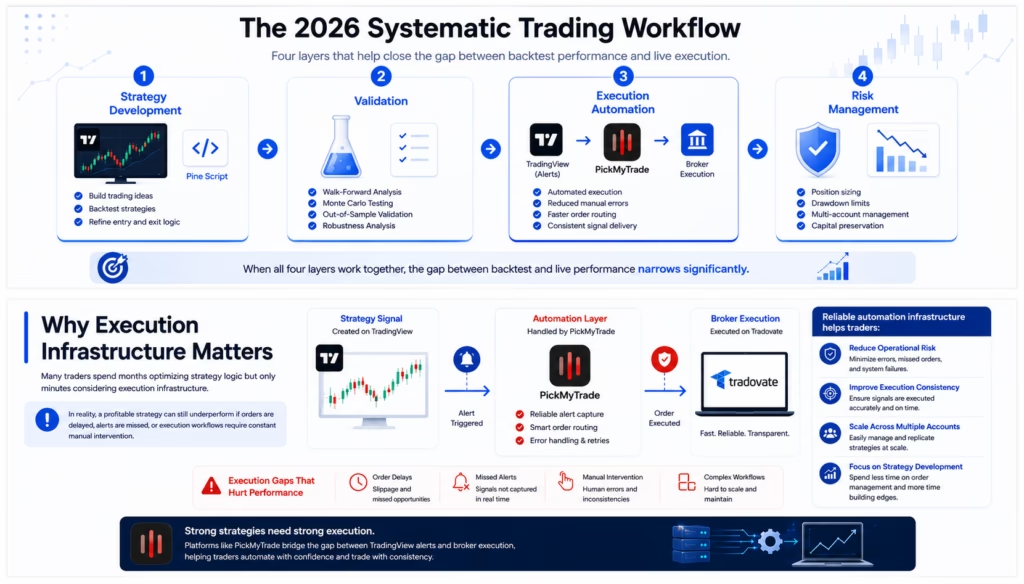
A modern systematic trading workflow typically includes four core layers:
1. Strategy Development
Use platforms such as TradingView and Pine Script to build, test, and refine trading ideas.
2. Validation
Apply rigorous testing methods including Walk-Forward Analysis, Out-of-Sample Testing, Monte Carlo simulations, and robustness analysis before deploying capital.
3. Execution Automation
Connect strategy signals directly to your broker through a reliable automation platform.
For futures traders using Tradovate, PickMyTrade helps bridge the gap between TradingView alerts and broker execution, reducing the operational risks associated with manual order entry.
4. Risk Management
Define clear risk parameters, position sizing rules, drawdown limits, and account management procedures before going live.
When all four layers work together, the gap between backtest performance and live performance can be reduced significantly.
A growing ecosystem of trading technology providers now supports different parts of the systematic trading process. While platforms like PickMyTrade focus on execution automation and broker connectivity, validation-focused platforms such as GMJD help traders analyze and refine strategies before deployment.
Why Execution Infrastructure Matters
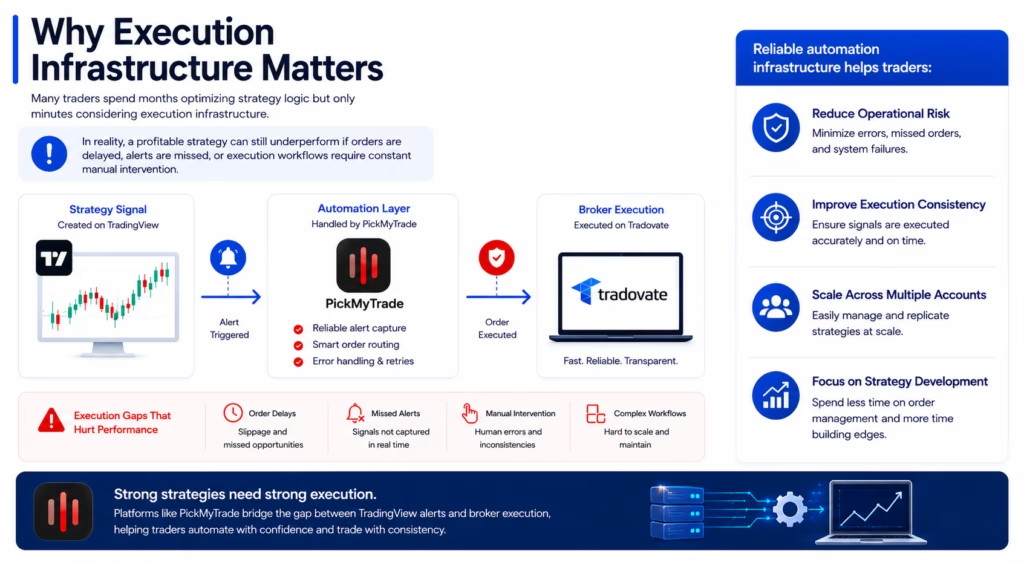
Many traders spend months optimizing strategy logic but only minutes considering execution infrastructure.
In reality, a profitable strategy can still underperform if orders are delayed, alerts are missed, or execution workflows require constant manual intervention.
Reliable automation infrastructure helps traders:
- Reduce operational risk
- Improve execution consistency
- Scale across multiple accounts
- Focus on strategy development rather than order management
This is where platforuch as PickMyTrade play an important role by providing a streamlined path from TradingView alerts to live broker execution.
The Bottom Line
The trading industry is gradually moving away from black-box systems and marketing hype.
Successful traders increasingly focus on:
- Methodology
- Transparency
- Validation
- Risk Management
- Reliable Execution Infrastructure
If your strategies consistently perform well in backtests but struggle in live markets, the issue may not be the strategy itself. More often, the missing piece is proper validation and execution discipline.
Building a repeatable process that includes strategy development, validation, automation, and risk management can dramatically improve the odds of long-term success.
PickMyTrade helps traders automate TradingView strategies across supported brokers, simplifying execution workflows and reducing manual trading errors.
You May also like:
Pine Script v6 + AI: Strategy Writing Guide for 2026
Build a Trading Bot in 10 Minutes (No Code) for Prop Firms
How Do You Use Pineify AI Strategy Tools to Build Trading Setups







555
555
555qNWriMmn’) OR 976=(SELECT 976 FROM PG_SLEEP(15))–
555%2527%2522\’\”