Author name: PickMyTrade

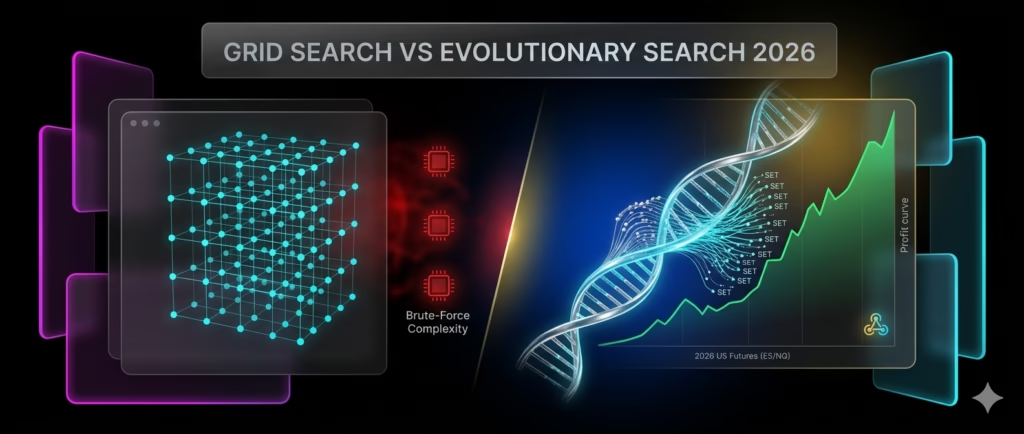
Grid search vs evolutionary search 2026 optimization comparison for futures trading
Trading, Tradingview Strategy

Grid Search vs Evolutionary Search 2026: Optimize Faster

Algo traders waste hours on slow, overfitted parameters. Grid search vs evolutionary search decides who wins in 2026. Grid search brute-forces every combination. Evolutionary search (genetic algorithms and variants) mimics natural selection to evolve smarter solutions. In volatile US futures markets, the wrong choice kills profitability. With 2026 papers proving evolutionary methods outperform on complex […]
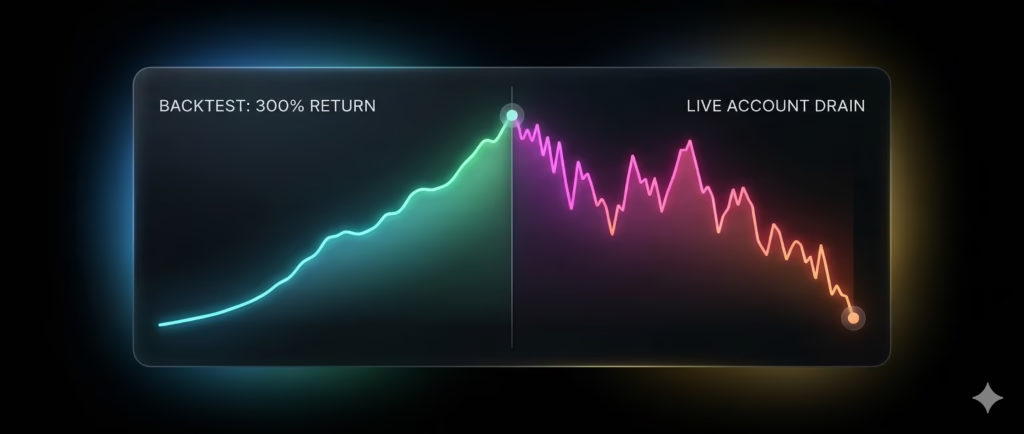
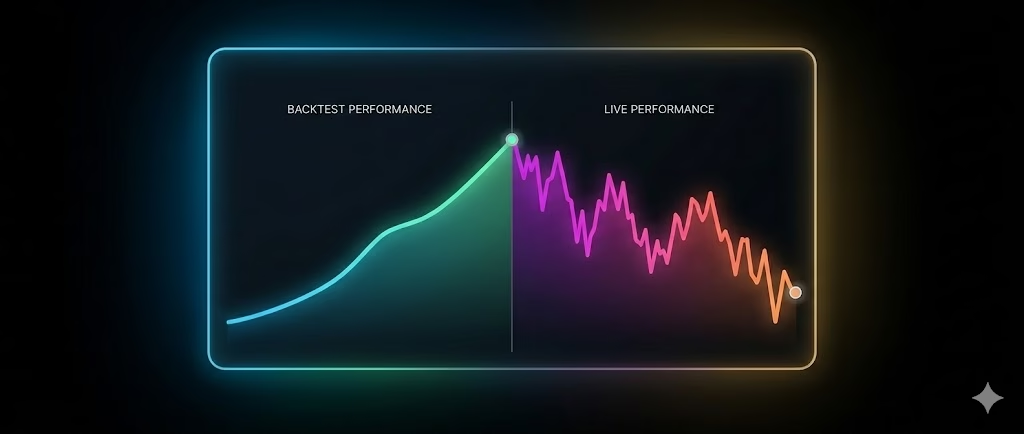
The Divergence (Backtest vs. Live Drain)
algorithm trading, Automated Trading

Backtest vs Live Trading: Why 300% Returns Fail in Real Markets

The Institutional Guide to Strategy Validation and Execution Integrity Executive Summary Every algorithmic trader encounters the same haunting experience: a strategy that backtests with triple‑digit returns proceeds to lose money in live markets within weeks. According to a 2025 Stanford study, 58% of retail algorithmic strategies collapse within three months of going live. The primary

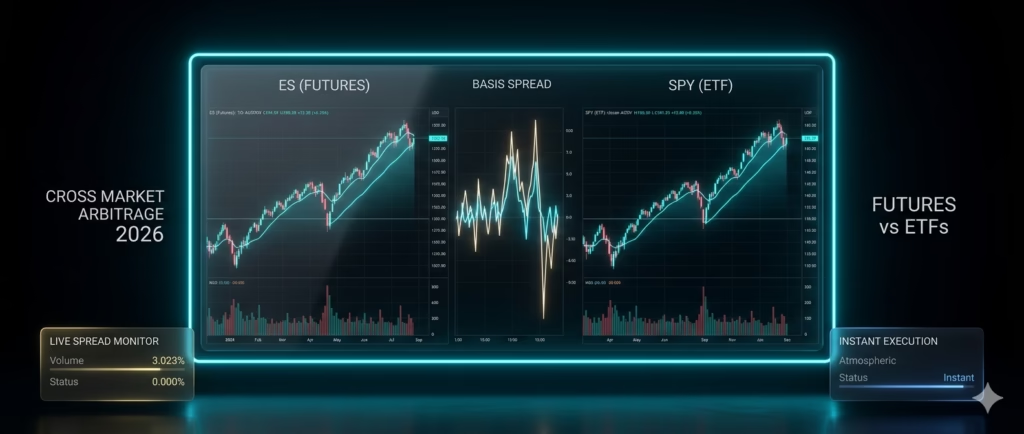
Cross market arbitrage 2026 futures vs ETFs on TradingView illustration
Automated Trading, AUTOMATED TRADINGVIEW STRATEGIES

Cross Market Arbitrage 2026: Futures vs ETFs

Price gaps between related assets still exist in 2026—even in ultra-efficient US markets. Cross market arbitrage exploits these temporary mispricings between index futures (ES, NQ) and their ETF counterparts (SPY, QQQ). With TradingView’s latest Pine scripts and instant automation, retail and funded traders can now monitor and trade cross market arbitrage opportunities that institutions once

Trading strategy validation dashboard showing backtest overfitting divergence in live performance
AI and Machine Learning, algorithm trading

The Ultimate Guide to Trading Strategy Validation: Detecting and Mitigating Backtest Overfitting

A rigorous examination of robustness testing methods for algorithmic trading strategies, drawing on established quantitative finance research and empirical evidence. Introduction: The Persistent Challenge of Backtest Overfitting Algorithmic trading strategies frequently demonstrate strong performance in historical simulations (backtests) but fail to replicate those results in live or out-of-sample environments. This discrepancy arises primarily from overfitting:

Prop firm mergers 2026 consolidation – how it impacts funded trading accounts illustration
Automated Trading, Prop Firms

Prop Firm Mergers 2026: Impact on Your Funded Accounts

The prop trading world is consolidating fast. Prop firm mergers and acquisitions are reshaping the entire industry in 2026, directly touching every funded trader’s account, rules, payouts, and long-term security. What started as a 2024–2025 shakeout—where 80–100 smaller prop firms vanished—has turned into full-scale prop firm mergers and strategic acquisitions. Regulators are tightening the screws,

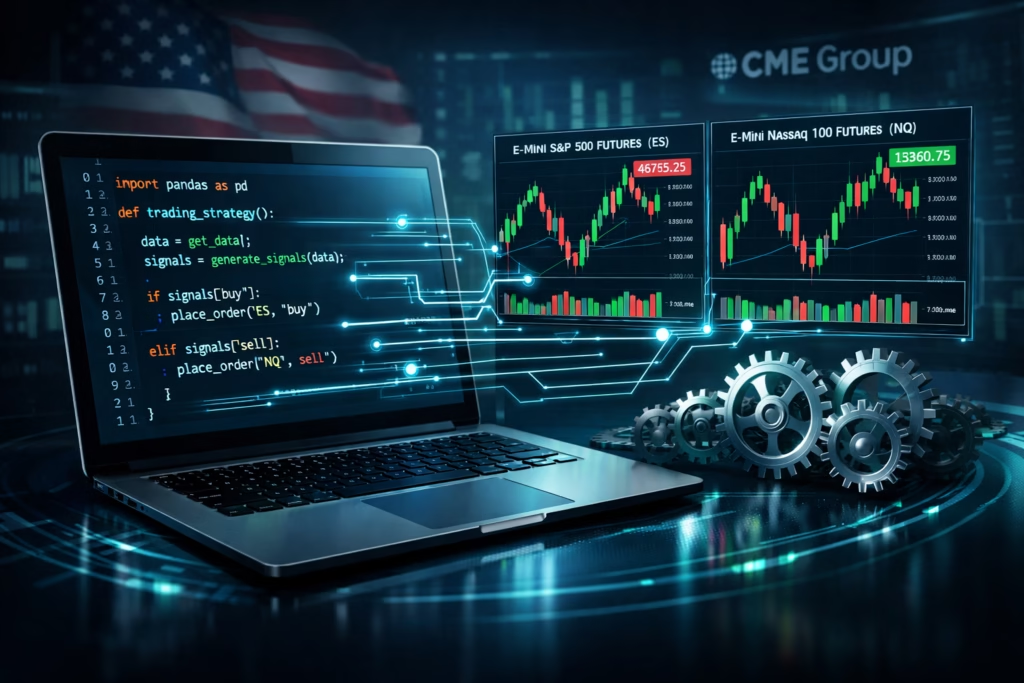
Python futures libraries dashboard with automated trading charts, US futures contracts, and PickMyTrade integration
Automated Trading, Trading

Python Futures Libraries for Automated Trading 2026

In the fast-evolving world of algorithmic trading, Python futures libraries have become essential for building reliable, high-performance automated systems. Whether you’re targeting CME futures like E-mini S&P 500 (ES), Nasdaq (NQ), or crypto perpetuals, these libraries deliver real-time data, order execution, and backtesting with unmatched flexibility. As of March 2026, Python futures libraries power everything

Algorithmic trading overfitting - why backtests fail in live trading environments
algorithm trading, Trading

Algorithmic Trading Overfitting: Why Backtests Fail in Live Markets

Many algorithmic trading strategies exhibit strong performance in historical backtests high returns, favorable win rates, elevated Sharpe ratios, and limited drawdowns yet deteriorate significantly when deployed live. This discrepancy often stems from overfitting: the strategy captures noise or idiosyncrasies in the historical data rather than persistent, generalizable market inefficiencies. Empirical studies of large cohorts of

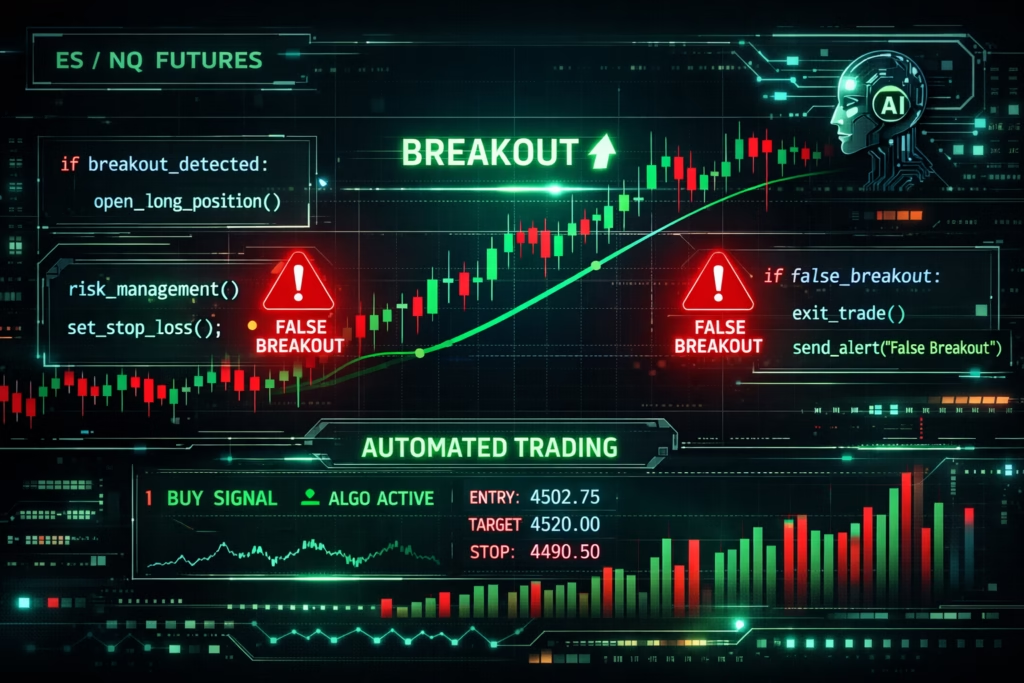
Breakout Strategy Automation chart highlighting false breakouts to avoid in automated futures trading.
AUTOMATED TRADINGVIEW STRATEGIES

Breakout Strategy Automation: Avoid Bad Trades

In the fast-evolving world of trading, Breakout Strategy Automation has become a game-changer for capturing explosive moves in futures markets. By automating entries on price breaks from consolidation, traders eliminate emotion and execute 24/7. Yet, the biggest pitfall remains: false breakouts that trigger losing trades. In 2026, with AI-driven tools and platforms like PickMyTrade enabling

Trading Psychology Automation concept with bots handling FOMO and revenge trading in futures markets.
Automated Trading

Trading Psychology Automation: How Bots Handle FOMO

Trading Psychology Automation represents a transformative shift in modern trading. By leveraging automated systems, traders eliminate emotional biases that often lead to poor decisions. As markets evolve with AI and algorithmic advancements in 2025-2026, automation enforces discipline, particularly against common pitfalls like FOMO (Fear of Missing Out) and revenge trading. Understanding the Challenges in Trading

Split view showing live vs simulation differences in trading: calm paper trading success vs stressful live trading losses with slippage and emotions.
Trading, TradingView

Live vs Simulation Trading Differences Exposed

The main reasons paper trading (simulation) wins often fail in live trading stem from key live vs simulation differences. These include psychological pressures, execution realities like slippage and commissions, market liquidity variations, and over-optimization in sim environments. Recent insights from 2025-2026 highlight that even advanced platforms struggle to replicate real stakes, with emotional factors causing

error

Follow us for more insights and updates

Scroll to Top