
Every algo trader I know pays for the same four things. A VPS so the bot doesn’t die when the laptop sleeps. A Level 2 data feed. A broker platform subscription. And something to bridge alerts to the broker. Add a charting plan and a CPA, and you’re past $5,000 a year before a single contract fills.
Table of Contents
- Can Algo Traders Actually Deduct VPS, Data Feeds, and Platform Fees?
- The Real Annual Cost of an Algo Trading Stack
- What Is Trader Tax Status and How Do You Qualify in 2026?
- Does Running Bots Disqualify You From Trader Tax Status?
- Which Trader Tax Deductions Actually Apply to an Algo Stack?
- What Are Trader Tax Deductions Worth in Real Dollars?
- Does the QBI Deduction Apply to Trading Income?
- Do You Need a Section 475 Election to Deduct Expenses?
- What If You Don’t Qualify for TTS?
- How Do You Document VPS and Data Feed Costs So They Survive an Audit?
- Where Automation Tools Fit in the Expense Column
- Frequently Asked Questions
- The Bottom Line on Trader Tax Deductions
So here’s the question that comes up every April. Are any of these trader tax deductions, or are you just eating the cost?
The answer is genuinely binary. Most traders get it wrong in the same direction. It doesn’t depend on how much you spend, how good the bot is, or whether the expense feels obviously business related. It comes down to one classification: whether the IRS sees you as a trader in a business or an investor. Land in the second bucket and the deduction isn’t reduced. It’s zero, permanently, thanks to a 2025 law change most trading blogs still haven’t caught up with.
Key Takeaways
- VPS hosting, market data, and platform fees are fully deductible on Schedule C only if you qualify for trader tax status (TTS). Investors get nothing.
- The One Big Beautiful Bill Act made the repeal of miscellaneous itemized deductions permanent in July 2025. The old 2%-of-AGI workaround is never coming back.
- A typical 2026 algo futures stack runs about $5,168 a year. That’s worth roughly $1,240 at a 24% bracket, and about $1,883 for a funded trader filing Schedule C.
- Practitioner benchmarks for TTS: about 720 trades a year, activity on roughly 75% of market days, average holding period under 31 days, 4+ hours a day.
- Funded prop traders can deduct the same stack without TTS, because 1099-NEC payouts already land on Schedule C.
Can Algo Traders Actually Deduct VPS, Data Feeds, and Platform Fees?
Yes, but only through one door. If you qualify for trader tax status, VPS hosting, market data subscriptions, and platform fees are ordinary and necessary business expenses under Section 162. They’re deductible in full on Schedule C. If you don’t qualify, you’re an investor, and investor expenses aren’t deductible at all.
That second half used to be softer. Before 2018, investors could claim investment expenses as miscellaneous itemized deductions above a 2% floor. The Tax Cuts and Jobs Act suspended that through 2025. Then the One Big Beautiful Bill Act, signed July 4, 2025, amended Section 67(g) to make the suspension permanent. There’s no sunset to wait out anymore.
That’s the whole game. A trader with TTS writes off the entire infrastructure stack against trading income. An identical trader without it writes off nothing. Same VPS, same data feed, same bot, completely different outcome.
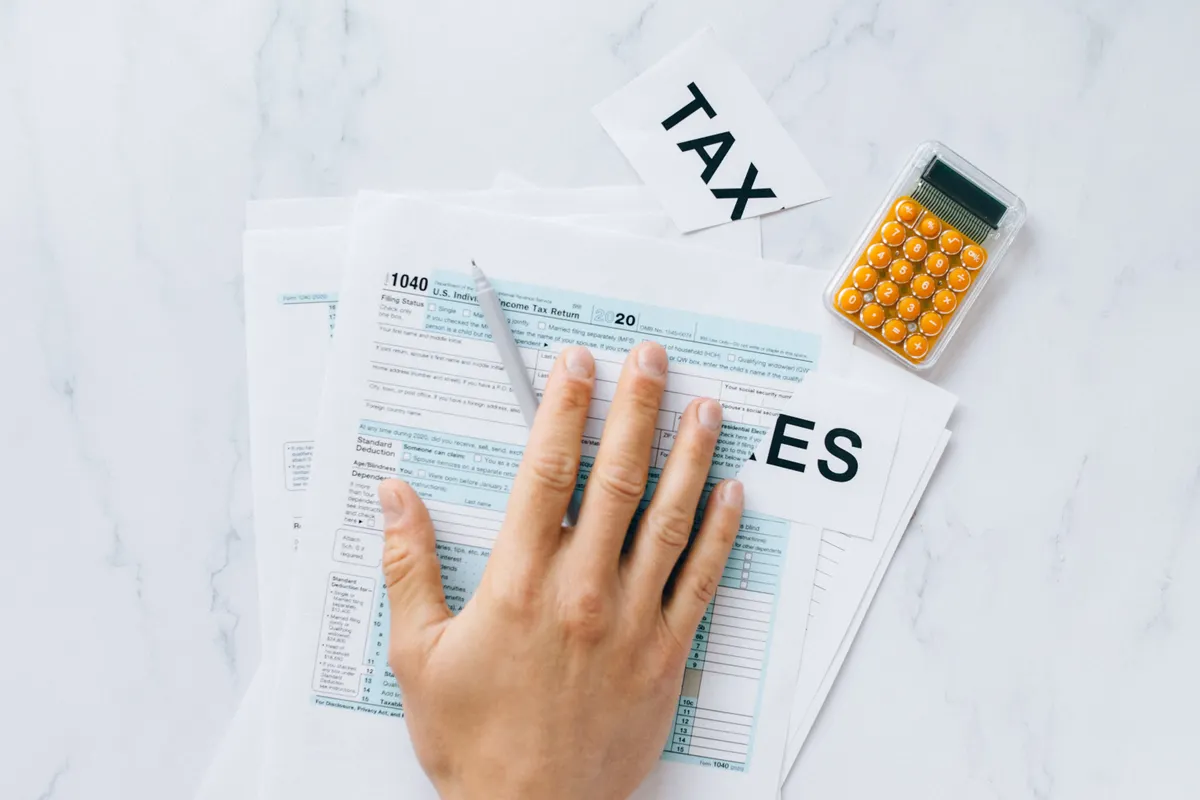
One thing to clear up early, because it trips people up every year. Commissions and exchange fees are not deductible expenses. They adjust your cost basis instead, so they net into your gain or loss automatically. If your mental model is “everything I pay to trade is a write-off,” half of it is already handled somewhere else on the return.
The Real Annual Cost of an Algo Trading Stack
A serious retail setup runs between $3,000 and $8,000 a year. A mid-range 2026 build lands near $5,168. That number matters for two reasons. It’s the base your deduction is calculated from. And plenty of traders underestimate it by half, because they only count the line items that hit their card monthly.
Here’s the stack priced from current 2026 list rates. It assumes a single-account futures trader running strategies unattended on a hosted server.

Those numbers aren’t padded. A mid-tier trading VPS runs about $100 a month at monthly billing, or roughly $42 with annual prepay. A broker platform plan with reduced commissions is commonly $99 a month. CME non-professional depth-of-market data costs $12.10 per device per month per exchange as of January 2026. A Rithmic pipeline with Level 2 typically lands between $35 and $55 a month before commissions. Add a premium charting plan and an annual automation subscription, and you’re at the number above.
Notice what’s missing from that list. The hardware. Computers, monitors, a second router, a UPS: those get expensed under Section 179 or 100% bonus depreciation instead. That’s a different part of the return, and often a much bigger first-year number.
What Is Trader Tax Status and How Do You Qualify in 2026?
Trader tax status isn’t an election you file. It’s a facts-and-circumstances determination built on Section 162 case law, and you claim it by filing as a business. The IRS gives three conditions. You must seek profit from daily market movements. Your activity must be substantial. And you must carry it on with continuity and regularity.
That’s deliberately vague, so practitioners work from benchmarks the Tax Court has actually accepted. The most cited is Poppe v. Commissioner (2015). A trader making roughly 720 trades a year, about 60 a month, was granted trader tax status.
Poppe is also a useful warning. He won trader tax status but lost his Section 475 mark-to-market election, because he couldn’t prove he’d completed the two-step filing process. That mistake turned a $1 million trading loss into a $3,000 annual capital loss deduction. Qualifying and electing are separate battles. You can win one and still lose the other.
The cases that go the other way are just as instructive. In Endicott, the taxpayer was denied trader status. Holding periods were too long and the activity wasn’t substantial enough. He was writing covered calls, which reads as investing with extra steps. Chen v. Commissioner (2004) landed on the other side, granting status to a frequent short-term trader who put in serious hours.
Does Running Bots Disqualify You From Trader Tax Status?
Not by itself. But the question of who built the system matters far more than most algo traders realize. The IRS has issued no guidance specific to automated trading and TTS. So you’re arguing from the same “time and effort” factor everyone else uses. The difference is that your time looks nothing like a discretionary trader’s.
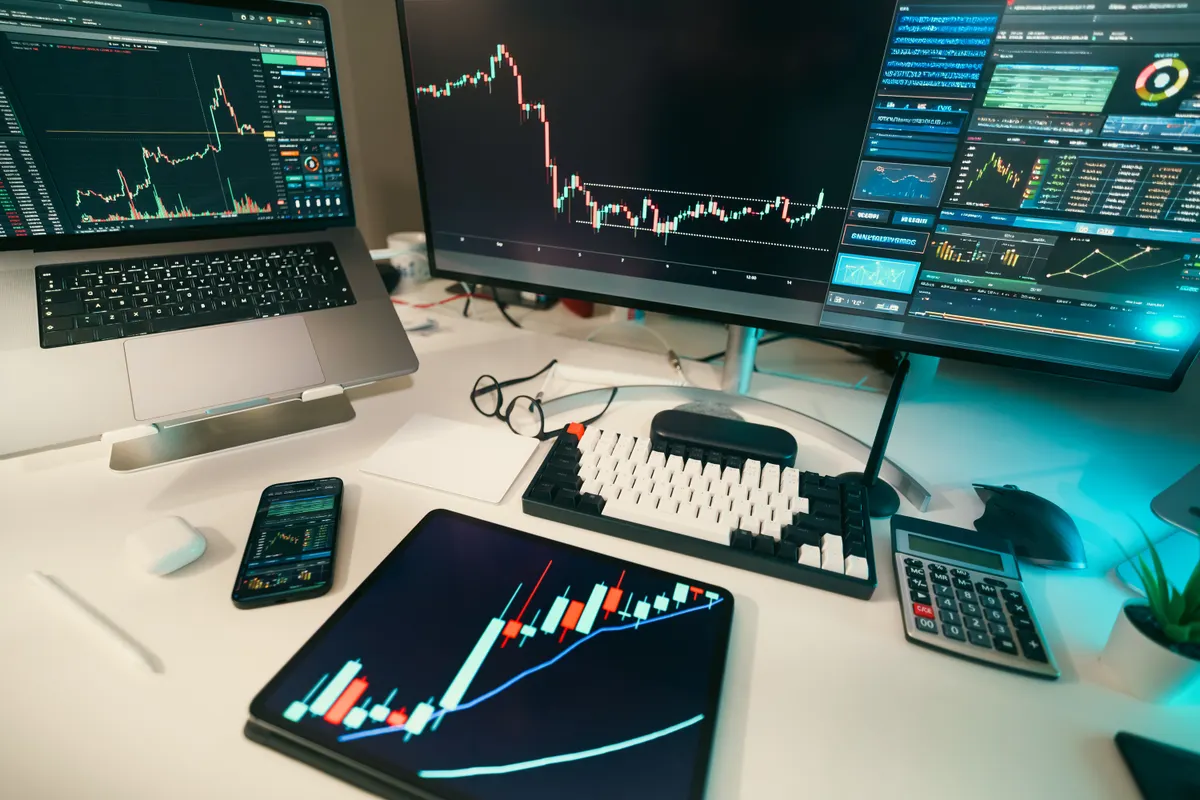
Here’s the distinction that actually decides it. Say you wrote the strategy. You backtest it, tune parameters, monitor fills, and kill it when a regime change breaks it. That’s your trade or business, and the trades are yours. Now say you bought a black-box system, switched it on, and haven’t touched it since. You look a lot like someone who handed capital to a manager. That’s investing, and those trades may not count toward your activity at all.
The part nobody says out loud: automation doesn’t weaken a TTS claim. Passivity does. A discretionary trader who clicks 700 buttons a year has an easy story. An algo trader who executes 4,000 trades but can’t show a single hour of development work has a harder one, despite far more activity. The evidence you need isn’t your fill count. It’s your workbench.
Which means the hours you’d never think to log are exactly the ones that matter. Pine Script revisions. Walk-forward tests. Slippage analysis. Webhook debugging at 2am when a strategy stopped firing. That work is the continuity and regularity the IRS is asking about. It just never shows up in a broker statement.
This also cuts against a common piece of forum advice: that you should trade manually for a few months to “establish” trader status before automating. There’s no support for it. Frequency and time still count when a server pulls the trigger, as long as you can show the trigger was yours. If you’re building that side of the operation, our futures trading bot guide covers the execution architecture, and the strategy developer workflow shows what that development trail looks like in practice.
Which Trader Tax Deductions Actually Apply to an Algo Stack?
Nearly all of it, once TTS is established. Three exceptions catch people out. Market data, platform subscriptions, VPS hosting, charting tools, and professional fees are straightforward Section 162 business expenses. Equipment goes through depreciation. Commissions, trading losses, and pre-business education behave differently than traders assume.
| Expense | Deductible with TTS? | Where it lands |
|---|---|---|
| VPS / cloud hosting | Yes, in full | Schedule C, other expenses |
| Market data feeds (CME non-pro, Rithmic L2) | Yes | Schedule C |
| Broker platform plan (Tradovate, NinjaTrader lease) | Yes | Schedule C |
| Charting and alerts (TradingView) | Yes | Schedule C |
| Automation bridge / webhook service | Yes | Schedule C |
| Computers, monitors, networking gear | Yes, via Section 179 or 100% bonus depreciation | Form 4562 |
| Home office | Yes, if used exclusively and regularly | Form 8829, or $5/sq ft simplified |
| Internet, phone, electricity | Business-use percentage only | Schedule C |
| CPA, entity formation, legal | Yes | Schedule C |
| Education that improves an existing trading business | Yes | Schedule C |
| Education bought before you had a business | No, treat as a startup cost | Section 195 |
| Commissions and exchange fees | No, it adjusts cost basis | Netted into gain/loss |
| Trading losses | No, not an expense | Form 6781 / Schedule D |
Two rules deserve a second look. Home office is capped by trading income for the year, and the unused portion carries forward. So a losing year doesn’t hand you a free deduction. And startup costs under Section 195 let you deduct $5,000 in the year the business begins, with the rest amortized over 180 months. That’s where the course you bought six months before you started trading actually goes.
Here are the 2026 figures worth writing on a sticky note.
| Item | 2026 figure |
|---|---|
| Section 179 expensing cap | $2,560,000 (phase-out begins at $4,090,000) |
| Bonus depreciation | 100%, made permanent for property acquired after Jan 19, 2025 |
| Home office, simplified method | $5/sq ft, 300 sq ft max, so $1,500 |
| Startup costs (Section 195) | $5,000 immediate, remainder over 180 months |
| 1099-NEC reporting threshold | $2,000, up from $600, effective Jan 1, 2026 |
| Social Security wage base | $184,500 |
| Self-employment tax | 15.3% on 92.35% of net Schedule C profit |
| QBI threshold (single / married filing jointly) | $201,750 / $403,500 |
| Investor misc. itemized deductions | Permanently repealed under Section 67(g) |
| Section 475 election deadline for 2027 | April 15, 2027 (the 2026 window closed April 15, 2026) |
Realistically, a trader who buys a new machine, two monitors and a backup connection in their first qualifying year is looking at a deduction well north of the $5,168 software stack. The hardware gets expensed immediately instead of spread over five years.
What Are Trader Tax Deductions Worth in Real Dollars?
Between roughly $1,240 and $1,883 a year on that $5,168 stack, depending on which door you came through. The spread exists because self-employment tax is in play for some traders and not others. That’s the single biggest driver of what a deduction is actually worth.
The investor column is the one to sit with. That trader pays the same $5,168 in real money and gets no offset at all. The expense reduces their bank balance and touches the return nowhere. Over five years, that’s roughly $25,800 of fully taxed income spent on infrastructure.
There’s a wrinkle unique to futures traders. Section 1256 gains get the 60/40 split: 60% taxed at long-term rates, 40% at short-term, for a blended maximum near 26.8%. Those gains aren’t subject to self-employment tax. Good news for the gains. But it also means a TTS futures trader’s expense deduction only offsets income tax, never SE tax. That’s why the middle column is worth less than the right one.
Does the QBI Deduction Apply to Trading Income?
Rarely for own-account traders, and only below the income threshold for funded traders. The Section 199A qualified business income deduction is worth 20% of net business income, and the One Big Beautiful Bill Act made it permanent. But two rules gut it for most traders, and they work in opposite directions.
First, capital gains are excluded from QBI entirely. A TTS trader’s Section 1256 futures gains are capital, so they never count as qualified business income. Your Schedule C might show expenses with no QBI-eligible income sitting behind them.
Second, trading is a specified service trade or business, an SSTB. That means the deduction phases out as taxable income rises. For 2026, the threshold is $201,750 for single filers and $403,500 for joint filers. The phase-in range runs $75,000 above that for singles and $150,000 for joint filers. Cross the top of the range, at $276,750 single or $553,500 joint, and the SSTB deduction disappears completely.
So who actually benefits? A funded prop trader under the threshold. Their 1099-NEC payouts are ordinary Schedule C income, which is QBI-eligible, and 20% of it can come off taxable income. Worth knowing: expenses reduce QBI too. Every dollar you deduct also shaves 20 cents off the QBI deduction, so the net benefit is a little smaller than your marginal rate suggests. It’s still worth claiming.
Do You Need a Section 475 Election to Deduct Expenses?
No. And if you trade futures, you probably shouldn’t want one. Business expense deductions flow from trader tax status alone. Section 475(f) mark-to-market is a separate, optional election. It changes how your gains and losses are characterized, not whether your VPS bill is deductible.
The election has real benefits for securities traders. Ordinary loss treatment with no $3,000 cap, and exemption from wash sale rules. But a 475 election that sweeps in your Section 1256 contracts converts that favorable 60/40 treatment into fully ordinary income, taxed as high as 37%. For a profitable futures trader, that’s a self-inflicted wound.
The fix is that the elections are separate. Section 475(f)(1) covers securities. Section 475(f)(2) covers commodities. Most TTS traders who want mark-to-market elect it for securities only, and deliberately leave futures out to keep 60/40 intact. The deadline is unforgiving. The statement must be attached to the prior year’s timely filed return or extension request. The 2026 window already closed on April 15, 2026, so an election effective for 2027 has to be filed by April 15, 2027.
What If You Don’t Qualify for TTS?
You still have three legitimate routes. One of them is hiding in plain sight for anyone trading a funded account. The mistake is assuming that failing the TTS benchmarks kills the deduction. For a large slice of algo traders, it never depended on TTS in the first place.
Route one: the funded account. Trade an Apex, Topstep, or similar funded account, and your profit split arrives as nonemployee compensation on Form 1099-NEC. That’s self-employment income on Schedule C by default. And Schedule C income can be offset by ordinary and necessary business expenses, including the VPS running your bot and the data feed powering it. You don’t need TTS to get there.
One threshold change to note. For payments made on or after January 1, 2026, firms only issue a 1099-NEC above $2,000, up from $600. The income is fully taxable either way. Our supported prop firms page lists which firms this route covers, and the prop firm automation FAQ covers which ones allow bots on a funded account.
Route two: build toward qualification. TTS is assessed year by year, so a year you don’t qualify doesn’t poison the next one. Increasing frequency, shortening holding periods, and logging your development hours can flip the answer for next year.
Route three: get the entity structure right. Traders with consistent income sometimes form an entity to reach retirement plan contributions and health insurance deductions. A sole proprietor trading their own capital can’t reach those, because trading gains aren’t earned income. This is genuinely CPA territory, not a DIY move.

How Do You Document VPS and Data Feed Costs So They Survive an Audit?
With three things. A clean paper trail, a defensible allocation for anything mixed-use, and contemporaneous records of the hours you spend running the business. Substantiation is where most trader deductions actually fail. Not because the expense wasn’t legitimate, but because nothing proved it two years later.
From experience: the first year I ran strategies on a hosted server, my VPS, charting plan and data feed all sat on the same personal card as groceries and a streaming subscription. Untangling that in March took an entire weekend. I still couldn’t say what percentage of that box had been running non-trading workloads. A separate card fixed it in one afternoon.
Four practices carry most of the weight.
- Separate the money. A dedicated business card or account for every trading subscription turns substantiation into a statement export. It costs nothing and does more work than everything else on this list combined.
- Log the hours. A simple weekly time record covering strategy development, backtesting, monitoring and review is the direct evidence for the time-and-effort factor. That factor decides an algo trader’s TTS claim. Trade counts already sit in your broker statements. Your hours exist nowhere unless you write them down.
- Keep the execution trail. Order logs with timestamps, your strategy source, alert configurations, and webhook records tie your activity to your intent. From what we’ve seen, they’re also exactly what you need when a broker rejects an order mid-strategy, which our troubleshooting FAQ walks through. So you should keep them regardless.
- Allocate mixed use honestly. A VPS dedicated to trading is 100% deductible. Home internet isn’t. Pick a reasonable percentage, write down how you got there, and use the same method every year.
There’s a practical bonus that has nothing to do with taxes. A trader who keeps clean execution logs and knows their real monthly infrastructure cost tends to make better decisions about which subscriptions to keep. Ever notice how the traders with the messiest records are also the ones paying for three charting platforms?
Where Automation Tools Fit in the Expense Column
Automation and execution software is deductible on the same footing as data and hosting. It’s infrastructure for the business, not a discretionary purchase. For algo traders, it’s often the line item that makes the rest of the stack work at all.
PickMyTrade sits in that category. It routes TradingView alerts to brokers and prop firms, including Tradovate, Rithmic, TradeLocker, ProjectX, IBKR and TradeStation, so a strategy can run without a person watching it. At $50 a month or $500 a year on the pricing page, it’s the $500 bar in the cost chart above. It’s fully deductible under either of the two Schedule C routes described earlier.
The routing choice underneath it matters for cost as much as for latency. Our Rithmic connection guide covers what that pipeline costs to run. If you’re trading funded capital, the prop firm FAQ answers the common account-setup questions, and the Apex automation guide walks through one setup end to end. Either way, keep the receipts. The software that executes your edge is also the software that reduces your tax bill.
Frequently Asked Questions
Yes, if you qualify for trader tax status or receive prop firm payouts on a 1099-NEC. In either case the VPS is an ordinary and necessary business expense, deductible in full on Schedule C. A typical trading VPS runs $504 to $1,200 a year. Investors without a trading business get nothing, because the Section 67(g) repeal is now permanent.
Only if the fees support self-employment income, such as prop firm payouts reported on Form 1099-NEC. Otherwise no. CME non-professional depth-of-market data costs $12.10 per device per month per exchange as of January 2026. For a pure investor that’s a non-deductible personal cost with no path onto the return.
No form exists. TTS is a facts-and-circumstances determination you claim by filing a Schedule C for the trading business. That’s separate from the Section 475(f) mark-to-market election, which does require a formal two-step filing: a statement with the prior year’s timely filed return, then Form 3115. Poppe v. Commissioner lost that election on paperwork alone.
Not if you built and manage the system. The IRS has issued no guidance specific to automated trading, so the analysis falls back on time and effort. Development, backtesting, parameter tuning and monitoring all count. Running someone else’s black-box system with no involvement is the version that looks like investing rather than a trade or business.
Yes, and usually in year one. Section 179 allows up to $2,560,000 of expensing in 2026, and 100% bonus depreciation was made permanent for property acquired after January 19, 2025. Both are reported on Form 4562. For mixed personal and business use, deduct only the business-use percentage and document how you calculated it.
Often yes, below the income threshold. Prop firm 1099-NEC payouts are ordinary Schedule C income, which is QBI-eligible, so 20% can come off taxable income. Trading is a specified service business, so the deduction phases out between $201,750 and $276,750 for single filers in 2026, and disappears above that.
The Bottom Line on Trader Tax Deductions
The VPS, the data feed, the platform plan and the automation bridge are all deductible. The only question is whether you’ve built a trading business or a very expensive hobby in the IRS’s eyes. That line got harsher in July 2025, when the repeal of miscellaneous itemized deductions became permanent and the investor’s consolation prize disappeared for good.
For an algo trader, three things decide it. Frequency and holding period, which your broker statements already prove. Hours, which nothing proves unless you log them. And whose system is actually trading, because a bot you built and maintain reads very differently than one you bought and forgot.
If you’re trading funded capital, check the simpler door first. Prop firm payouts land on Schedule C by default, which means your $5,168 stack is already deductible against income that also carries 15.3% self-employment tax. That’s the most valuable version of this deduction available to a retail trader, and plenty of funded traders leave it entirely unclaimed.
Start with a clean record of what you spend and what you do. Then take it to a CPA who specializes in trader taxation before you file. This is one area where the generalist down the street will cost you more than they charge.
Questions about connecting an account or which plan fits your setup? Reach the team through the contact page, or read more about how PickMyTrade works.
Disclaimer:
This content is for informational purposes only and does not constitute financial, investment, or trading advice. Trading and investing in financial markets involve risk, and it is possible to lose some or all of your capital. Always perform your own research and consult with a licensed financial advisor before making any trading decisions. The mention of any proprietary trading firms, brokers, does not constitute an endorsement or partnership. Ensure you understand all terms, conditions, and compliance requirements of the firms and platforms you use.
Also Checkout: Automate TradingView Indicators with Tradovate Using PickMyTrade