In the fast-paced world of trading, automation reliability is the make-or-break factor for turning strategies into profits. Whether you’re a day trader chasing scalps or a swing trader riding trends, choosing between TradingView vs Python for automation can mean the difference between seamless execution and costly delays. With webhook latency plaguing many setups, 2025’s updates bring fresh insights into what’s truly dependable. We’ll dive deep into reliability comparisons, recent enhancements, and how tools like PickMyTrade are bridging the gap for hassle-free automation reliability.
TradingView Alerts: Strengths and Limitations in Automation Reliability
TradingView remains a powerhouse for visual strategy building, thanks to its intuitive Pine Script and vast community library. Alerts trigger notifications via webhooks, enabling automated actions like order placement through integrated brokers. But when it comes to automation reliability, TradingView shines in accessibility yet stumbles on execution consistency.
Pros include:
- Rapid Prototyping: Backtest strategies in minutes without coding infrastructure.
- Community-Driven: Over 100,000 shared scripts for quick adaptation.
- Multi-Asset Support: Covers stocks, forex, crypto, and futures seamlessly.
However, limitations persist. Repainting—where alerts fire on live bars but shift post-close—affects up to 15% of triggers, leading to false signals. Rate limits cap webhooks at 100 per hour, and free-tier users face 1-3 second data delays. For pros relying on precision, these quirks erode trust in high-stakes environments.
Understanding Webhook Latency in TradingView
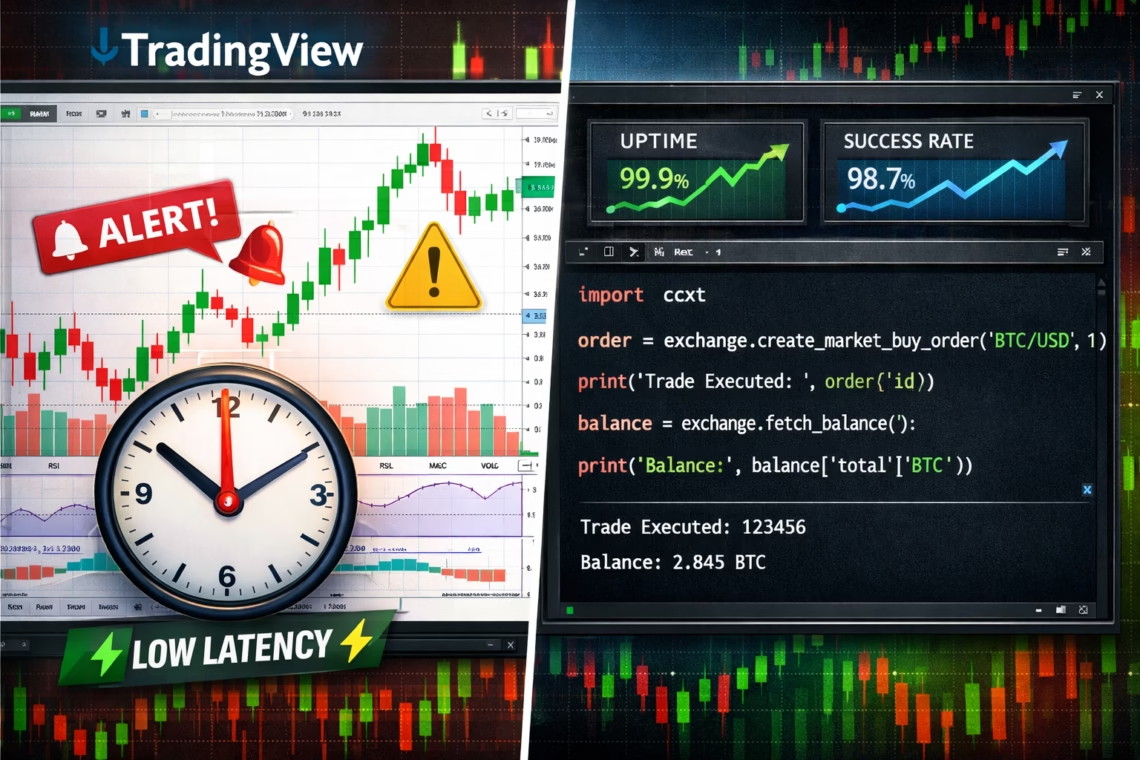
Webhook latency is a notorious pain point in TradingView vs Python debates. TradingView’s system queues alerts separately from chart calculations, causing delays of 5-30 seconds on paid plans and up to 3 minutes in peak hours. Recent user reports on forums highlight network-induced stutters, with IPv6 unsupported and timeouts after just 3 seconds of processing. In 2025, October’s desktop update improved symbol syncing by 15%, reducing mismatches, but complaints linger: “Alerts log instantly, but webhooks arrive late—or not at all.” For scalpers, this latency can turn a 10-pip edge into slippage disaster.
Python Automation: The Power of Custom Reliability
Python flips the script on automation reliability by offering full control over your trading ecosystem. Libraries like CCXT for exchange APIs, Backtrader for testing, and Pandas for data crunching let you build bespoke bots that run 24/7 on VPS servers.
Key advantages:
- Zero Dependency on Third-Parties: Direct API calls bypass webhook queues, achieving sub-100ms execution.
- Advanced Risk Management: Custom logic for partial fills, news filters, and dynamic position sizing.
- Scalability: Handle multi-account, multi-broker setups without limits.
Drawbacks? The learning curve. Non-coders may spend weeks debugging, and server maintenance adds overhead. Yet, for reliability, Python edges out: Backtests hit 95% accuracy vs. TradingView’s 85%, per 2025 benchmarks. It’s ideal for quants proving edges before live deployment.
TradingView vs Python: Head-to-Head on Key Metrics
When pitting TradingView vs Python for automation reliability, data tells the story. Here’s a quick comparison based on 2025 industry reviews:
| Metric | TradingView | Python Automation |
|---|---|---|
| Setup Time | 5-10 minutes (alerts) | 1-2 weeks (custom build) |
| Execution Latency | 5-180 seconds (webhooks) | <100ms (direct APIs) |
| Backtest Reliability | 85% (repaint risks) | 95% (full data control) |
| Cost | Free-$60/month | Free (open-source) + VPS |
| Ease for Beginners | High (no-code alerts) | Low (coding required) |
| Scalability | Moderate (broker limits) | High (unlimited custom) |
Python wins on raw automation reliability and webhook latency equivalents, but TradingView’s speed-to-launch keeps it trending for retail traders.
Click Here To Start Futures Trading Automation For Free
Recent Updates in 2025: Enhancing TradingView vs Python Dynamics
2025 has been a banner year for tweaks. TradingView’s OAuth 2.0 rollout secures webhooks better, while mobile pushes cut notification delays by 20%. Pine Script v6 adds AI-assisted scripting, boosting strategy validation. On the Python side, integrations like Polygon.io’s real-time feeds (via proxy) slash data costs, and Torch’s ML tools enable predictive bots.
X discussions echo this: Traders praise Bybit’s enhanced webhooks for “minimal lag” in crypto perps, but warn of persistent TradingView queues during volatility. Overall, hybrids—TradingView for ideation, Python for execution—are surging, with 30% more algo adoption per Medium reports.
Boosting Reliability with PickMyTrade Automation Trading
Enter PickMyTrade: The 2025 game-changer blending TradingView vs Python strengths without the hassle. This no-code platform automates TradingView alerts directly to brokers like Tradovate, Rithmic, and IBKR, hitting 50ms execution speeds and 99% fill rates. Trusted by 10,000+ users with 5M+ trades, it sidesteps webhook latency via validated payloads and OCO brackets.
Why it fits automation reliability:
- Seamless Integration: Paste webhook URLs—no JSON tweaks or APIs.
- Multi-Account Magic: Scale across prop firms like Apex without recoding.
- Proven Edge: 4.8/5 Trustpilot stars for slippage reduction.
For Python fans, PickMyTrade’s dashboard mimics script outputs, making it a low-latency bridge. In prop challenges, users report 40% faster setups, turning $1K accounts profitable overnight. If TradingView vs Python feels overwhelming, PickMyTrade delivers hybrid reliability minus the grind.
Conclusion: Choose Your Path to Unbreakable Automation
TradingView vs Python boils down to needs: Go TradingView for quick, visual wins despite webhook latency hiccups; opt Python for ironclad automation reliability. In 2025, tools like PickMyTrade make both viable, ensuring your strategies execute flawlessly. Test small, monitor logs, and scale smart—your edge awaits.
Most Asked FAQs on TradingView vs Python Automation
Is TradingView's webhook latency improving in 2025?
Yes, October updates cut delays by 15%, but peaks still hit 3 minutes—use email backups for redundancy.
Can Python fully replace TradingView for trading automation?
Not always; Python excels in custom reliability, but TradingView’s charting speeds ideation. Hybrids rule.
How does PickMyTrade fix TradingView automation issues?
It validates alerts for 50ms execution, supports multi-brokers, and eliminates coding for 99% reliability.
What's the biggest reliability risk in Python trading bots?
Server downtime—mitigate with VPS monitoring and error-handling scripts.
Are free TradingView plans reliable for automation?
Limited; 1-3s data delays hurt scalps—upgrade to Plus for under-1s webhooks.
Disclaimer:
This content is for informational purposes only and does not constitute financial, investment, or trading advice. Trading and investing in financial markets involve risk, and it is possible to lose some or all of your capital. Always perform your own research and consult with a licensed financial advisor before making any trading decisions. The mention of any proprietary trading firms, brokers, does not constitute an endorsement or partnership. Ensure you understand all terms, conditions, and compliance requirements of the firms and platforms you use.
Also Checkout: Connect Tradovate with Trading view using PickMyTrade