In the fast-paced world of automated trading, downtime isn’t just inconvenient—it’s catastrophic. A single server failure, API outage, or cyber incident can wipe out profits, trigger margin calls, or lead to uncontrolled losses in seconds. As markets evolve with AI-driven algos and high-frequency strategies, Trading Disaster Recovery has become non-negotiable for serious traders and firms.
This comprehensive guide explores proven Trading Disaster Recovery strategies, recent advancements as of 2026, and practical tools to keep your automated systems running 24/7—even during chaos. Whether you’re scalping E-mini S&P 500 futures or running complex multi-strategy bots on US markets, these backup systems deliver real resilience.
Why Trading Disaster Recovery Matters More Than Ever in 2026
Automated trading systems now dominate US futures markets, with platforms executing thousands of trades per minute. But risks persist: hardware failures, exchange connectivity issues, power outages, or even rare flash-crash-like events from algo glitches.
Recent insights from 2025-2026 highlight:
- Near-zero Recovery Time Objective (RTO) and Recovery Point Objective (RPO) demands for high-frequency and automated setups—often seconds or sub-second.
- Increased focus on automated failover over manual DR, with cloud/hybrid models leading the way.
- Regulatory emphasis (e.g., FIA best practices) on pre-trade controls, post-trade analysis, and conformance testing to prevent disasters.
- Ongoing vulnerabilities: While no massive public automated failures dominated headlines recently, isolated outages and glitches remind us that over-reliance on single systems is dangerous.
Without robust Trading Disaster Recovery, even profitable strategies can turn disastrous overnight.
Core Components of Effective Trading Disaster Recovery Plans
A solid Trading Disaster Recovery framework combines prevention, redundancy, and rapid restoration. Key elements include:
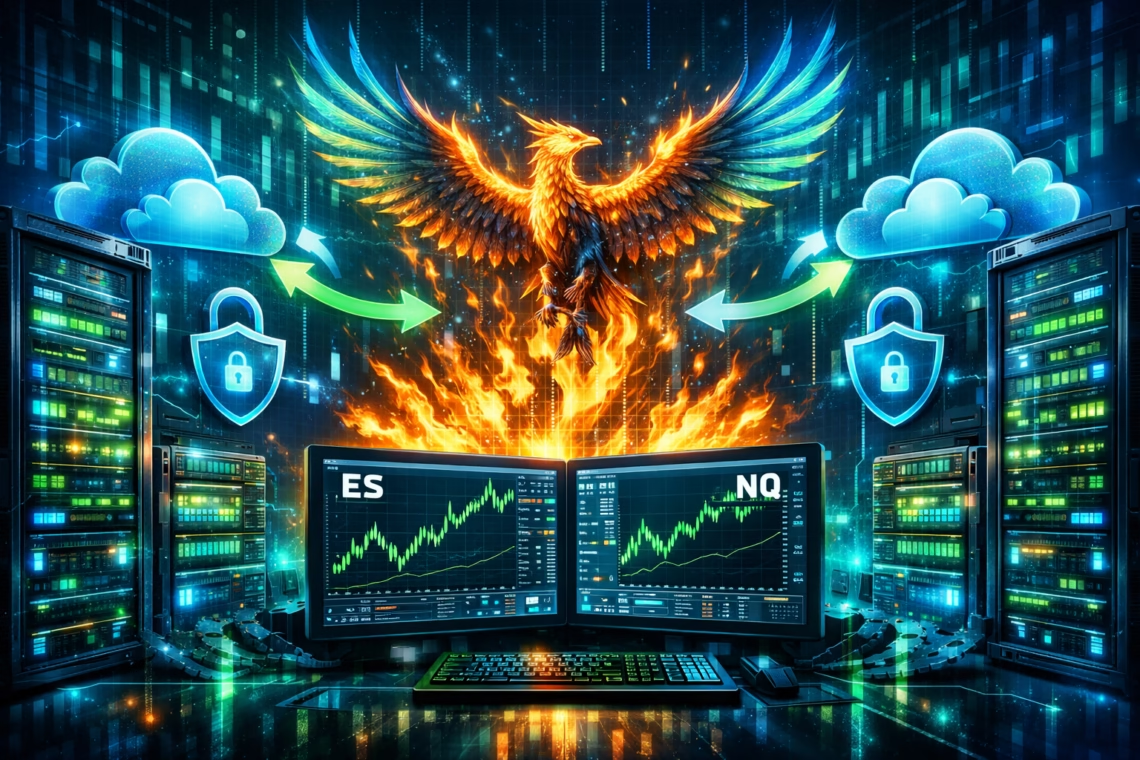
- Redundant Infrastructure and Automatic Failover Modern systems use “sizzling-hot-takeover” or active-active setups where backup servers mirror primaries in real time.
- Hardware failover activates secondary components instantly.
- Application failover shifts platforms to redundant instances.
- In 2026, tools like cloud-based geographic redundancy (e.g., AWS multi-region) achieve 99.99%+ uptime.
- Real-Time Data Backup and Incremental Strategies High-frequency data demands low-latency, incremental backups—not full nightly dumps.
- Capture changes continuously for point-in-time recovery (PITR).
- Use distributed, fault-tolerant storage to handle massive tick data volumes.
- Cloud solutions offer automated scheduling, cross-region replication, and archival for long-term resilience.
- Exchange API and Connectivity Redundancy API outages are common pain points. Build multi-channel designs with automatic failover to secondary gateways or brokers.
- Co-location near exchanges reduces latency and adds physical redundancy.
- Monitor feeds in real time to switch seamlessly.
- Risk Controls and Automation Integration Embed pre-trade checks, kill switches, and post-trade monitoring.
- Automate recovery orchestration to eliminate human error in high-pressure scenarios.
- Regular DR testing (e.g., simulated failover drills) ensures readiness—Eurex’s 2026 T7 tests underscore industry-wide emphasis.
- Hybrid Cloud and Colocation Approaches Migrate primaries and backups to resilient data centers with high-density support for AI/algo workloads.
- Combine on-prem control with cloud failover for cost-effective, scalable Trading Disaster Recovery.
Click Here To
Spotlight: PickMyTrade for Resilient Automated Futures Trading on US Markets
For retail and professional traders automating US futures (e.g., ES, NQ, YM, RTY), PickMyTrade stands out as a reliable platform that aligns perfectly with Trading Disaster Recovery principles.
PickMyTrade enables seamless automation of TradingView strategies via webhooks, supporting brokers like Tradovate, Rithmic, Interactive Brokers, TradeStation, and more. Key resilience features:
- Cloud-based execution for 24/7 uptime without local hardware dependency.
- Unlimited strategies, tickers, and alerts with built-in risk management.
- Low-latency replication close to exchanges, reducing single-point failures.
- Multi-broker support for diversified connectivity—automatically route if one broker experiences issues.
In 2026, PickMyTrade empowers traders with native futures logic, ultra-reliable automation, and VPS-grade stability. It’s ideal for implementing redundant execution paths, ensuring your bots keep trading through disruptions. Over 3000+ traders use it for precise, automated futures trading—pair it with robust backups for unbreakable performance.
Click Here To Start Futures Trading Automation
Implementing Your Trading Disaster Recovery Plan: Step-by-Step
- Assess risks: Map dependencies, set RTO/RPO targets (aim for seconds in automated setups).
- Build redundancy: Deploy failover servers, multi-region cloud backups.
- Automate everything: From incremental backups to recovery orchestration.
- Test rigorously: Run simulated disasters quarterly.
- Integrate tools like PickMyTrade: Automate execution with resilient broker routing.
- Monitor continuously: Use real-time alerts for anomalies.
The Bottom Line on Trading Disaster Recovery
In 2026, Trading Disaster Recovery isn’t optional—it’s your competitive edge. By prioritizing automatic failover, real-time backups, and resilient automation platforms like PickMyTrade, you protect capital and seize opportunities others miss.
Don’t wait for the next outage. Build systems that actually work—resilient, automated, and ready for anything.
Most Asked FAQs
What is Trading Disaster Recovery?
Trading Disaster Recovery refers to strategies, backups, and failover systems designed to restore automated trading operations quickly after failures like outages, glitches, or disasters, minimizing losses in fast markets.
How does automated failover differ from traditional backup in trading?
Automated failover switches to redundant systems instantly without intervention, achieving near-zero downtime—essential for automated trading—while traditional backups require manual restoration.
What RTO and RPO should automated futures traders aim for?
For US markets and HFT/automated setups, target sub-second to seconds RTO and near-zero RPO to prevent data loss or missed trades.
Can retail traders implement effective Trading Disaster Recovery?
Yes—use cloud-based platforms like PickMyTrade for automated execution, multi-broker redundancy, and low-latency setups without massive infrastructure costs.
Disclaimer:
This content is for informational purposes only and does not constitute financial, investment, or trading advice. Trading and investing in financial markets involve risk, and it is possible to lose some or all of your capital. Always perform your own research and consult with a licensed financial advisor before making any trading decisions. The mention of any proprietary trading firms, brokers, does not constitute an endorsement or partnership. Ensure you understand all terms, conditions, and compliance requirements of the firms and platforms you use.
Also Checkout: Connect Tradovate with Trading view using PickMyTrade