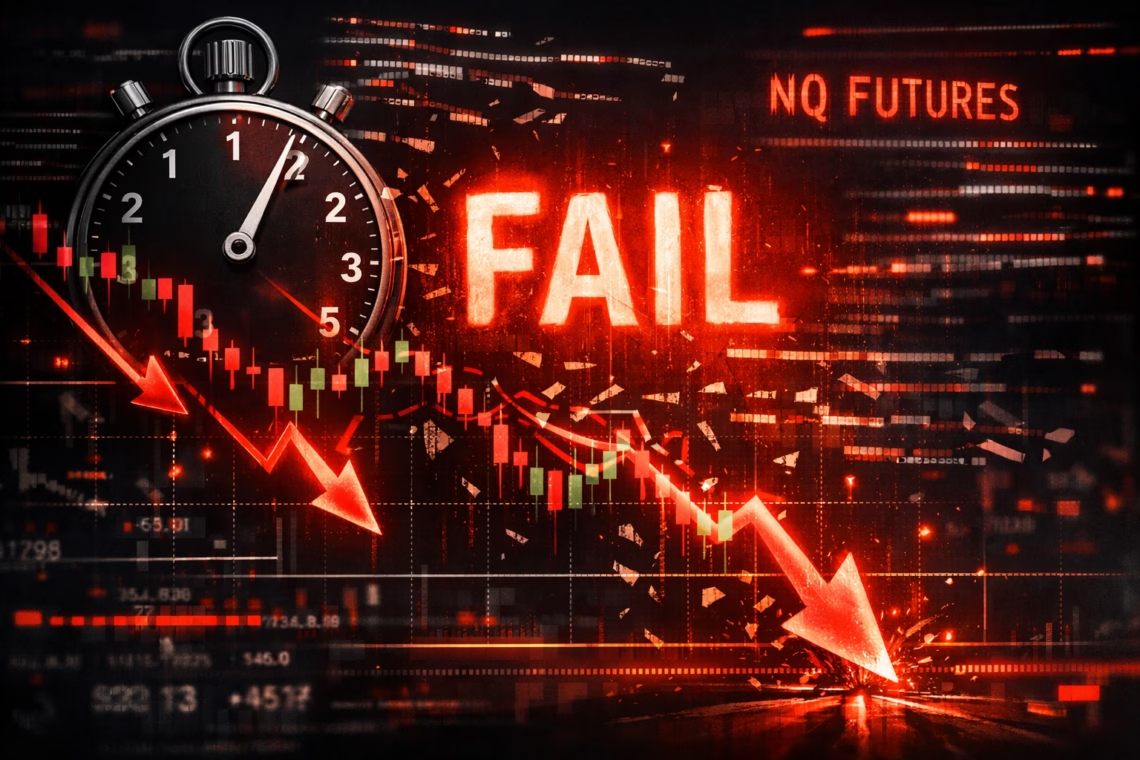
In the fast-paced world of intraday trading, many traders turn to algo strategies hoping for consistent profits. Yet, statistics and real-world experience show that most algo strategies fail when deployed live, especially in intraday setups. One overlooked factor is the “5-minute rule”—a principle highlighting how ultra-short timeframes like 5-minute charts amplify noise, overfitting, and execution pitfalls, causing strategies to crumble under real-market pressure.
As of 2026, with algorithmic trading dominating over 70% of US equity and futures volume, understanding why algo strategies fail remains critical. Recent market events, including volatility spikes and AI-driven moves (like the February 2026 gold plunge amplified by momentum algos), underscore these failures. This guide explores the core reasons, backed by current insights, and offers practical solutions—including automation tools like PickMyTrade for US futures markets.
Common Reasons Why Algo Strategies Fail in Intraday Trading
Algo strategies fail primarily due to a disconnect between backtesting and live execution. Here’s why most intraday approaches underperform:
- Overfitting to Historical Data Many algos are over-optimized on past data, capturing noise rather than true edges. In live markets, regime shifts (trending to choppy) cause rapid decay. Recent 2025-2026 analyses show overfitting as the top culprit, with strategies performing brilliantly in tests but failing live due to ignored market adaptations.
- Ignoring Transaction Costs and Slippage Intraday strategies ignore brokerage fees, slippage, and latency. High-frequency or scalping algos on 5-minute charts suffer most, as small edges vanish with real fills. In US futures, low-latency execution is essential, yet many retail algos overlook this, turning paper profits into losses.
- Poor Risk Management and Emotional Interference Even automated systems lack robust stops or position sizing. Weak controls lead to drawdowns during volatility. In 2025-2026, events like amplified CTA moves in precious metals highlight how rigid rules fail without adaptive risk layers.
- Market Regime Blindness and Data Quality Issues Markets aren’t static—volatility, liquidity, and sentiment shift. Algos ignoring regimes (e.g., high-vol periods) falter. Poor data (delayed or incomplete) compounds errors in intraday setups.
- The 5-Minute Trap: Noise Over Signal The “5-minute rule” refers to the pitfalls of ultra-short intraday timeframes (e.g., 5-minute charts popular in momo or scalping strategies). These amplify random fluctuations, leading to false signals, frequent whipsaws, and eroded edges. While 5-minute strategies like EMA-MACD momo setups aim for quick bursts, they often fail due to excessive noise, making algo strategies fail faster than higher-timeframe approaches.
Click Here To Start PickMyTrade Trading Automation For Free
How to Avoid Algo Strategy Failures in 2026
To beat the odds:
- Use out-of-sample testing and walk-forward optimization.
- Incorporate realistic costs, slippage, and latency in backtests.
- Implement dynamic risk rules (e.g., regime filters).
- Diversify across assets and avoid over-complexity.
For US futures traders, automation bridges the gap. PickMyTrade excels here, enabling seamless TradingView strategy automation on platforms like Tradovate, Rithmic, and Interactive Brokers. It supports unlimited tickers, 24/7 execution, low-latency futures trading (e.g., ES, NQ), and risk tools—ideal for overcoming intraday pitfalls without coding hassles. Traders automate signals precisely, reducing emotional errors and execution delays that doom manual or poorly built algos.
The Path to Sustainable Algo Success
Algo strategies fail not because automation is flawed, but due to overlooked realities like overfitting, costs, and short-term noise. By focusing on robust design and reliable tools, traders can thrive in 2026’s competitive landscape.
Ready to build resilient intraday algos? Explore PickMyTrade for futures automation and turn insights into action.
FAQs: Why Algo Strategies Fail
Why do most algo strategies fail in live trading?
Overfitting, ignoring slippage/transaction costs, poor risk management, and failure to adapt to market regimes are primary reasons, as seen in 2025-2026 analyses.
What is the 5-minute rule in trading?
It highlights risks in 5-minute intraday charts: excessive noise leads to false signals and strategy breakdown, a common reason algo strategies fail on short timeframes.
Can beginners succeed with algo trading?
Yes, using no-code platforms like PickMyTrade for US futures automation reduces barriers, but start with backtesting and risk controls.
Is algorithmic trading profitable in 2026?
It can be, especially with tools like PickMyTrade for futures, but success requires avoiding common pitfalls like overfitting.
Disclaimer:
This content is for informational purposes only and does not constitute financial, investment, or trading advice. Trading and investing in financial markets involve risk, and it is possible to lose some or all of your capital. Always perform your own research and consult with a licensed financial advisor before making any trading decisions. The mention of any proprietary trading firms, brokers, does not constitute an endorsement or partnership. Ensure you understand all terms, conditions, and compliance requirements of the firms and platforms you use.
Also Checkout: Automate TradingView Indicators with Tradovate Using PickMyTrade