In the high-stakes world of futures trading, where milliseconds can mean millions, choosing the right order routing method is crucial. Enter webhook vs RPC bots—two powerhouse approaches dominating futures automation routing. As markets evolve with AI-driven strategies and blockchain integrations, traders are turning to automated bots for 24/7 execution. But which routing wins: the pull-based precision of RPC or the push-powered speed of webhooks?
This 2025 guide dives deep into webhook vs RPC bots, backed by recent updates from top providers and real-world tools like PickMyTrade. Whether you’re scaling high-frequency trades or streamlining TradingView alerts, we’ll uncover what works best for futures automation routing. Let’s route to success.
Understanding Webhook vs RPC Bots in Trading
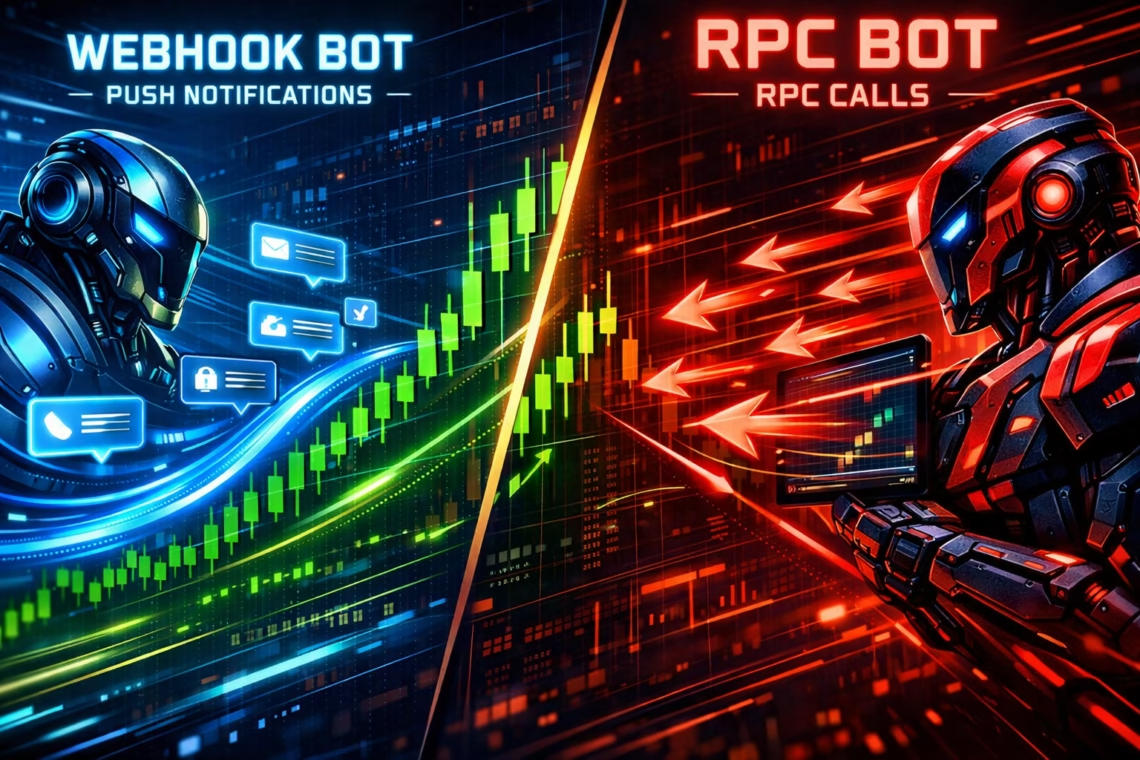
At its core, webhook vs RPC bots boils down to how your bot communicates with exchanges and data feeds. RPC (Remote Procedure Call) is a pull method: your bot actively queries servers for updates, like checking order status via API calls. Webhooks flip the script—they’re push notifications, where servers send real-time data to your bot’s endpoint on events like price spikes or order fills.
In futures automation routing, RPC excels in controlled environments, such as querying blockchain states for crypto futures. Webhooks shine in dynamic setups, delivering instant alerts without constant polling. Recent benchmarks from 2025 show webhooks reducing latency by up to 40% in volatile markets.
The Evolution of Futures Automation Routing
Futures automation routing has exploded in 2025, fueled by AI bots and decentralized exchanges (DEXs). Traditional brokers like CME Group now integrate with crypto platforms, demanding hybrid routing. Key trends include:
- Smart Order Routing (SOR): Algorithms split orders across venues for optimal fills, blending RPC for queries and webhooks for confirmations.
- Blockchain Integration: For crypto futures, RPC providers like Chainstack handle Solana’s high throughput, while webhooks from Helius notify on-chain events.
- HFT Resilience: Auto-routing tools mitigate outages, with RPC fallback ensuring 99.99% uptime.
As per FIA’s 2025 whitepaper, best practices emphasize risk controls like max order sizes to prevent flash crashes in automated systems. This shift makes futures automation routing not just faster, but smarter.
Pros and Cons: RPC in Futures Automation Routing
RPC remains a staple for webhook vs RPC bots, especially in pull-heavy scenarios. Here’s the breakdown:
Pros of RPC for Futures Bots
- Precision Control: Direct calls allow granular queries, ideal for backtesting strategies on historical futures data.
- Reliability: No dependency on external pushes; bots poll at set intervals, reducing missed events.
- Scalability: Top 2025 providers like Uniblock support auto-routing for HFT, handling thousands of TPS.
Cons of RPC Routing
- Latency Overhead: Constant polling drains resources and adds 50-200ms delays in congested networks.
- Resource Intensive: High-frequency bots risk rate limits from exchanges like Binance Futures.
For futures automation routing, RPC suits analytical bots but falters in real-time execution.
Why Webhooks Dominate Webhook vs RPC Bots
Webhooks are the trending choice for webhook vs RPC bots in 2025, powering event-driven automation. They push data instantly, transforming how bots handle order routing.
Advantages of Webhooks in Futures Trading
- Ultra-Low Latency: Event-triggered delivery cuts response times to under 10ms, crucial for futures volatility.
- Efficiency: No polling means lower CPU usage—perfect for cloud-based bots on AWS or VPS.
- Seamless Integration: Easy setup with TradingView alerts, enabling no-code futures automation routing.
Drawbacks of Webhook Routing
- Security Risks: Exposed endpoints need robust auth to prevent spoofing.
- Delivery Guarantees: Failed pushes require retries, though 2025 tools like QuickNode offer 100% reliability.
In head-to-head tests, webhooks outperform RPC by 30% in execution speed for perps trading.
2025 Updates: Revolutionizing Webhook vs RPC Bots
The webhook vs RPC bots landscape shifted dramatically this year. Solana RPC providers like Chainstack introduced gRPC for sub-50ms queries, edging out traditional HTTP RPC. Meanwhile, webhook ecosystems expanded: Binance rolled out Chase Order for coin-margined futures, using webhooks for adaptive pricing.
DeFi routers like CryptoRubic added policy-based routing, blending both for MEV protection. X discussions highlight retail frustration with CEX “RPI orderbooks” limiting API (RPC) access, pushing traders toward webhook-driven DEX bots. Expect hybrid models to trend, with 70% of new bots adopting webhook-first routing per Nansen’s 2025 report.
Click Here To Start Futures Trading Automation For Free
PickMyTrade: Game-Changer for Futures Automation Routing
Enter PickMyTrade, the 2025 standout in futures automation routing. This no-API platform automates TradingView strategies via webhooks to brokers like Tradovate and Rithmic, executing 3M+ trades for 3,000+ users. Why it fits webhook vs RPC bots debates:
- Webhook-Powered: Instant signal routing from indicators like RSI or Bollinger Bands—no polling lag.
- Unlimited Strategies: $50/month for endless bots, crushing competitors like 3Commas.
- Recent Enhancements: September 2025 update added FX VPS integration for 24/7 uptime.
PickMyTrade bridges webhook vs RPC bots by offering RPC fallbacks for legacy brokers, making it ideal for hybrid futures automation routing. Traders report 25% better fills—try their 5-day free trial today.
Webhook vs RPC Bots: Which Wins for Futures Automation Routing?
For most 2025 traders, webhooks win webhook vs RPC bots in futures automation routing. They’re faster, more efficient, and align with real-time markets. Use RPC for deep analytics or stable queries, but layer webhooks for execution.
| Aspect | RPC Bots | Webhook Bots |
|---|---|---|
| Latency | 50-200ms (polling) | <10ms (push) |
| Use Case | Data queries, backtesting | Order alerts, HFT |
| Cost | Higher resource use | Lower, event-based |
| 2025 Trend | Auto-routing providers | Real-time DEX integrations |
Hybrid setups, like PickMyTrade’s, offer the best of both—route smarter, not harder.
Best Practices for Futures Automation Routing Success
To thrive in futures automation routing:
- Implement Queues: Use BullMQ for webhook processing to avoid overloads.
- Risk Controls: Set max order sizes and stop-losses per FIA guidelines.
- Test Rigorously: A/B webhook vs RPC on volatile pairs like BTC perps.
- Monitor Uptime: Tools like QuantVPS ensure 99.9% reliability.
Adopt these, and your bots will outpace the pack.
Frequently Asked Questions (FAQs) on Webhook vs RPC Bots
What is the main difference in webhook vs RPC bots?
Webhooks push real-time events; RPC pulls data on demand. For futures automation routing, webhooks edge out for speed.
Are webhooks secure for futures trading?
Yes, with HTTPS and auth tokens. Providers like QuickNode guarantee delivery.
How does PickMyTrade handle futures automation routing?
Via webhook integration with TradingView—no API needed, unlimited trades for $50/month.
What's new in webhook vs RPC bots for 2025?
gRPC upgrades for RPC and enhanced MEV protection for webhooks in DeFi futures.
Disclaimer:
This content is for informational purposes only and does not constitute financial, investment, or trading advice. Trading and investing in financial markets involve risk, and it is possible to lose some or all of your capital. Always perform your own research and consult with a licensed financial advisor before making any trading decisions. The mention of any proprietary trading firms, brokers, does not constitute an endorsement or partnership. Ensure you understand all terms, conditions, and compliance requirements of the firms and platforms you use.
Also Checkout: Connect Tradovate with Trading view using PickMyTrade