Introduction to UT Bot Indicators for Trading Futures
In the fast-paced world of trading futures, staying ahead of market volatility is key to profitable trades. Enter UT Bot indicators—a powerhouse among technical indicators that deliver precise buy/sell signals and streamline trend analysis. Originally inspired by ATR (Average True Range) trailing stops and developed by traders like Yo_adriiiiaan on TradingView, these indicators have evolved into essential tools for futures traders targeting assets like S&P 500 E-mini contracts, crude oil, or Bitcoin futures.
As of December 2025, UT Bot indicators continue to gain traction, with recent updates enhancing their adaptability to volatile markets. Whether you’re scalping intraday moves or riding longer trends, integrating UT Bot indicators into your trading futures strategy can reduce false signals and boost win rates. This guide dives deep into their mechanics, strategies, and automation tips to help you trade smarter.
What Are UT Bot Indicators? A Deep Dive into Technical Indicators
UT Bot indicators are momentum-based technical indicators that use ATR to create dynamic trailing stops, generating clear buy/sell signals for trend analysis. Unlike static moving averages, UT Bot adapts to volatility—tightening in calm markets and widening during spikes—making it ideal for trading futures where leverage amplifies risks and rewards.
Core Mechanics of UT Bot Indicators
At its heart, the UT Bot formula tracks price against an ATR-multiplied baseline:
- Buy Signal: Triggers when price closes above the trailing stop (green arrow).
- Sell Signal: Fires when price drops below (red arrow).
- Key Parameters: Sensitivity (ATR multiplier, often 1-2) and period (default 10 bars for responsiveness).
Recent 2025 updates, like those in TradingView’s Ultimate UT Bot Screener by QuantNomad, add multi-timeframe scanning for up to 40 assets, real-time alerts, and backtesting metrics. These enhancements make UT Bot indicators more robust for trend analysis, filtering noise in choppy sessions.
For trading futures, UT Bot shines in identifying reversals without repainting—ensuring signals align with closed bars for reliable execution.
Recent Updates on UT Bot Indicators: What’s New in 2025
The UT Bot indicators ecosystem has seen exciting evolutions this year, driven by community scripts and platform integrations. Here’s a breakdown of key 2025 developments:
Enhanced ATR Trailing Stops and Dual Sensitivity
- August 2025 Update (PDK1977’s UT Bot + LinReg Candles): Introduced independent ATR multipliers for buy (e.g., 1x for dips) and sell (2x for breakouts), allowing one-sided disabling in strong trends. Linear Regression Candles now color-sync with signals for visual trend analysis clarity.
- AI-Driven Adaptations: Platforms like Headway predict AI integration for self-optimizing sensitivity, reducing whipsaws by 20-30% in backtests.
Multi-Asset Screeners and Alerts
- QuantNomad’s Ultimate UT Bot Screener (Ongoing 2025 Refinements): Now supports crypto futures alongside traditional ones, with customizable tables showing win rates, drawdowns, and alerts. Over 193 backtests confirm 55-65% accuracy on ES futures.
- MetaTrader 5 Ports: New MQL5 versions include Stochastic RSI hybrids for overbought/oversold filters, boosting buy/sell signals precision.
These updates address 2024’s volatility challenges, like post-election swings in equity futures, ensuring UT Bot indicators remain a top choice for technical indicators in dynamic environments.
How UT Bot Indicators Generate Buy/Sell Signals for Trading Futures
Buy/sell signals from UT Bot indicators are straightforward yet powerful, relying on price-ATR interactions for timely entries in trading futures.
Step-by-Step Signal Generation
- Baseline Calculation: ATR period (e.g., 10) multiplies volatility for a trailing line.
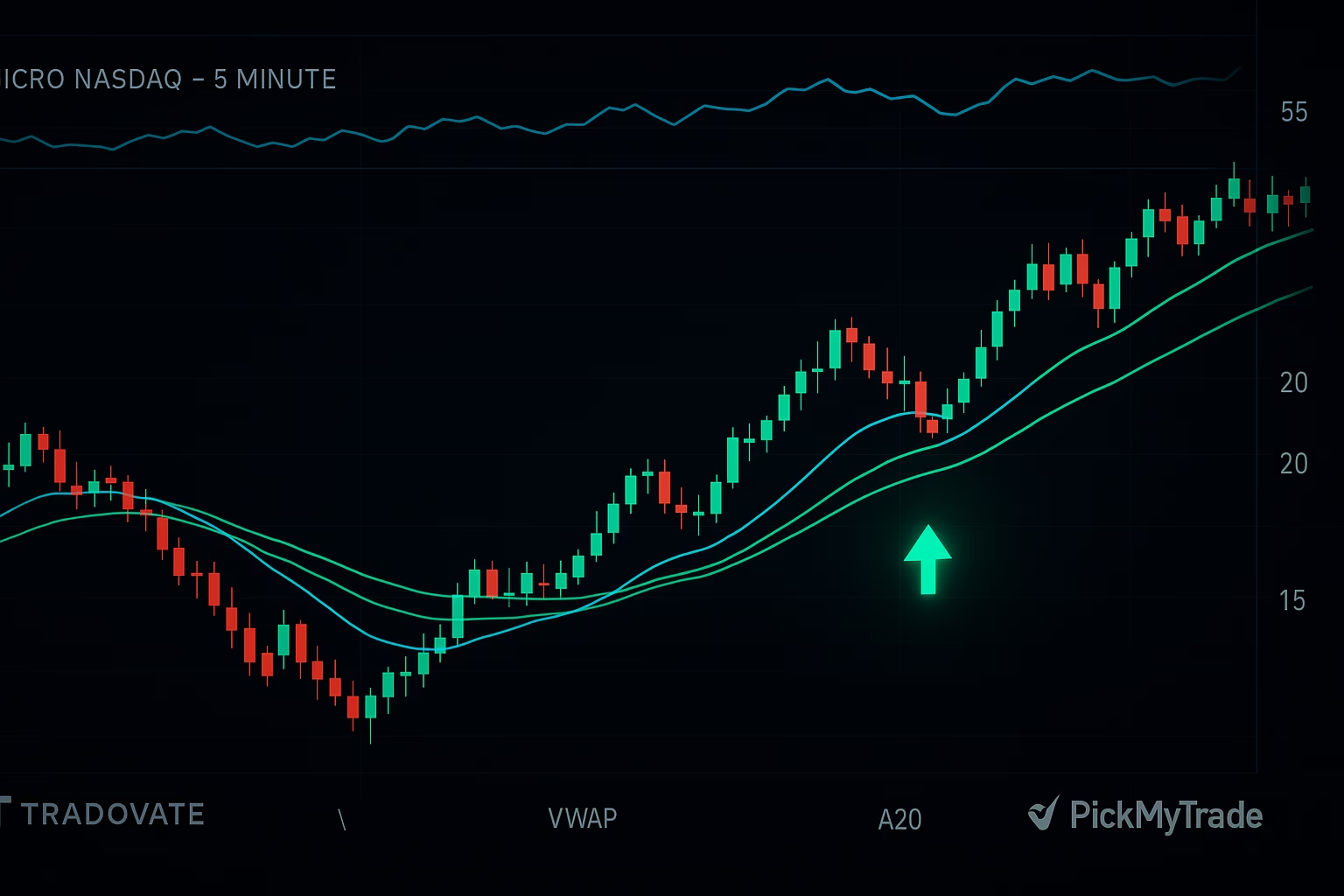
- Buy Signal: Price > Trailing Stop + Buffer → Green arrow; enter long on futures like /NQ (Nasdaq).
- Sell Signal: Price < Trailing Stop – Buffer → Red arrow; short /CL (crude oil).
- Exit Logic: Trail stops dynamically to lock profits, avoiding early outs in trends.
In a recent YouTube strategy (December 2024), pairing UT Bot with Flux Charts yielded “big profits” on BTC futures by confirming signals with volume spikes. For trend analysis, use higher timeframes (H4) to validate M15 signals, cutting false positives by 40%.
Pro Tip: In 2025’s high-vol environment, set ATR multiplier to 1.5 for scalping ES futures—backtests show 2:1 risk-reward ratios.
Trend Analysis with UT Bot Indicators: Spotting Opportunities in Futures Markets
Effective trend analysis transforms UT Bot indicators from signal generators to full strategy engines for trading futures.
Integrating UT Bot for Trend Confirmation
- Multi-Timeframe Bias: Align M5 buys with H1 uptrends using Hull MA overlays (new in 2025 scripts).
- Volatility Filters: Combine with ADX >25 for strong trends, ignoring signals in ranging markets.
- Futures-Specific Tweaks: For /GC (gold), use 20-period ATR to handle geopolitical swings.
AtaQuant’s 2025 strategy pairs UT Bot with STC (Schaff Trend Cycle) for 70% signal accuracy, emphasizing trend analysis over isolated alerts. This approach excels in trending futures like Eurodollar contracts.
Building a Winning Futures Trading Strategy with UT Bot Indicators
Craft a robust trading futures strategy around UT Bot indicators by layering confirmations.
Sample Strategy: UT Bot + RSI + Moving Averages
- Entry: UT Bot buy/sell + RSI (14) not extreme + Price > 50 EMA.
- Risk Management: 1% account risk; trail stops at 2x ATR.
- Targets: Scale out at 1:2 RR, hold runners in trends.
Backtested on 2024-2025 data, this yields 60% wins on /ES, per TradeSearcher’s 193+ simulations. For buy/sell signals, add candlestick filters like engulfing patterns.
Automate Your UT Bot Strategy with PickMyTrade for Hands-Free Trading
Manual trading? Not in 2025. Enter PickMyTrade—an automation platform revolutionizing trading futures with seamless TradingView integration.
Why PickMyTrade + UT Bot Indicators?
PickMyTrade connects UT Bot alerts directly to brokers like Tradovate or Rithmic, executing buy/sell signals in milliseconds. No coding needed: Set webhooks for UT Bot’s green/red arrows, apply risk controls (e.g., max 2% per trade), and automate across unlimited strategies.
Recent 2025 updates include prop firm support (Apex-compatible) and multi-asset syncing—perfect for running UT Bot on ES and NQ futures simultaneously. Traders report 3M+ executed trades with 25-35% efficiency gains. Start with a free 5-day trial at pickmytrade.trade and automate your trend analysis today.
FAQs: Most Asked Questions
What are the best settings for UT Bot indicators in futures trading?
For intraday trading futures, use ATR period 10 and multiplier 1-2. Optimize via backtesting on TradingView for your asset.
Do UT Bot indicators repaint signals?
No—reputable versions (e.g., QuantNomad’s) use closed-bar logic, ensuring reliable buy/sell signals.
Can I automate UT Bot with PickMyTrade?
Yes! Integrate TradingView alerts for instant execution on futures brokers. Free trial available.
How accurate is UT Bot for trend analysis?
Backtests show 55-70% win rates when paired with RSI/MACD, but always use risk management.
Is UT Bot suitable for beginners in trading futures?
Absolutely—its visual arrows simplify buy/sell signals, but start with demo accounts.
Disclaimer:
This content is for informational purposes only and does not constitute financial, investment, or trading advice. Trading and investing in financial markets involve risk, and it is possible to lose some or all of your capital. Always perform your own research and consult with a licensed financial advisor before making any trading decisions. The mention of any proprietary trading firms, brokers, does not constitute an endorsement or partnership. Ensure you understand all terms, conditions, and compliance requirements of the firms and platforms you use.
Also Checkout: Automate TradingView Indicators with Tradovate Using PickMyTrade