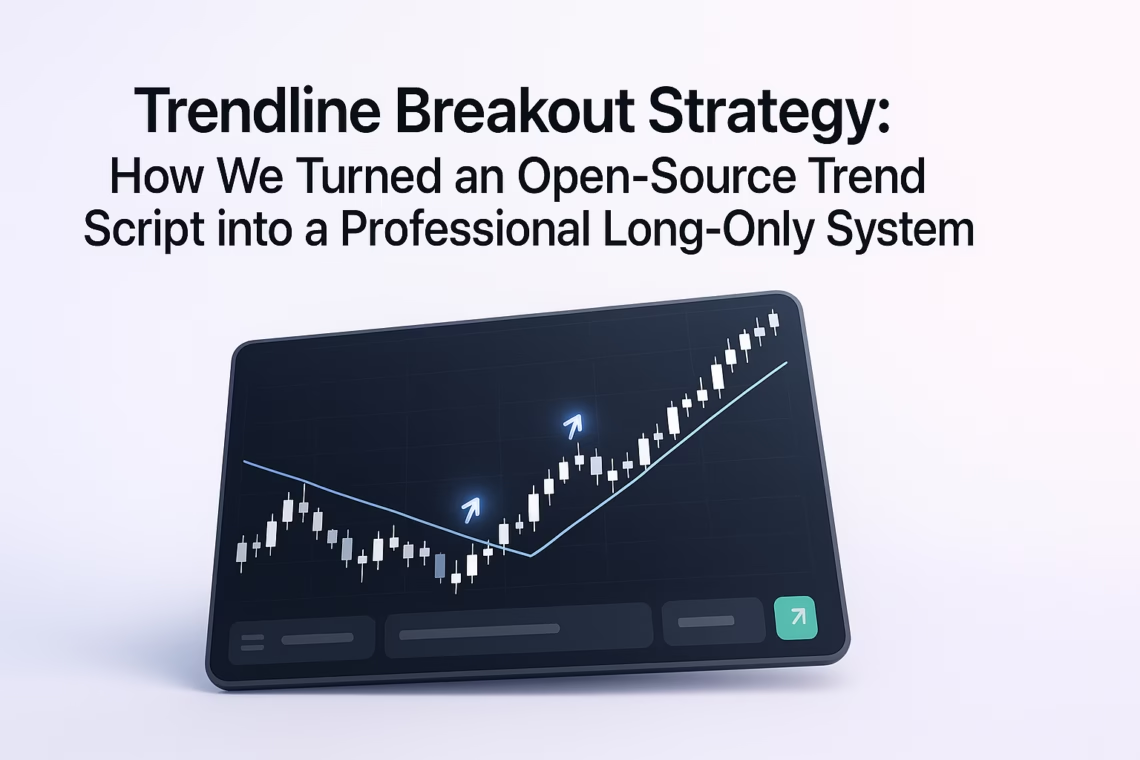
If you like clean price action, you’re going to like this one.
The PickMyTrade Advanced Trend Following Strategy is built on top of an excellent open-source Pine Script by @crazyrabbitheart that automatically draws and trades off trendlines. We took that script, wrapped it into a complete TradingView strategy, and added professional-grade risk and trade management so it’s ready for both backtesting and full automation.
Just like in our MACD + ADX post, the idea is simple:
An indicator shows you what might be a trade.
A strategy decides when to enter, how much to risk, where to exit, and when to stand aside.
In this post we’ll walk through:
- How the trendline breakout logic actually works
- The risk and position-sizing engine we added
- Real backtest performance across stocks, crypto, forex, and futures
- How to automate everything with PickMyTrade
From Trendline Indicator to Complete Strategy
Original Idea (by @crazyrabbitheart)
The original script focuses on one thing and does it very well:
- Automatically detecting downtrend resistance lines
- Validating them using multiple touches
- Entering long when price breaks above that trendline
It’s pure price action – no oscillators, no lagging filters. Great for visual discretionary trading and semi-automated entries.
What We Added
We turned it into a full TradingView strategy with automation-grade features:
Trend & Entry Logic (core kept from original)
- Automatic detection of downtrend lines using pivot highs
- Configurable pivot length for trend detection
- Touch count requirement (e.g., 3 touches) to validate the trendline
- Optional extra pivot validation for stricter trendlines
- Session filter so the system only trades during specific hours
Risk & Position Management (our enhancements)
- Fixed dollar-based risk per trade (default: $100)
- Automatic position sizing based on stop distance
- Pivot-based stop loss with optional buffer
- Three different take-profit modes:
- Risk/Reward ratio (e.g., 1.5R)
- Lookback-based exits
- Fibonacci extension targets (multi-level scaling)
- Optional trailing stop using new pivot lows
- Multi-trend mode so it can track and trade multiple simultaneous breakouts
With that, you get a pure price-action strategy that:
- Only buys strong, confirmed breakouts
- Sizes each trade based on risk, not emotion
- Handles exits mechanically from start to finish
Understanding Profit Factor (Again)
Just like in the MACD article, one of the key metrics here is Profit Factor:
Profit Factor = Gross Profit ÷ Gross Loss
- PF > 1.0 → profitable
- PF > 1.5 → solid
- PF > 2.0 → excellent
In a trend strategy like this, we care less about being right on every trade and more about:
- Cutting losers at logical pivots
- Letting winners run into clean trend legs
So Profit Factor and average R:R tell us more than raw win rate.
Backtest Results: Stocks, Crypto, Forex & Futures
All tests use the same default parameters (3 touches, risk–reward 1.5R, $100 risk per trade, session 09:00–18:00 where applicable).
Numbers are from TradingView Strategy Tester using the script below.
AAPL – 5 Minute (NASDAQ)
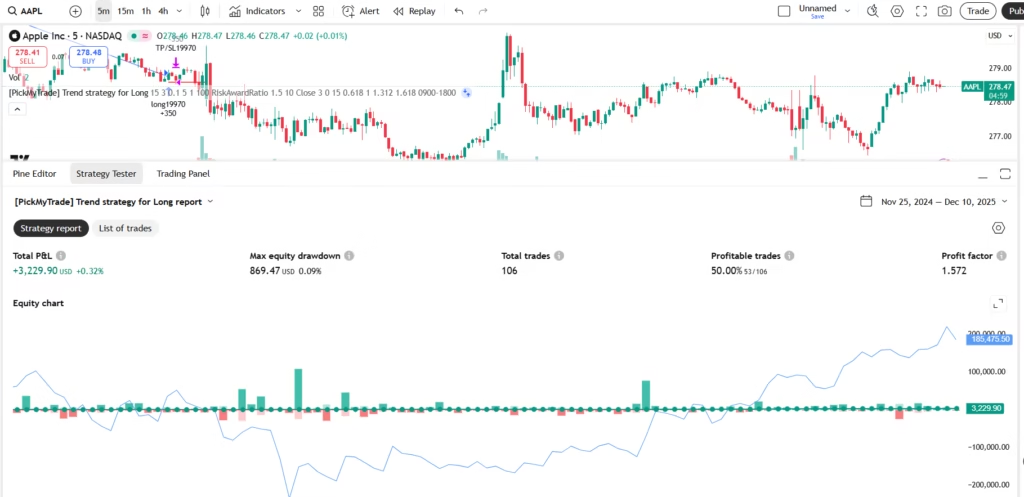
- Total P&L: +$3,229.90
- Max Equity Drawdown: $869.47
- Total Trades: 106
- Win Rate: 50.00% (53 / 106)
- Profit Factor: 1.572
Comment:
Even with very conservative dollar risk, AAPL shows a strong profit factor and a clean equity curve, with half the trades profitable and losers capped by pivot-based stops.
SOLUSDT – 1 Hour (Binance)
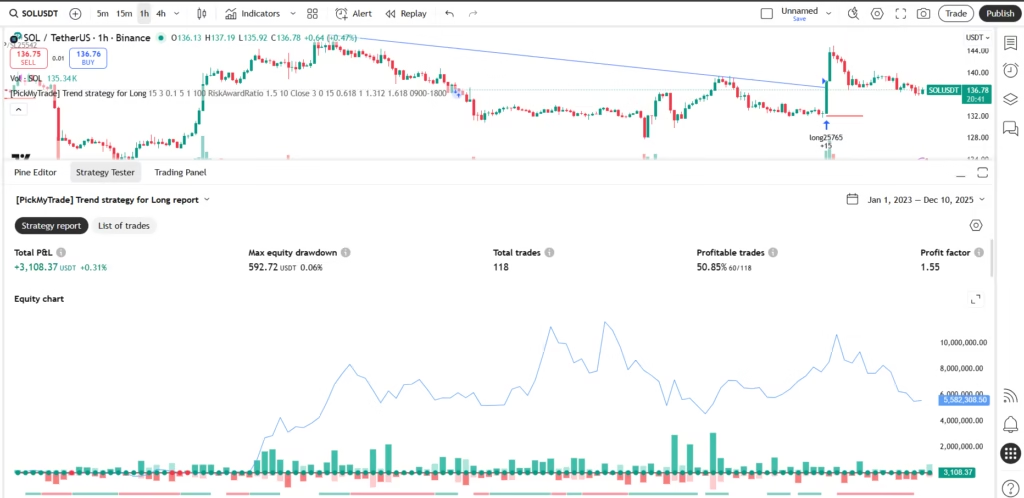
- Total P&L: +3,108.37 USDT
- Max Equity Drawdown: 592.72 USDT
- Total Trades: 118
- Win Rate: 50.85% (60 / 118)
- Profit Factor: 1.55
Comment:
SOL is a volatile trending crypto, and the strategy handles it nicely – profit factor stays around 1.5 with a drawdown that is small relative to total movement. Trendline breakouts really shine on coins that trend hard after consolidation.
EURUSD – 15 Minute (Tickmill)
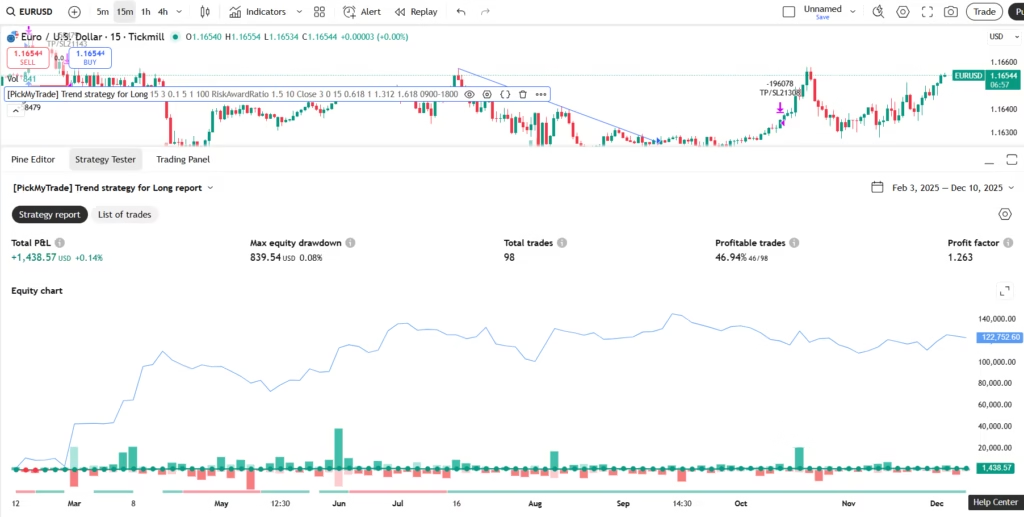
- Total P&L: +1,438.57 USD
- Max Equity Drawdown: $839.54
- Total Trades: 98
- Win Rate: 46.94% (46 / 98)
- Profit Factor: 1.263
Comment:
FX is choppier, so the win rate dips just under 50%, but the strategy is still comfortably profitable. This is where touch count and session filtering help filter noisy London/NY overlaps.
MNQ – 5 Minute (Micro Nasdaq Futures, CME)
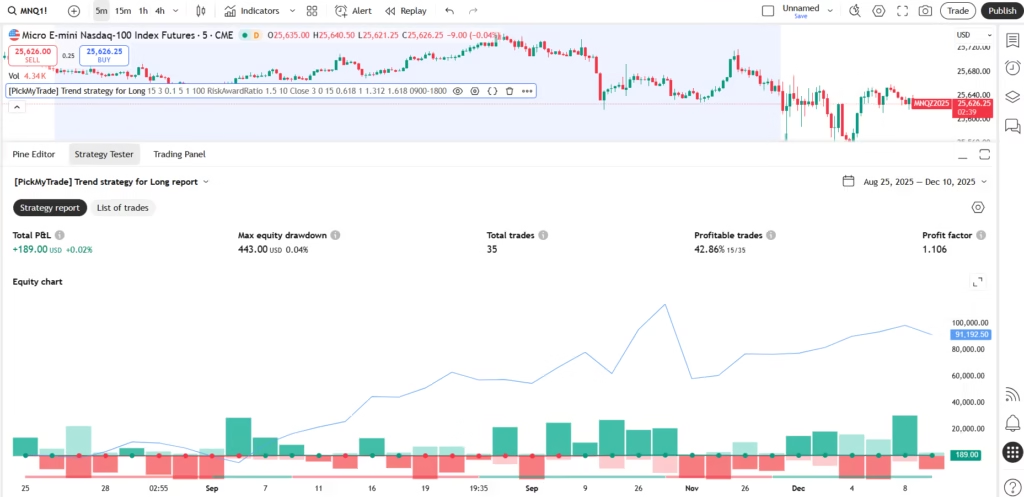
- Total P&L: +$189.00 USD
- Max Equity Drawdown: $443.00
- Total Trades: 35
- Win Rate: 42.86% (15 / 35)
- Profit Factor: 1.106
Comment:
Short test window and a volatile index future, yet still positive with PF > 1.0. Tightening parameters (higher touch count, enabling extra pivot validation) usually improves PF here.
Key Takeaways from the Tests
- Consistent Profit Factor Across Markets
Stocks, crypto, FX, and futures all show PF > 1.1, with the best performers (AAPL & SOL) around 1.55–1.57 using the same default settings. - You Don’t Need a Huge Win Rate
Win rates hover around 45–51%, yet the strategies remain profitable. The edge comes from logical stops + asymmetric targets, not trying to be right all the time. - Trend Markets Reward the Strategy Most
SOLUSDT and AAPL – both capable of strong, clean trends – deliver the best numbers. Exactly what you’d expect from a trendline breakout system. - Risk Is Contained by Construction
Every trade starts with:- Pre-defined dollar risk
- Stop loss at a structural pivot low
- Optional buffer and trailing stop
Drawdowns in the tests stay modest relative to the number of trades taken.
- One Strategy, Many Markets
With no indicator soup and no asset-specific config, this is a good “core” system you can apply across stocks, crypto, FX and index futures with only minor tuning (timeframe, touch count, session hours).
How the Trendline Strategy Actually Works
Here’s the high-level logic behind the Pine Script you shared.
1. Pivot Detection & Trendline Building
- The script finds pivot highs using a configurable length (
pivotLength, default 15). - When a new pivot high forms below the previous pivot high, it assumes a downtrend and draws a line between them.
- It then checks how many candles:
- Touch or slightly pierce that line
- Or come within a small percentage buffer (
valid)
If the number of touches is ≥ touchNum (default 3), the line is considered a valid downtrend resistance.
Optional: a second pivot length (plen) can be used to demand an extra confirming swing between those two highs – a stricter filter for “real” trendlines.
2. Entry: Breakout Above a Valid Trendline
A long entry is triggered when:
- The current bar closes above the validated downtrend line
- The bar is within your active session (if the session filter is enabled)
- The maximum allowed number of open positions (
posNum) has not been reached
In multi-trend mode, this can happen on any active trendline. In single-trend mode, it only tracks one main line at a time.
3. Stop Loss: Pivot-Based
To place the stop:
- The script searches backward through recent pivot lows (
plenforsl) - It finds the most recent low that makes sense as structural support
- Optional offset (
offsetForSL) is subtracted to add a safety buffer - The stop is never allowed above the bar’s low (basic sanity check)
This gives you market-based stops instead of random fixed ticks.
4. Position Sizing: Dollar Risk Model
Once entry and stop are known:
Risk per trade = riskAmount   (e.g., $100)

Qty = floor( riskAmount / |Entry - Stop| / syminfo.pointvalue )
- If calculated size is ≤ 0 (risk too small vs. stop distance) → no trade,
unless you enable Default Contract Size, in which case it forces 1 unit.
This keeps risk consistent across markets and volatility regimes.
5. Take Profit Options
You can choose 1 of 3 TP styles:
a) Risk/Reward Ratio (default)
- TP = Entry + (Entry − Stop) ×
riskAwardRatio(1.5R by default) - A simple, robust rule that works across most instruments.
b) Lookback-Based Exit
- No fixed TP limit – only a stop.
- The strategy closes all positions when:
- Price makes the lowest low (or close) of the last
lookBackCandlesbars in a long trade.
- Price makes the lowest low (or close) of the last
- Great for swing trading, letting winners run until structure breaks.
c) Fibonacci Extensions
- It finds a swing high (
phFib) above the trade and calculates:- 0.618, 1.0, 1.312, 1.618 extensions between that high and your stop.
- As price breaks above these levels, it marks them as triggered.
- When price later closes back below the highest triggered level, the strategy exits.
This effectively creates a tiered TP system, letting you hold into strong trends while still banking gains.
6. Trailing Stop (Optional)
When enabled:
- If a new pivot low (
plsl) forms above your original stop level, - And price then drops back below that pivot,
- The strategy exits the trade.
That turns newly formed higher lows into dynamic trailing stops.
7. Session Control
For intraday traders:
- You can specify a session (e.g.
"0900-1800") - The strategy will:
- Only open trades during those hours
- Optionally close all positions at session end
Great if you want to avoid overnight gaps or news.
The Actual Strategy Code (Pine Script v5)
Here’s the complete script, including original license and credit:
// This work is licensed under a Attribution-NonCommercial-ShareAlike 4.0 International (CC BY-NC-SA 4.0) https://creativecommons.org/licenses/by-nc-sa/4.0/
// © crazyrabbitheart

//@version=5
strategy("[PickMyTrade] Trend strategy for Long", overlay = true, pyramiding = 1000, process_orders_on_close = true, calc_on_every_tick = true, max_bars_back = 5000, max_lines_count = 500, max_labels_count = 500)

pivotLength = input.int(15, title = "pivot Length For Trend")
touchNum = input.int(3, title = "Touch Number")
valid = input.float(0.1, title = "valid percentage")
enablePivotToCheck = input.bool(false, title = "Enable Pivot To Valid")
plen = input.int(5, title = "pivot Length For valid")

isMulti = input.bool(true, title = "Enable Multi Trend")
posNum = input.int(1, title = "position number")

riskAmount = input.int(defval = 100, title = "Risk Amount", group = "strategy", minval = 1)
EnableContractSizeByDefault = input.bool(false, title = "Enable Default Contract Size")
setMethodForTP = input.string(defval = "RiskAwardRatio", title = "Set TP Method", options = ["RiskAwardRatio", "LookBackCandles", "Fibonacci"])
riskAwardRatio = input.float(defval = 1.5, title = "riskAwardRatio", group = "strategy", minval = 1.0)
lookBackCandles = input.int(defval = 10, title = "Look Back Candles", minval =1)
// nextCandles = input.int(1, title = "candles to check breakout")
sourceForTP = input.string(defval = "Close", title = "Source for TP", options = ["Close", "High/Low"])
enabledSL = input.bool(true, title = "Turn On/Off SL")
plenforsl = input.int(3, title = "pivot length for sl")
offsetForSL = input.float(0.0, title = "Buffer For SL", minval = 0.0)
enabledTrailing = input.bool(false, title = "Turn On/Off trailing stop")

lengthForFib = input.int(15, title = "Pivot length for Fibonacci", group = "Fibonacci")
// isFib1 = input.bool(true, title = "", group = "Fibonacci", inline = "Fibonacci1")
fibLevel1 = input.float(0.618, title = "Pivot length for Fibonacci", group = "Fibonacci", inline = "Fibonacci1")
// isFib2 = input.bool(false, title = "", group = "Fibonacci", inline = "Fibonacci2")
fibLevel2 = input.float(1, title = "Pivot length for Fibonacci", group = "Fibonacci", inline = "Fibonacci2")
// isFib3 = input.bool(false, title = "", group = "Fibonacci", inline = "Fibonacci3")
fibLevel3 = input.float(1.312, title = "Pivot length for Fibonacci", group = "Fibonacci", inline = "Fibonacci3")
// isFib4 = input.bool(false, title = "", group = "Fibonacci", inline = "Fibonacci4")
fibLevel4 = input.float(1.618, title = "Pivot length for Fibonacci", group = "Fibonacci", inline = "Fibonacci4")

enabledSession = input.bool(false, title = "", group = "Session", inline = "Session")
i_sess = input.session("0900-1800", "Session", group = "Session", inline = "Session")

t = time(timeframe.period, i_sess)
bgcolor(time == t and enabledSession ? color.new(color.white, 95) : na)

ph = ta.pivothigh(high, pivotLength, pivotLength)
pl = ta.pivotlow(low, pivotLength, pivotLength)

var phh = 0.0
var pll = 0.0

phh := na(ph) ? phh[1] : ph     //pivot high value
pll := na(pl) ? pll[1] : pl     //pivot low value

var phbar = 0
var plbar = 0

phbar := na(ph) ? phbar[1] : bar_index - pivotLength    // pivot high bar_index
plbar := na(pl) ? plbar[1] : bar_index - pivotLength    // pivot low bar_index

phbar := na(phbar) ? 0 : phbar
plbar := na(plbar) ? 0 : plbar

pph = ta.pivothigh(high, plen, plen)    // pivot high for valid
ppl = ta.pivotlow(low, plen, plen)      // pivot low for valid

var pphbar = 0
var pplbar = 0

pphbar := na(pph) ? pphbar[1] : bar_index - plen    // pivot high bar_index for valid
pplbar := na(ppl) ? pplbar[1] : bar_index - plen    // pivot low bar_index for valid

h = ta.pivothigh(high, plenforsl, plenforsl)        //pivot high for SL
l = ta.pivotlow(low, plenforsl, plenforsl)          //pivot low for SL

var phsl = 0.
var plsl = 0.

phsl := na(h) ? phsl[1] : h
plsl := na(l) ? plsl[1] : l

h := ta.pivothigh(high, lengthForFib, lengthForFib)
l := ta.pivotlow(low, lengthForFib, lengthForFib)

var phFib = 0.
var plFib = 0.

phFib := na(h) ? phFib[1] : h
plFib := na(l) ? plFib[1] : l

// ------------- Multi-trend mode -------------
if isMulti
    var line[] trendline = array.new_line()
    var int[] distance = array.new_int()
    var float[] stepY = array.new_float()
    var int[] startPointX = array.new_int()
    var float[] startPointY = array.new_float()

    if not na(ph) and phh < phh[1]
        dis = bar_index - phbar[1]
        step = (phh[1] - phh) / (phbar - phbar[1])
        y = phh[1] - step * (bar_index - phbar[1])

        n = 0
        for int i = 0 to dis
            pricen = y + i * step
            if high[i] > pricen
                n := n + 1
            else
                if (pricen - high[i]) < ((high[i] - low[i]) * valid / 100)
                    n := n + 1
        isValidLine = n >= touchNum ? true : false

        if enablePivotToCheck
            isValidLine := isValidLine and (pphbar[bar_index - phbar] < phbar and pphbar[bar_index - phbar] > phbar[1]) ? true : false

        if isValidLine
            array.push(trendline, line.new(phbar[1], phh[1], bar_index, y, xloc = xloc.bar_index))
            array.push(distance, dis)
            array.push(stepY, step)
            array.push(startPointX, phbar[1])
            array.push(startPointY, phh[1])

    var string[] entryId = array.new_string()
    var float[] slPerEntry = array.new_float()
    var string[] fibLevel = array.new_string()
    var float[] isFibTriggered = array.new_float()

    i = 0
    for tline in trendline
        y2 = array.get(startPointY, i) - array.get(stepY, i) * (bar_index - array.get(startPointX, i))
        line.set_xy2(tline, bar_index, y2)
        if close > y2 and ((timeframe.isintraday and time == t and enabledSession) or not timeframe.isintraday or not enabledSession)
            if strategy.opentrades < posNum
                j = 0
                minl = plsl
                while close < plsl[j]
                    j := j + 1
                    minl := plsl[j]
                    if j == 1000
                        minl := low
                        break

                minl := offsetForSL > 0 ? minl - offsetForSL : minl
                minl := low > minl ? minl : low
                qtyLong = math.floor((riskAmount / math.abs(close - minl)) / syminfo.pointvalue)
                if (not EnableContractSizeByDefault and qtyLong <= 1) or qtyLong < 0
                    qtyLong := 0
                else if EnableContractSizeByDefault and qtyLong <= 1
                    qtyLong := 1
                takeProfitLong = close + (close - minl) * riskAwardRatio
                entryId_ = "long"+str.tostring(bar_index)
                strategy.entry(entryId_, strategy.long, qtyLong)
                array.push(entryId, entryId_)

                sl = line.new(x1=bar_index, y1=minl, x2=bar_index + 10, y2=minl, color=color.red, width=2)

                if setMethodForTP == "Fibonacci"
                    k = 1
                    q = phFib

                    while close > phFib[k]
                        k := k + 1
                        q := phFib[k]
                        if k == 1000
                            q := close
                            break

                    l1 = (q - minl) * fibLevel1 + minl
                    l2 = (q - minl) * fibLevel2 + minl
                    l3 = (q - minl) * fibLevel3 + minl
                    l4 = (q - minl) * fibLevel4 + minl

                    fl1 = line.new(x1=bar_index, y1=l1, x2=bar_index + 10, y2=l1, color=color.green, width=1)
                    fl2 = line.new(x1=bar_index, y1=l2, x2=bar_index + 10, y2=l2, color=color.green, width=1)
                    fl3 = line.new(x1=bar_index, y1=l3, x2=bar_index + 10, y2=l3, color=color.green, width=1)
                    fl4 = line.new(x1=bar_index, y1=l4, x2=bar_index + 10, y2=l4, color=color.green, width=1)

                    strlvl = str.tostring(l1) + "," + str.tostring(l2) + "," + str.tostring(l3) + "," + str.tostring(l4)
                    array.push(fibLevel, strlvl)
                    array.push(isFibTriggered, 0.0)

                if enabledSL
                    if setMethodForTP == "RiskAwardRatio" or setMethodForTP == "Fibonacci"
                        strategy.exit("TP/SL" + str.tostring(bar_index), entryId_, stop=minl, limit=takeProfitLong)
                    else if setMethodForTP == "LookBackCandles"
                        strategy.exit("TP/SL" + str.tostring(bar_index), entryId_, stop=minl)

                array.push(slPerEntry, minl)

            array.remove(trendline, i)
            array.remove(distance, i)
            array.remove(stepY, i)
            array.remove(startPointX, i)
            array.remove(startPointY, i)
        i := i + 1

    exitLongCondition = false
    exitShortCondition = false

    if sourceForTP == "Close"
        exitLongCondition := close == ta.lowest(close, lookBackCandles+1) and open > close
        exitShortCondition := close == ta.highest(close, lookBackCandles+1) and open < close
    else
        exitLongCondition := low == ta.lowest(low, lookBackCandles+1) and open > close
        exitShortCondition := high == ta.highest(high, lookBackCandles+1) and open < close

    if setMethodForTP == "LookBackCandles"
        if (strategy.position_size > 0 and exitLongCondition) or (strategy.position_size < 0 and exitShortCondition)
            strategy.close_all()
            array.clear(entryId)
            array.clear(slPerEntry)
            array.clear(fibLevel)
            array.clear(isFibTriggered)

    if setMethodForTP == "Fibonacci"
        i := 0
        for isTrig in isFibTriggered
            if isTrig > 0 and close < isTrig and open < isTrig
                strategy.close_all()
                array.clear(entryId)
                array.clear(slPerEntry)
                array.clear(fibLevel)
                array.clear(isFibTriggered)
            i := i + 1

        i := 0
        for fib in fibLevel
            a = str.split(fib, ",")
            if array.size(a) > 0
                for k = 0 to array.size(a) - 1
                    if close > str.tonumber(array.get(a, k)) and array.get(isFibTriggered, i) < str.tonumber(array.get(a, k))
                        array.set(isFibTriggered, i, str.tonumber(array.get(a, k)))
            i := i + 1

    i := 0
    if enabledTrailing
        for slPerEntry_ in slPerEntry
            if plsl > slPerEntry_ and close < plsl
                strategy.close(array.get(entryId, i))
                array.remove(entryId, i)
                array.remove(slPerEntry, i)
                array.remove(fibLevel , i)
                array.remove(isFibTriggered, i)
            i := i + 1

    if na(t) and enabledSession
        strategy.close_all()
        array.clear(entryId)
        array.clear(slPerEntry)
        array.clear(fibLevel)
        array.clear(isFibTriggered)

// ------------- Single-trend mode -------------
else
    var line line1 = na
    var hvalid = false
    var distanceh = 0
    var steph = 0.
    var startLineXPointh = 0
    var startLineYPointh = 0.

    if not na(ph) and phh < phh[1] and not hvalid
        distanceh := bar_index - phbar[1]
        steph := (phh[1] - phh) / (phbar - phbar[1])
        y = phh[1] - steph * (bar_index - phbar[1])
        line1 := line.new(phbar[1], phh[1], bar_index, y, xloc = xloc.bar_index)
        startLineXPointh := phbar[1]
        startLineYPointh := phh[1]

        n = 0
        for int i = 0 to distanceh
            pricen = line.get_price(line1, bar_index - i)
            if high[i] > pricen
                n := n + 1
            else
                if (pricen - high[i]) < ((high[i] - low[i]) * valid / 100)
                    n := n + 1
        hvalid := n >= touchNum ? true : false

        if enablePivotToCheck
            hvalid := hvalid and (pphbar[bar_index - phbar] < phbar and pphbar[bar_index - phbar] > phbar[1]) ? true : false
    else
        distanceh := distanceh[1]
        steph := steph[1]
        startLineXPointh := startLineXPointh[1]
        startLineYPointh := startLineYPointh[1]
        hvalid := hvalid[1]

    var entryIndexh = 0
    var entrySl = 0.
    var fibLevel = ""
    var isFibTriggered = 0.

    if hvalid
        y2 = startLineYPointh - steph * (bar_index - startLineXPointh)
        line.set_xy2(line1, bar_index, y2)
        if close > y2 and ((timeframe.isintraday and time == t and enabledSession) or not timeframe.isintraday or not enabledSession)
            if strategy.opentrades <= posNum
                j = 0
                minl = plsl
                while close < plsl[j]
                    j := j + 1
                    minl := plsl[j]
                    if j == 1000
                        minl := low
                        break
                minl := offsetForSL > 0 ? minl - offsetForSL : minl
                minl := low > minl ? minl : low
                qtyLong = math.floor((riskAmount / math.abs(close - minl)) / syminfo.pointvalue)
                if (not EnableContractSizeByDefault and qtyLong <= 1) or qtyLong < 0
                    qtyLong := 0
                else if EnableContractSizeByDefault and qtyLong <= 1
                    qtyLong := 1
                takeProfitLong = close + (close - minl) * riskAwardRatio
                strategy.entry("long"+str.tostring(bar_index), strategy.long, qtyLong)
                entrySl := minl

                line3 = line.new(x1=bar_index, y1=minl, x2=bar_index + 10, y2=minl, color=color.red, width=2)
                entryIndexh := bar_index

                if setMethodForTP == "Fibonacci"
                    k = 1
                    q = phFib

                    while close > phFib[k]
                        k := k + 1
                        q := phFib[k]
                        if k == 1000
                            q := close
                            break

                    l1 = (q - minl) * fibLevel1 + minl
                    l2 = (q - minl) * fibLevel2 + minl
                    l3 = (q - minl) * fibLevel3 + minl
                    l4 = (q - minl) * fibLevel4 + minl

                    fl1 = line.new(x1=bar_index, y1=l1, x2=bar_index + 10, y2=l1, color=color.green, width=2)
                    fl2 = line.new(x1=bar_index, y1=l2, x2=bar_index + 10, y2=l2, color=color.green, width=2)
                    fl3 = line.new(x1=bar_index, y1=l3, x2=bar_index + 10, y2=l3, color=color.green, width=2)
                    fl4 = line.new(x1=bar_index, y1=l4, x2=bar_index + 10, y2=l4, color=color.green, width=2)

                    fibLevel := str.tostring(l1) + "," + str.tostring(l2) + "," + str.tostring(l3) + "," + str.tostring(l4)
                    isFibTriggered := 0.

                if enabledSL
                    if setMethodForTP == "RiskAwardRatio" or setMethodForTP =="Fibonacci"
                        strategy.exit("TP/SL" + str.tostring(bar_index), "long"+str.tostring(bar_index), stop=minl, limit=takeProfitLong)
                    else if setMethodForTP == "LookBackCandles"
                        strategy.exit("TP/SL" + str.tostring(bar_index), "long"+str.tostring(bar_index), stop=minl)
            hvalid := false

    exitLongCondition = false
    exitShortCondition = false

    if sourceForTP == "Close"
        exitLongCondition := close == ta.lowest(close, lookBackCandles+1) and open > close
        exitShortCondition := close == ta.highest(close, lookBackCandles+1) and open < close
    else
        exitLongCondition := low == ta.lowest(low, lookBackCandles+1) and open > close
        exitShortCondition := high == ta.highest(high, lookBackCandles+1) and open < close

    if setMethodForTP == "LookBackCandles" and bar_index > entryIndexh
        if (strategy.position_size > 0 and exitLongCondition)
            strategy.close_all()

        if (strategy.position_size < 0 and exitShortCondition)
            strategy.close_all()

    if setMethodForTP == "Fibonacci"
        if close < isFibTriggered and open < isFibTriggered
            strategy.close_all()

        a = str.split(fibLevel, ",")
        if array.size(a) > 0
            for k = 0 to array.size(a) - 1
                if close > str.tonumber(array.get(a, k)) and isFibTriggered < str.tonumber(array.get(a, k))
                    isFibTriggered := str.tonumber(array.get(a, k))

    if enabledTrailing
        if plsl > entrySl and close < plsl
            strategy.close_all()

    if na(t) and enabledSession
        strategy.close_all()
Automate It with PickMyTrade
Backtesting is great. Automation is better.
Because this is written as a TradingView strategy, you can:
- Turn it into alerts
- Use PickMyTrade to convert those alerts into live orders on your broker
Typical workflow:
- Add the strategy to your chart and adjust settings (risk, TP method, time window).
- In TradingView, create an alert based on “strategy order fills”.
- Point the alert to your PickMyTrade webhook URL.
- In PickMyTrade, map that alert to:
- Your broker & symbol
- Order type, quantity mode, etc.
From there:
- Every trendline breakout the strategy takes on TradingView becomes a live trade on your broker.
- Stops and targets are pre-defined in the script.
- You’re no longer glued to the screen waiting for the perfect breakout candle.
(Always start on demo / paper trading first.)
Final Thoughts & Disclaimers
We’ve taken a smart, open-source trendline concept by @crazyrabbitheart and wrapped it into a risk-controlled, automation-ready TradingView strategy that:
- Waits for confirmed multi-touch trendlines
- Enters only when price decisively breaks out
- Sizes positions by fixed dollar risk
- Manages exits with R:R, lookback, or Fibonacci
- Plays well across stocks, crypto, FX and futures
Still, the usual reminders apply:
- Backtests are historical, not guarantees.
- Live execution includes slippage, commissions, and human error.
- Markets evolve – no strategy works in every condition forever.
Use it as a framework, not a magic box:
- Risk 1–2% per trade
- Test per market and timeframe
- Demo first, real money later
You may also like:
UT Bot Indicators: Futures Trading Strategy
TradingView Alert Enhancement: Tools & Indicators