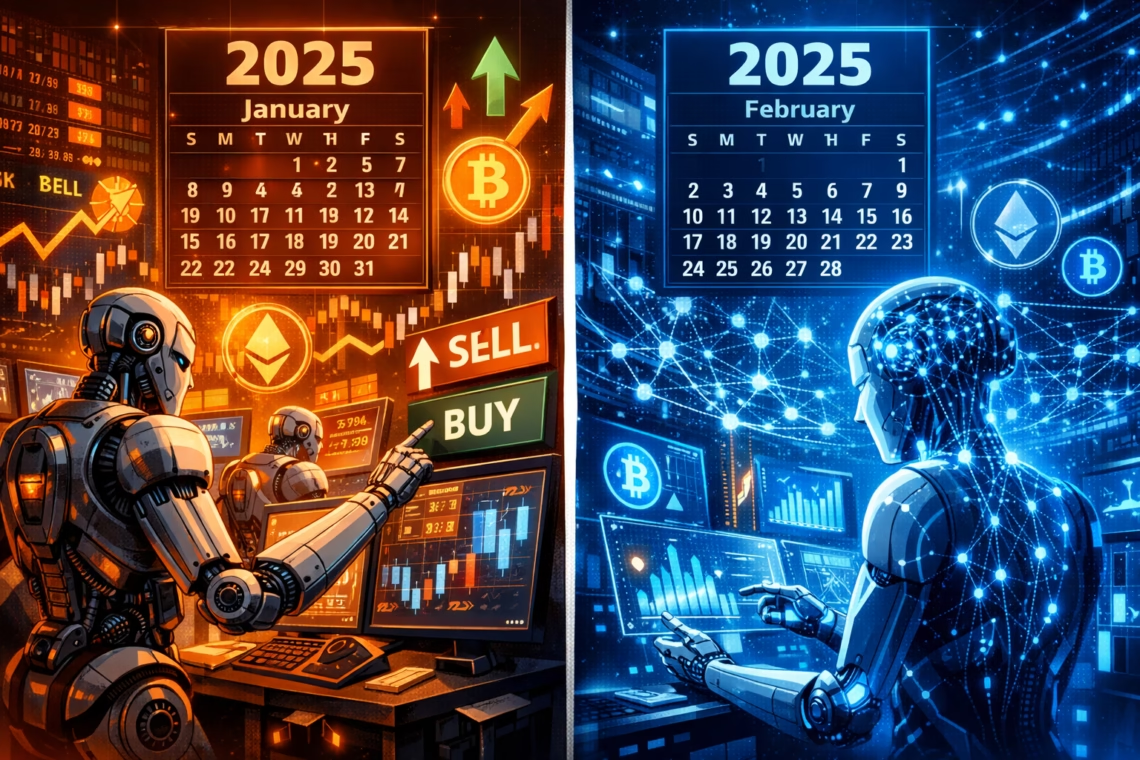
In the fast-paced world of finance, trading robots vs AI debates are heating up as we close out 2025. With algorithmic trading revenues surging to $16 billion globally, thanks to AI-driven innovations, traders are rethinking their strategies. Traditional trading robots execute predefined rules with precision, but AI trading agents—often called algo agents—are adapting in real-time, learning from market chaos like the recent $2 trillion sell-off. Whether you’re a day trader or long-term investor, understanding trading robots vs AI is key to staying ahead. In this guide, we’ll break down the differences, spotlight recent updates, and explore tools like PickMyTrade for automated trading success.
What Are Trading Robots in 2025?
Trading robots, also known as algorithmic trading bots, are automated software programs that follow strict, user-defined rules to execute trades. Think of them as tireless executors: they scan markets 24/7, spotting opportunities like arbitrage or trend-following based on indicators such as moving averages or RSI.
In 2025, these bots have evolved with faster execution speeds, handling millions of data points per second. Popular platforms like 3Commas and CryptoHopper dominate crypto spaces, offering backtesting and cloud-based deployment. They’re ideal for repetitive tasks but lack intuition—sticking rigidly to code, even in volatile swings.
Pros: Lightning-fast trades, emotion-free decisions, and easy customization for beginners. Cons: Vulnerable to black swan events, requiring constant tweaks.
Decoding AI Trading Agents: The Rise of Algo Agents
Enter AI trading agents, the smart evolution of automation. These algo agents use machine learning, neural networks, and reinforcement learning to not just follow rules but predict and adapt. They analyze vast datasets—including social sentiment, news, and geopolitical shifts—to refine strategies on the fly.
By mid-2025, agentic AI has transformed stock trading with use cases like autonomous execution and dynamic portfolio rebalancing, boosting returns by up to 359% in simulated multi-agent setups. Tools like Tickeron’s AI Agents employ multi-agent architectures for hedging and pattern recognition, outperforming legacy bots in uncertain markets.
Pros: Predictive power, adaptive risk management, and scalability for complex portfolios. Cons: Higher costs, data dependency, and the “black box” opacity that can spook regulators.
Trading Robots vs AI: Key Differences in Algo Agent Era
The core of trading robots vs AI boils down to rigidity versus intelligence. Here’s a 2025 breakdown:
Speed and Execution: Robots Take the Lead
Trading robots shine in high-frequency trading (HFT), executing orders in milliseconds with zero lag. AI agents, while fast, prioritize analysis—processing sentiment from X posts or news feeds before acting, which adds microseconds but enhances accuracy.
Adaptability and Learning: AI’s Edge
Robots falter in regime shifts, like the 2025 gold rush where prices spiked 29% YTD. Algo agents, powered by genetic algorithms, self-optimize, achieving 171% returns on volatile portfolios by learning from mistakes.
Risk Management: Smarter Safeguards
Both implement stop-losses, but AI dynamically adjusts exposure—reducing bets during dips via real-time volatility scans. Robots rely on static thresholds, risking overexposure in flash crashes.
| Aspect | Trading Robots | AI Trading Agents (Algo Agents) |
|---|---|---|
| Core Mechanism | Rule-based automation | Machine learning & adaptation |
| Best For | High-volume, repetitive trades | Predictive, volatile markets |
| 2025 Performance | Consistent 10-20% returns | Up to 359% in optimized setups |
| Risk Level | Medium (static rules) | Low (dynamic hedging) |
Click Here To Start Futures Trading Automation For Free
Recent Developments: Algo Agents Reshaping 2025 Markets
2025 has been a banner year for trading robots vs AI. Algorithmic trading hit $24.3 billion, fueled by AI-blockchain hybrids for transparent DeFi agents. Trends include:
- Agentic AI Boom: 9 key uses like signal generation and fraud detection, per Ampcome reports.
- Hybrid Models: Combining bots’ speed with AI’s smarts for 40% better profit/drawdown ratios.
- Retail Accessibility: Platforms now rival institutional tools, with AI forecasting memecoin surges.
These shifts underscore why algo agents are the future—projected to grow the market to $40.47 billion by 2029.
Benefits and Risks: Weighing Trading Robots vs AI
Benefits of Trading Robots: Cost-effective ($50/month setups), user-friendly, and reliable for grid/DCA strategies. Risks include overfitting to past data and cyber vulnerabilities.
AI Trading Agents’ Upside: Superior sentiment analysis and 24/7 autonomy, minimizing emotional trades. Drawbacks? Data biases and high setup complexity—success hinges on quality inputs.
In volatile 2025, hybrids mitigate risks while maximizing gains.
Spotlight: PickMyTrade – Powering Automation Trading
For traders bridging trading robots vs AI, PickMyTrade stands out as a game-changer in automation trading. This platform automates TradingView strategies on brokers like Tradovate and Rithmic, executing 3M+ trades with millisecond precision—no API coding needed. At $50/month, it supports unlimited algo agents, TP/SL automation, and multi-account management, blending robot efficiency with AI-like adaptability for futures and day trading.
Users rave about its seamless indicator automation, making it a top pick for 2025 retail traders seeking hassle-free scaling.
Choosing Between Trading Robots vs AI: Your 2025 Playbook
Short-term scalpers? Stick with robots for speed. Long-haul investors? Embrace algo agents for foresight. Test hybrids via demos—platforms like PickMyTrade offer risk-free trials.
As markets evolve, the winner isn’t one side; it’s integration. Start small, monitor performance, and let data guide you.
In conclusion, trading robots vs AI isn’t zero-sum—it’s synergy. With 2025’s AI surge, equip yourself with adaptive tools to thrive amid uncertainty.
Frequently Asked Questions (FAQs) on Trading Robots vs AI
What is the main difference between trading robots and AI trading agents?
Trading robots follow fixed rules for execution, while AI agents (algo agents) learn and adapt using machine learning for predictive decisions.
Are AI trading agents profitable in 2025?
Yes, with optimized setups yielding up to 359% returns, but success depends on data quality and risk management.
What are the risks of using trading robots?
Overreliance on outdated rules during market shifts and security breaches from API access.
How does PickMyTrade fit into trading robots vs AI?
It automates strategies like an advanced robot but integrates AI signals from TradingView for smarter, adaptive trading.
Can beginners use AI algo agents?
Absolutely—platforms simplify setup, but start with simulations to build confidence.
Disclaimer:
This content is for informational purposes only and does not constitute financial, investment, or trading advice. Trading and investing in financial markets involve risk, and it is possible to lose some or all of your capital. Always perform your own research and consult with a licensed financial advisor before making any trading decisions. The mention of any proprietary trading firms, brokers, does not constitute an endorsement or partnership. Ensure you understand all terms, conditions, and compliance requirements of the firms and platforms you use.
Also Checkout: Automate TradingView Indicators with Tradovate Using PickMyTrade