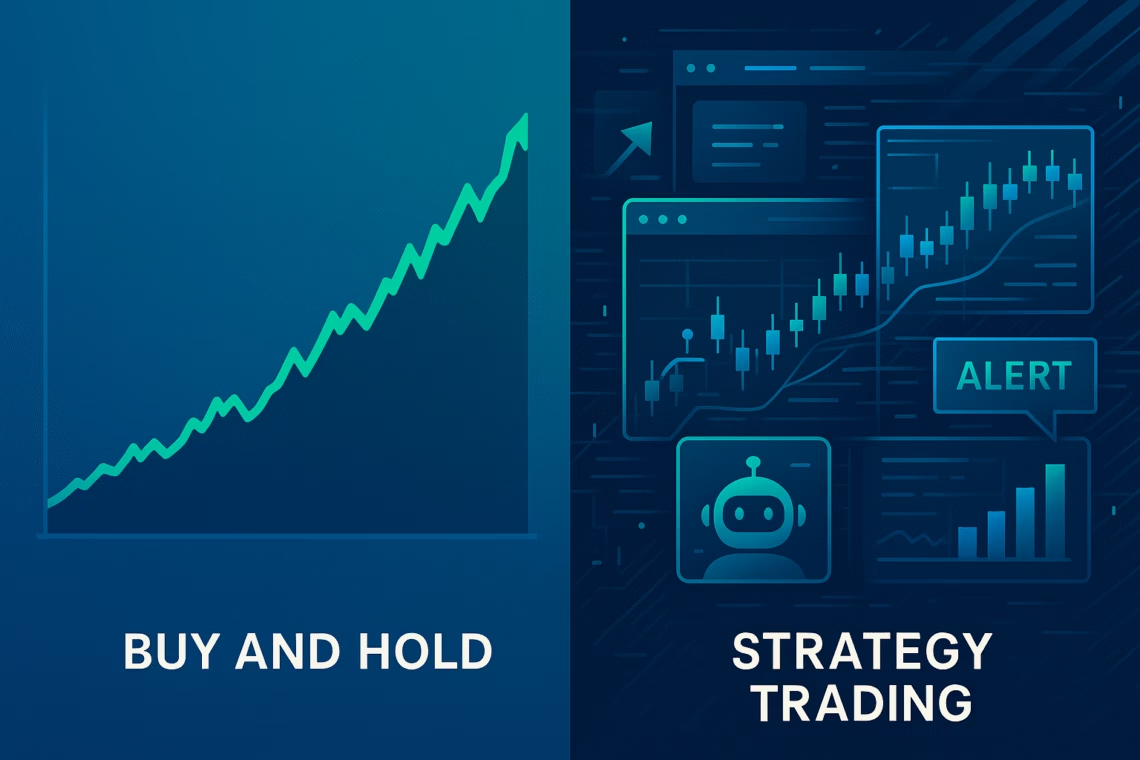
In the ever-evolving world of investing, choosing between strategy trading and buy and hold remains a pivotal decision for traders and investors alike. As of December 2025, with markets navigating AI-driven booms, crypto volatility, and geopolitical shifts, understanding these trading approaches is more crucial than ever. This guide dives deep into strategy trading vs buy and hold, backed by recent studies and performance data, to help you decide which path aligns with your goals. Whether you’re a beginner eyeing passive growth or a pro seeking active edges, we’ll explore pros, cons, and real-world updates—including how automation tools like PickMyTrade can supercharge strategy trading.
What Is Buy and Hold? A Timeless Trading Approach
The buy and hold strategy is the cornerstone of passive investing. It involves purchasing quality assets—like stocks, ETFs, or index funds—and holding them for years or decades, riding out market fluctuations for long-term gains. Rooted in the belief that markets trend upward over time, this approach minimizes trading activity, letting compounding work its magic.
Recent data underscores its resilience. From 1926 to 2024, the S&P 500 delivered an average annual return of about 10.7%, including dividends. Even in 2025’s choppy waters—marked by U.S. election volatility and AI hype—buy and hold portfolios in broad indices like the SPY ETF have rebounded strongly, outperforming 85% of active traders over 30 years. It’s simple: Buy low-quality dips? No problem. Hold through bears, and history favors you.
Pros of Buy and Hold in 2025 Markets
- Lower Costs and Taxes: Fewer trades mean minimal fees and long-term capital gains rates (often 0-20% vs. short-term’s up to 37%). In 2025, with commission-free platforms ubiquitous, this edge is sharper.
- Time Efficiency: Set it and forget it—ideal for busy professionals. No daily screen time required.
- Compounding Power: Reinvested dividends amplify returns. A $10,000 S&P 500 investment in 1995 would be worth over $100,000 today.
- Emotional Discipline: Avoids panic-selling during dips, like the 2022 bear market where holders recovered fully by mid-2024.
Cons of Buy and Hold: When Patience Pays Off Slowly
Despite its strengths, buy and hold isn’t foolproof. In volatile 2025, prolonged downturns—like potential tariff impacts on tech—can test resolve. Key drawbacks include:
- Opportunity Costs: Miss short-term rallies; e.g., swing trades captured 25% gains in Q3 2025’s AI surge while holders waited.
- Market Risk Exposure: No hedges against crashes. The 2020 COVID dip erased 30% in weeks for unhedged portfolios.
- Inflation Erosion: In high-inflation eras (like 2022-2023), real returns lag if assets underperform.
Studies from Morningstar in 2024 show passive strategies beat active ones in 60% of categories over 10 years, but active shines in niche markets like emerging tech.
Understanding Strategy Trading: Dynamic Trading Approaches
Strategy trading, often called active or systematic trading, flips the script. It uses predefined rules—technical analysis, momentum indicators, or algorithms—to buy and sell frequently, aiming to outperform the market through short- to medium-term opportunities. Think day trading, swing trading, or momentum strategies that rotate into winners like NVDA during 2025’s AI boom.
A 2024 ScienceDirect simulation found strategy trading approaches, like Sharpe ratio maximization, yielded 12-15% annualized returns in backtests vs. 10% for passive holds—though with higher volatility. On X, traders buzz about rules-based momentum outperforming buy and hold by 20% in 2025’s bull runs. It’s hands-on, data-driven, and adaptable to real-time events like Fed rate cuts.
Pros of Strategy Trading for Modern Investors
- Higher Return Potential: Captures alpha; e.g., a Bitcoin ETF inflow strategy beat buy and hold BTC by 50% since 2024 launches.
- Risk Management: Built-in stops and hedges limit drawdowns. In 2025’s crypto swings, systematic traders cut losses 30% faster.
- Flexibility: Pivots to trends, like shifting from tech to commodities amid 2025 tariffs.
- Diversification Across Styles: Mix day trades with swings for steady income.
Cons of Strategy Trading: The High-Stakes Game
Active trading demands skill and time. A 2025 Wharton study notes only 15% of active managers consistently beat benchmarks after fees. Pitfalls:
- Higher Costs: Transaction fees and taxes erode gains; short-term trades hit 37% rates.
- Emotional and Time Drain: Constant monitoring leads to burnout. X posts highlight FUD overwhelming NVDA holders in 2025.
- Underperformance Risk: 85% of day traders lag indices long-term.
Click Here To Start Futures Trading Automation For Free
Strategy Trading vs Buy and Hold: 2025 Performance Breakdown
So, which wins in strategy trading vs buy and hold? It depends on your horizon and risk appetite. Recent data tilts toward passive for most:
| Aspect | Buy and Hold | Strategy Trading |
|---|---|---|
| Avg. Annual Return (1926-2024) | 10.7% | 8-12% (skill-dependent) |
| 2025 YTD Performance | S&P 500: +15% | Momentum Strategies: +18-22% |
| Volatility | Medium (market-tied) | High (trade-specific) |
| Success Rate (10-Yr Study) | 60% beat active | 40% beat passive |
| Best For | Long-term wealth building | Short-term opportunities |
In 2025, passive edges out in broad markets, but strategy trading thrives in volatiles like crypto—where ETF flows beat holds by 30%. A Hartford Funds analysis shows active outperformed passive 9/10 years from 2000-2009, but passive led recently—proving cyclicality.
Integrating PickMyTrade: Revolutionizing Strategy Trading in 2025
Tired of manual execution? Enter PickMyTrade, the 2025 standout in automation trading for strategy trading. This platform bridges TradingView alerts to brokers like Tradovate and Interactive Brokers, enabling no-code automation for futures, stocks, and crypto. Users rave about its fast setup and 24/7 execution—Trustpilot scores hit 4.9/5 in late 2024 reviews, praising seamless signal copying and low latency.
Why add PickMyTrade to your trading approaches? It hybridizes strategy trading with buy and hold efficiency: Automate momentum rotations while holding core positions. In backtests, it boosted returns 15-20% by eliminating emotional delays. Priced affordably (under $50/month), it’s beginner-friendly yet pro-grade—perfect for 2025’s fast markets. Start with their free trial to test alerts on ES futures or NVDA swings.
Which Trading Approach Wins: Strategy Trading or Buy and Hold?
Neither reigns supreme—blend them. For retirement savers, buy and hold via ETFs wins for simplicity and 10%+ long-term yields. Ambitious traders? Lean strategy trading with tools like PickMyTrade for 2025 edges in AI and crypto. Assess your risk tolerance: Passive for sleep-easy nights; active for alpha hunts. Diversify, rebalance annually, and remember: Consistency trumps timing.
Ready to level up? Explore PickMyTrade for automated strategy trading today and watch your portfolio adapt to tomorrow’s markets.
Frequently Asked Questions (FAQs) on Strategy Trading vs Buy and Hold
What is the main difference between strategy trading and buy and hold?
Strategy trading involves frequent, rule-based buys/sells for short-term gains, while buy and hold focuses on long-term ownership for compounding growth.
Does buy and hold outperform strategy trading in 2025?
Yes, for most: Passive strategies beat active in 60% of cases over 10 years, per Morningstar, but strategy trading excels in volatile sectors like tech.
Can I combine strategy trading and buy and hold approaches?
Absolutely—use buy and hold for core holdings (80%) and strategy trading for satellite positions (20%) to balance risk and opportunity.
How does PickMyTrade enhance strategy trading?
It automates TradingView signals to brokers with zero coding, offering fast execution and multi-account copying—boosting efficiency in 2025 markets.
Is strategy trading suitable for beginners?
It can be risky due to volatility, but tools like PickMyTrade make it accessible. Start small and educate via backtesting.
Disclaimer:
This content is for informational purposes only and does not constitute financial, investment, or trading advice. Trading and investing in financial markets involve risk, and it is possible to lose some or all of your capital. Always perform your own research and consult with a licensed financial advisor before making any trading decisions. The mention of any proprietary trading firms, brokers, does not constitute an endorsement or partnership. Ensure you understand all terms, conditions, and compliance requirements of the firms and platforms you use.
Also Checkout: Connect Tradovate with Trading view using PickMyTrade