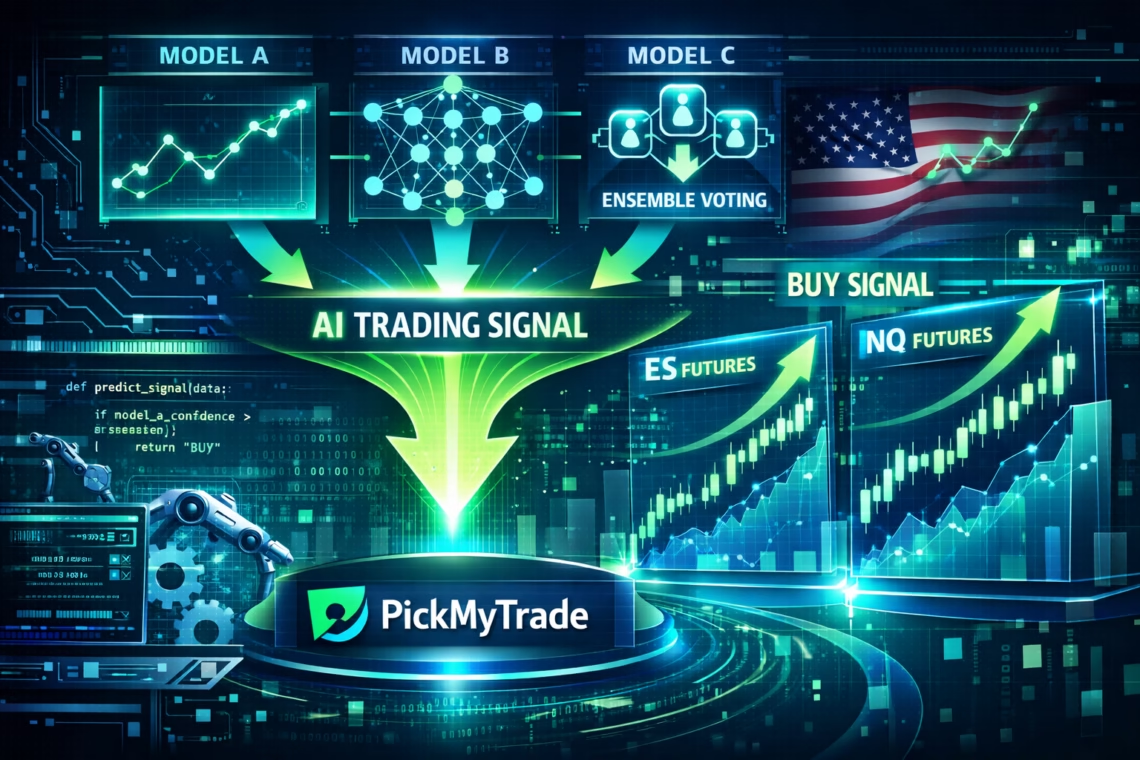
The Multi-Model Trading landscape in 2026 represents a significant evolution in algorithmic and quantitative trading. Traders and institutions increasingly adopt multi-model trading frameworks to combine diverse predictive approaches—such as statistical models, deep learning (e.g., LSTM, Transformers), ensemble methods (e.g., XGBoost with HMM voting), and reinforcement learning—for superior robustness, reduced overfitting, and better performance across volatile market regimes.
Recent research highlights breakthroughs like ensemble-HMM voting for regime shift detection, yielding improved risk-adjusted returns on indices like S&P 500 and Russell 3000 ETFs (2020–2025 data). Hybrid systems merging SVR, Random Forest, and LSTM for forecasting, alongside multi-agent AI where models “compete” in real-time (e.g., via platforms like FMZ Quant), show 15–20% outperformance over single models. Advances in AI-driven multi-strategy execution emphasize diversification to handle regime changes, with over 70% of top exchange trades now algorithmic or AI-based.
In this context, tools like PickMyTrade enable practical implementation of multi-model trading ideas through automation, particularly for US futures markets.
What is Multi-Model Trading?
Multi-model trading involves integrating multiple predictive or decision-making models rather than relying on a single algorithm. This ensemble approach mitigates weaknesses of individual models—e.g., linear regression’s limitations in nonlinear data or LSTM’s vulnerability to regime shifts—by aggregating outputs via voting, weighting, or dynamic selection.
Key benefits include:
- Enhanced accuracy through complementary strengths
- Better handling of market regimes (bull, bear, sideways)
- Reduced drawdowns via diversification
Recent Advances in Multi-Model Trading Frameworks (2025–2026)
2025–2026 saw key developments:
- Ensemble-HMM Voting Frameworks: Tree-based ensembles (e.g., XGBoost) combined with Hidden Markov Models detect regime shifts, enabling adaptive strategies with profit factors up to 1.57 on S&P 500 ETFs.
- AI Internal Competition Systems: Real-time multi-model arenas let diverse LLMs (e.g., DeepSeek, Qwen, Grok) compete, dynamically selecting the best for execution—boosting diversification and avoiding single-model blind spots.
- Hybrid Deep Learning Ensembles: Integrating economic indicators, temporal dependencies, and multi-timeframe analysis for robust forecasting in stocks and crypto.
- Multi-Agent and Reinforcement Learning: Teams of bots outperform solo algorithms by 15–20%, with dynamic optimization in volatile environments.
These innovations make multi-model trading essential for 2026, especially in high-frequency and futures contexts.
Click Here To Automate Futures Trading
Implementing Multi-Model Trading in US Futures Markets
US futures (e.g., E-mini S&P 500/ES, Nasdaq-100/NQ) benefit immensely from multi-model trading due to high liquidity and volatility. Combine models for signals (e.g., one for trend, another for mean-reversion), then automate execution.
PickMyTrade stands out as a leading tool for this. It automates TradingView strategies via webhooks to brokers like Tradovate, Rithmic, Interactive Brokers, and TradeStation—ideal for futures. Key features:
- Unlimited alerts and tickers (higher plans)
- Low-latency, 24/7 execution
- Risk controls, multi-account support
- No-code setup for signal-driven automation
Traders use PickMyTrade to run multi-strategy setups (e.g., SuperTrend for momentum + regime filters), achieving hands-free trading on US markets while complying with CFTC regulations through rules-based, auditable execution. It’s praised for scalping, day trading, and prop firm compatibility in 2026.
Advantages and Challenges of Multi-Model Trading
Advantages:
- Superior performance in varying conditions
- Risk mitigation via ensemble diversity
- Scalability with AI advancements
Challenges:
- Complexity in integration and validation
- Data quality needs
- Overfitting risks—addressed by rigorous backtesting
Future of Trading
Expect deeper AI integration, like adaptive multi-agent systems and quantum-enhanced optimization, making multi-model trading the standard for profitable, resilient strategies.
FAQs
What is multi-model trading?
Multi-model trading uses an ensemble of models (e.g., statistical + ML + deep learning) to generate trading signals, improving accuracy and adaptability over single-model approaches.
How does multi-model trading differ from single-model strategies?
It combines diverse models to reduce biases and handle market regimes better, often yielding higher risk-adjusted returns.
Is multi-model trading suitable for futures?
Yes, especially US markets like ES/NQ, where volatility benefits from regime-aware ensembles automated via tools like PickMyTrade.
What tools support multi-model trading automation?
Platforms like PickMyTrade automate signals from TradingView to brokers (Tradovate, Rithmic, IBKR), enabling seamless execution of ensemble strategies.
Disclaimer:
This content is for informational purposes only and does not constitute financial, investment, or trading advice. Trading and investing in financial markets involve risk, and it is possible to lose some or all of your capital. Always perform your own research and consult with a licensed financial advisor before making any trading decisions. The mention of any proprietary trading firms, brokers, does not constitute an endorsement or partnership. Ensure you understand all terms, conditions, and compliance requirements of the firms and platforms you use.
Also Checkout: Automate TradingView Indicators with Tradovate Using PickMyTrade