In the fast-paced world of financial trading, secure API authentication is crucial for protecting sensitive data and enabling seamless automation. As trading platforms evolve, methods like API keys and OAuth authorization trading have become essential. This blog explores these techniques, their differences, recent updates as of January 2026, and how tools like PickMyTrade leverage them for automated trading. Whether you’re a developer, trader, or fintech enthusiast, understanding these can enhance your strategies and security.
What Are API Keys in Trading?
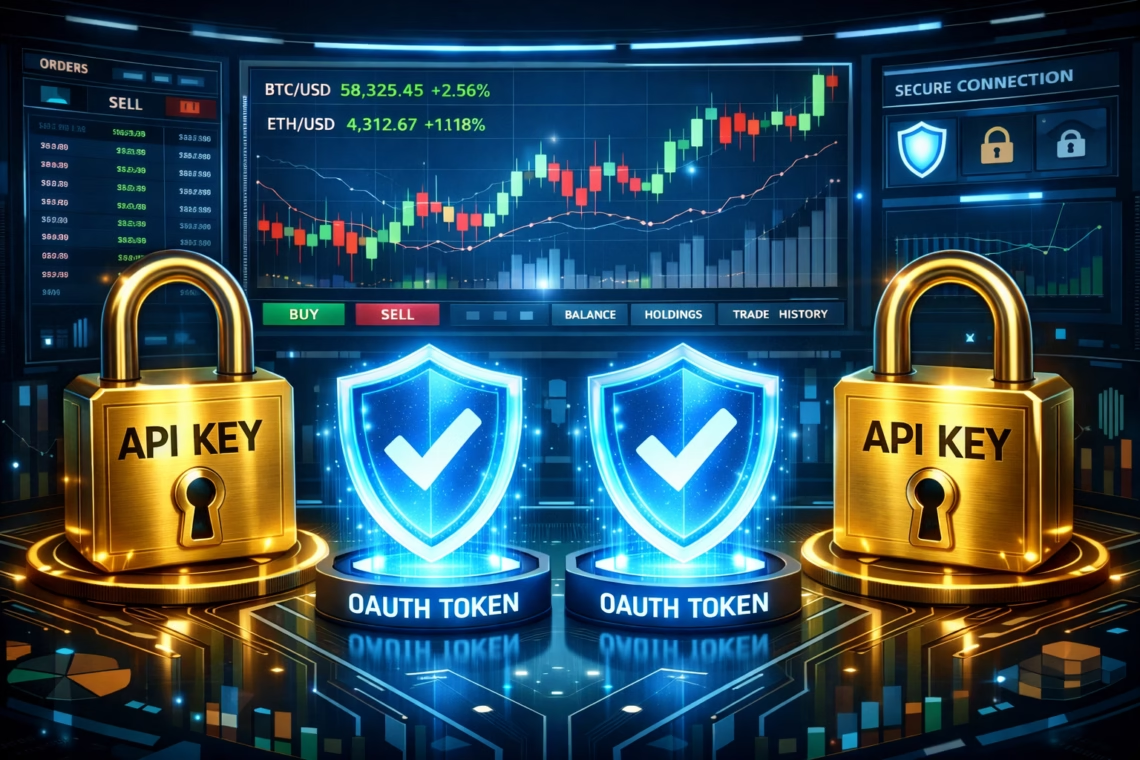
API keys serve as a simple yet effective authentication method for accessing trading platforms’ APIs. They act like unique identifiers, allowing applications to connect securely without sharing full credentials. In trading, API keys are commonly used for fetching market data, placing orders, and managing accounts on exchanges like Interactive Brokers or crypto platforms.
Pros of using API keys include ease of setup and low overhead, making them ideal for quick integrations. However, they lack built-in expiration, posing risks if compromised. For instance, platforms recommend treating API keys as confidential and using IP whitelisting to restrict access.
The Power of OAuth Authorization Trading
OAuth authorization trading represents a more advanced, token-based approach to API security. Unlike static keys, OAuth uses short-lived access tokens that expire automatically, reducing exposure windows. OAuth 2.0, the dominant version, enables delegated access—perfect for third-party apps in trading ecosystems.
In trading APIs, OAuth ensures granular permissions, such as read-only access to balances or execute trades without full account control. This method shines in scenarios involving user consent, like connecting a trading bot to an exchange without sharing passwords. Recent adoptions in financial APIs emphasize OAuth for compliance with standards like PSD2 in open banking.
API Keys vs. OAuth Authorization Trading: Key Differences
Choosing between API keys and OAuth authorization trading depends on your needs. API keys offer simplicity for internal tools, while OAuth provides superior security for user-facing or high-stakes applications.
Here’s a comparison:
| Feature | API Keys | OAuth Authorization Trading |
|---|---|---|
| Security Level | Basic; no auto-expiration | High; tokens expire, scoped access |
| Ease of Use | Simple setup | More complex but scalable |
| Best For | Quick data pulls, low-risk | Secure delegations, financial transactions |
| Risks | Indefinite validity if not revoked | Requires proper token management |
OAuth edges out for modern trading due to features like token revocation and fine-grained controls.
Click Here To Automate Futures Trading
Recent Updates in API Keys, OAuth Authorization Trading (2026)
As of January 2026, API authentication in trading is rapidly evolving with AI integration and stricter security standards. OAuth integrations are maturing, with emphasis on token exchange for least-privileged access and JWT-assertion grants. Financial institutions are adopting FAPI 2.0, mandating mutual TLS (mTLS), short-lived JWTs, and specific OAuth scopes to combat authenticated attacks.
The Model Context Protocol (MCP) now recommends OAuth 2.1 as the primary mechanism for AI-API integrations in trading. Additionally, 47% of APIs still lack authentication, highlighting the “Governance Paradox” and pushing for centralized OAuth servers. Crypto APIs, like those from CoinAPI, now prioritize real-time data with OAuth for secure analytics.
Best Practices for API Keys, OAuth Authorization Trading
To secure your trading APIs, follow these guidelines:
- Use HTTPS and Encryption: Always encrypt data in transit with TLS and rotate keys regularly.
- Implement Strong Controls: Combine OAuth with MFA and RBAC for role-specific access.
- API Gateway Protection: Centralize traffic with gateways for rate limiting and threat detection.
- Token Management: Expire tokens frequently and avoid static credentials.
- Compliance Focus: Align with PCI DSS and open banking regs using OAuth flows.
These practices minimize risks in volatile trading environments.
Integrating Automation: PickMyTrade and API Keys, OAuth Authorization Trading
Automation tools are transforming trading, and PickMyTrade exemplifies this. As a no-code platform for futures trading automation, PickMyTrade connects TradingView signals to brokers like Tradovate via secure OAuth Authorization. It supports API keys for quick setups and OAuth for enhanced security in multi-broker environments, enabling 24/7 execution without manual intervention. Traders can automate strategies like RSI-based entries, leveraging OAuth’s token system for safe delegations.
Conclusion
API keys and OAuth authorization trading are pillars of modern trading APIs. With 2026 updates focusing on AI-driven security and token standards, adopting these methods ensures robust protection and efficiency. Tools like PickMyTrade demonstrate their practical value in automation. Stay ahead by implementing best practices and monitoring evolving trends.
Most Asked FAQs on API Keys, OAuth Authorization Trading
What is the main difference between API keys and OAuth in trading?
API keys are static identifiers for simple access, while OAuth uses dynamic tokens for secure, scoped authorization.
Are API keys secure enough for trading APIs?
They’re suitable for low-risk scenarios but should be combined with IP restrictions; OAuth is better for sensitive operations.
How has OAuth evolved for trading in 2026?
Updates include OAuth 2.1 integration with MCP and FAPI 2.0 for mTLS and short-lived tokens.
Can PickMyTrade use OAuth for automation?
Yes, it supports OAuth alongside API keys for secure connections to brokers like Tradovate.
Disclaimer:
This content is for informational purposes only and does not constitute financial, investment, or trading advice. Trading and investing in financial markets involve risk, and it is possible to lose some or all of your capital. Always perform your own research and consult with a licensed financial advisor before making any trading decisions. The mention of any proprietary trading firms, brokers, does not constitute an endorsement or partnership. Ensure you understand all terms, conditions, and compliance requirements of the firms and platforms you use.
Also Checkout: Connect Tradovate with Trading view using PickMyTrade