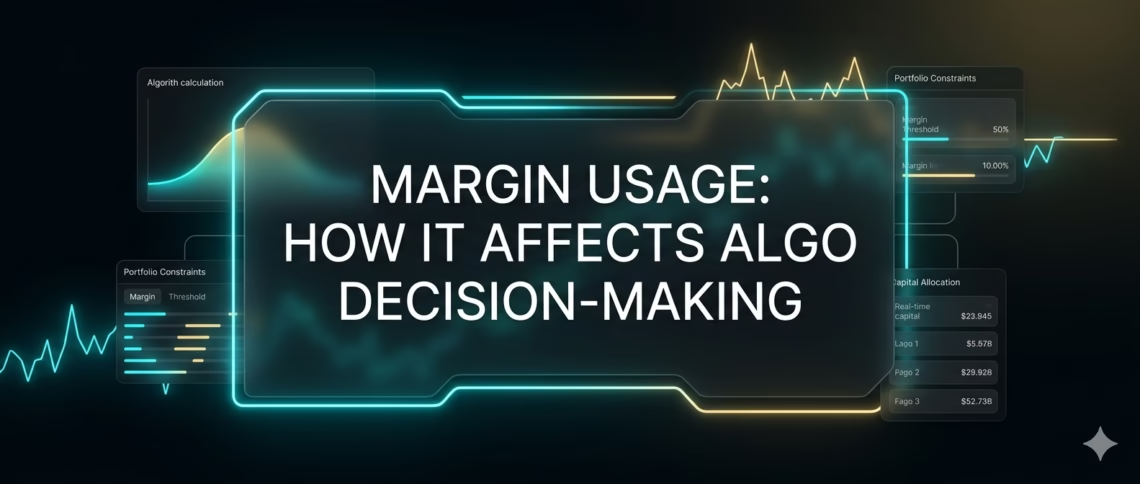
In the fast-paced world of algorithmic trading, margin usage is a critical factor that directly influences every buy, sell, and hold decision. Whether you’re trading futures on US markets or equities, understanding margin usage can mean the difference between optimized profits and unexpected margin calls that derail even the most sophisticated algorithms. This updated 2026 guide explores how margin usage shapes algo strategies, recent regulatory shifts, and practical tools to stay ahead.
What Is Margin Usage in Trading?
Margin usage refers to the portion of borrowed capital (or performance bond in futures) that traders deploy to control larger positions than their account equity alone would allow. In stocks, it’s governed by Reg T (typically 50% initial margin). In futures, it’s a good-faith deposit set by exchanges like CME Group—often just 2-12% of notional value.
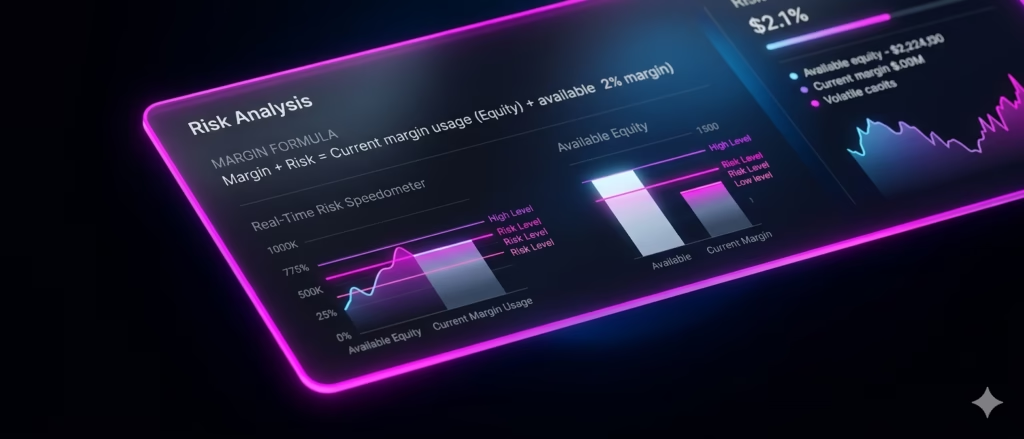
Proper margin usage amplifies returns but demands precision. Over-leveraging triggers margin calls, where brokers automatically liquidate positions to restore required equity. Algorithms that ignore real-time margin usage can face forced exits at the worst possible moments.
The Role of Margin Usage in Algorithmic Trading
Modern algos don’t just chase signals—they optimize around margin usage in real time. Here’s how it affects core decision-making:

- Position Sizing: Algorithms calculate maximum contracts or shares based on available margin, account equity, and maintenance requirements. A margin calculator integrated into the strategy prevents over-exposure.
- Risk Management: Dynamic margin usage models adjust leverage according to volatility. For example, during heightened risk periods, algos reduce position size to maintain a buffer above maintenance margin.
- Leverage Control: High margin usage magnifies both gains and losses. Smart algos cap leverage (e.g., 1-2% risk per trade) to avoid cascading liquidations.
- Entry/Exit Logic: Pre-trade checks verify if the proposed trade fits within current margin limits. Post-trade monitoring triggers alerts or adjustments if equity drops near maintenance levels.
Without accounting for margin, even profitable strategies can fail when market volatility spikes.
Recent Updates on Margin Requirements (2025-2026)
Staying current with margin rules is essential for algo performance. Key 2026 developments include:
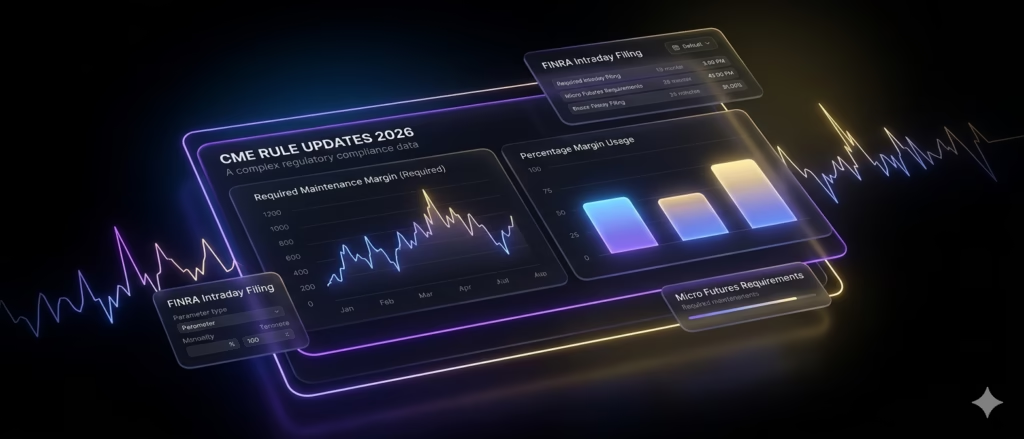
- CME Group’s Shift to Percentage-Based Margins: In January 2026, CME moved gold, silver, platinum, and palladium futures to percentage-of-contract-value calculations (e.g., 5% for gold, 9% for silver). Multiple hikes followed in February 2026 due to volatility, raising maintenance margins significantly.
- FINRA Intraday Margin Proposal: January 2026 filing replaces outdated pattern-day-trader rules with modern intraday standards, eliminating the $25,000 minimum equity threshold and introducing real-time equity monitoring.
- Micro Futures Advantage: Lower day-trading margins (e.g., $50 for Micro E-mini S&P) make them ideal for algos testing strategies with controlled margin.
These changes make margin more dynamic than ever—algos must now incorporate real-time API feeds from exchanges to recalibrate instantly.
How Margin Usage Directly Influences Algo Strategies
Margin usage impacts decision-making across strategy types:
- Trend-Following & Momentum: Higher margin allows bigger positions during breakouts but requires tight stops to protect against reversals.
- Mean-Reversion: Conservative margin prevents oversized bets when volatility expands.
- High-Frequency & Arbitrage: Ultra-low latency platforms monitor margin tick-by-tick to exploit tiny inefficiencies without breaching limits.
- Portfolio-Level Optimization: Advanced algos treat margin usage as a portfolio constraint, allocating capital across correlated futures contracts to minimize total margin draw.
Result? Strategies that embed margin usage logic achieve better Sharpe ratios and survive drawdowns.
Click Here To Automate Futures Trading
Automating Futures Trading with Smart Margin Usage: PickMyTrade Example
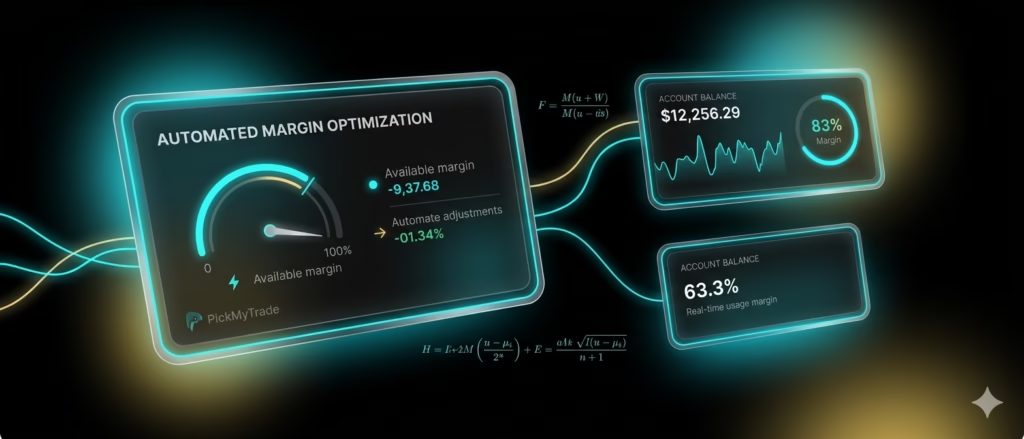
For US futures traders, platforms like PickMyTrade make margin usage optimization seamless. This no-code automation tool connects TradingView alerts directly to brokers such as Tradovate, Rithmic, and Interactive Brokers via secure webhooks.
Key advantages for algo traders:
- Auto Position Sizing: Calculates exact contract sizes based on account balance and user-defined risk percentage—ensuring margin stays within safe limits.
- 24/7 Execution: Runs strategies on US futures markets without keeping platforms open, while respecting real-time margin requirements.
- Prop Firm & Multi-Account Support: Perfect for scaling across funded accounts while maintaining disciplined margin usage.
- Built-in Risk Tools: Includes stop-loss, take-profit, and trailing stops that adapt to volatility, reducing the chance of margin calls.
By automating execution and embedding margin checks, PickMyTrade turns manual monitoring into a hands-off, emotion-free process—ideal for futures traders on CME, CBOT, and beyond.
Best Practices for Optimizing in Algos
- Monitor margin levels in real time with API integrations.
- Maintain a 20-30% buffer above maintenance margin.
- Backtest strategies with historical margin data, including 2026 updates.
- Use volatility filters to dynamically lower margin during turbulent periods.
- Diversify across instruments with different margin profiles.
Conclusion: Master Margin Usage for Algo Success
Margin usage is no longer a back-office concern—it’s a frontline driver of algorithmic decision-making. By integrating real-time margin logic, staying updated on 2026 regulatory shifts, and leveraging automation tools like PickMyTrade, traders can build resilient, high-performing strategies in US futures and beyond.
Start optimizing your margin today and give your algos the edge they need to thrive.
FAQs
What is margin usage in algo trading?
Margin usage is the calculated allocation of required collateral (or performance bond) that determines how large a position your algorithm can safely take without triggering a margin call.
How do margin calls affect algorithmic strategies?
Unexpected margin calls can force automatic liquidations, overriding algo logic and turning winning strategies into losses. Smart algos include preventive buffers and real-time adjustments.
Do recent 2026 margin changes impact futures algos?
Yes—CME’s percentage-based margins and FINRA’s intraday rules require algos to pull live data and recalibrate position sizes dynamically.
Can automation tools help manage margin usage?
Absolutely. Platforms like PickMyTrade auto-calculate position sizes based on account equity and risk rules, ensuring compliant margin usage 24/7.
Disclaimer:
This content is for informational purposes only and does not constitute financial, investment, or trading advice. Trading and investing in financial markets involve risk, and it is possible to lose some or all of your capital. Always perform your own research and consult with a licensed financial advisor before making any trading decisions. The mention of any proprietary trading firms, brokers, does not constitute an endorsement or partnership. Ensure you understand all terms, conditions, and compliance requirements of the firms and platforms you use.
Also Checkout: Automate TradingView Indicators with Tradovate Using PickMyTrade