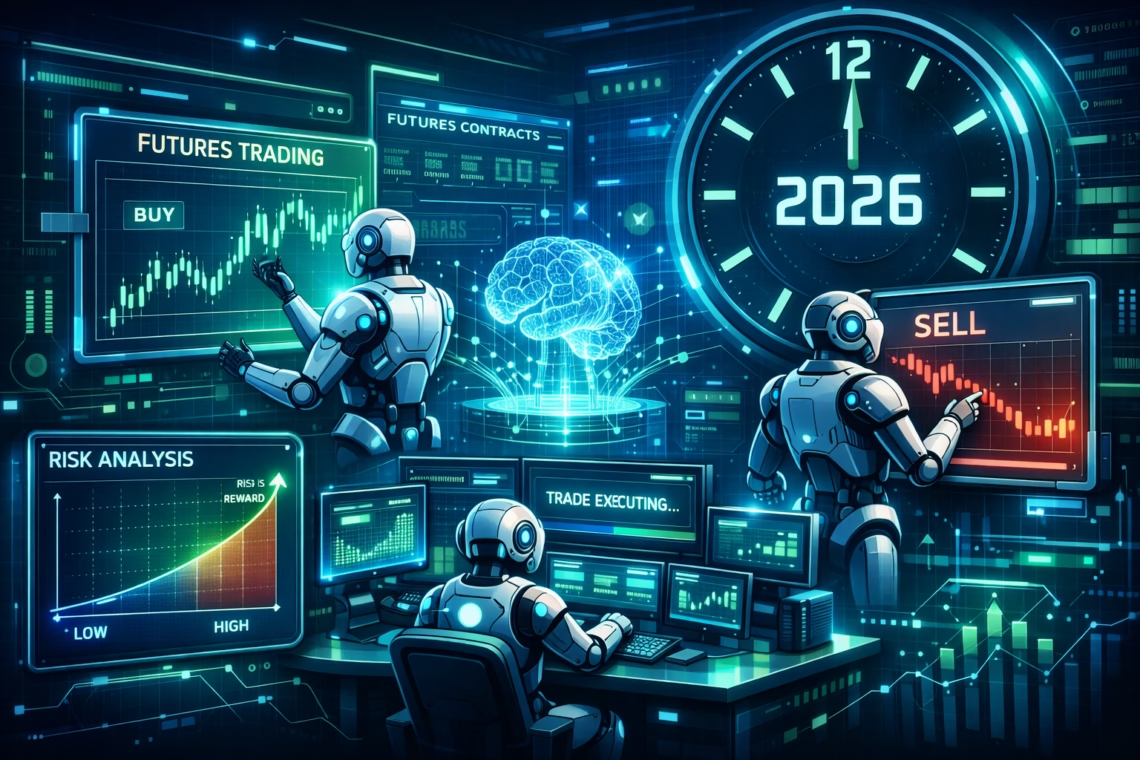
In 2026, futures trading automation has shifted from a niche tool for institutions to a mainstream necessity for retail and professional traders. With AI advancements, low-latency platforms, and accessible no-code solutions, automation promises speed, discipline, and 24/7 execution. But what are the futures trading automation expectations in reality? This updated guide draws from recent 2025-2026 trends, including AI integration, algorithmic mainstreaming, and platforms like PickMyTrade, to set practical benchmarks.
Why Futures Trading Automation Expectations Are Rising in 2026
Algorithmic trading is becoming the baseline in 2026, transitioning from a competitive edge to an essential requirement. Market data shows increased adoption due to AI agents, real-time analytics, and cloud-based execution. Independent traders now access tools once reserved for hedge funds, but success depends on realistic futures trading automation expectations.
Key drivers include:
- AI and Machine Learning Integration — Predictive models analyze patterns humans miss.
- No-Code Platforms — Tools simplify strategy deployment without programming.
- Regulatory and Tech Shifts — Faster settlements and automation focus enhance efficiency.
Yet, automation doesn’t guarantee profits—markets remain volatile, and over-optimization leads to failures.
Realistic Returns and Performance in Futures Trading Automation Expectations
Many beginners expect 20-50% monthly returns, but realistic futures trading automation expectations are more modest. Backtested strategies in optimal conditions (e.g., sideways markets) might yield 5-15% monthly for grid or arbitrage bots, but live results vary.
- Conservative Estimates — 10-30% annual returns after fees and drawdowns for well-managed systems.
- High-Performing Cases — User-reported 20-85% in strong years with adaptive strategies, but losses occur in trends or volatility spikes.
- Risk Reality — Drawdowns of 20-50% are common; leverage amplifies both gains and losses.
In 2026, adaptive systems (e.g., volatility filters, session timing) outperform static ones. Past performance doesn’t predict future results—continuous monitoring and adjustments are essential.
Key Risks and Challenges in Futures Trading Automation Expectations
Automation removes emotion but introduces new pitfalls:
- Overfitting — Strategies excel in backtests but fail live.
- Technical Issues — Latency, API downtime, or execution slips erode edges.
- Market Regime Shifts — Trends reverse, black swans hit hard.
- Costs — Commissions, data fees, and platform subscriptions add up.
Realistic expectation: Treat automation as a tool requiring oversight, not a “set-it-and-forget-it” solution. Start with paper trading to align expectations.
Top Strategies for Futures Trading Automation in 2026
Effective automated strategies include:
- Trend Following — Uses moving averages/RSI for entries; reliable in sustained moves.
- Mean Reversion — Profits from overextensions in range-bound markets.
- Arbitrage/Spread Trading — Low-risk if executed fast.
- Momentum and Breakout — Captures volatility bursts.
- AI-Enhanced Quantitative — Incorporates sentiment and on-chain data.
Platforms emphasize regime-adaptive bots over always-on systems.
Click Here to Start Futures Trading Automation For Free
PickMyTrade: Meeting Modern Futures Trading Automation Expectations
PickMyTrade stands out in 2026 for accessible futures trading automation. It bridges TradingView strategies to brokers like Tradovate, Rithmic, Interactive Brokers, and TradeStation—no coding required.
Key features aligning with realistic expectations:
- Millisecond execution for futures (e.g., ES, NQ contracts).
- Unlimited automation with risk controls.
- No-API-key setup for quick deployment.
- User-reported strong performance in scalping and day trading.
Traders automate alerts in minutes, suiting beginners and pros. PickMyTrade supports prop firm setups and multi-account management, making it a practical choice for consistent, emotion-free trading.
Futures Trading Automation: Best Practices
- Backtest rigorously with realistic slippage/fees.
- Use risk management (e.g., 1-2% per trade).
- Diversify strategies and assets.
- Monitor and adapt quarterly.
- Combine automation with human oversight.
In 2026, success comes from disciplined execution, not hype.
Most Asked FAQs on Futures Trading Automation
What are realistic monthly returns from automated futures trading in 2026?
Expect 1-5% on average for conservative systems, with higher volatility in aggressive setups. Annualized 10-30% is more realistic after drawdowns.
Is futures trading automation profitable for beginners?
Yes, with education and paper trading first. Platforms like PickMyTrade lower barriers, but start small and expect a learning curve.
What risks should I expect with automated futures trading?
High drawdowns, technical failures, overfitting, and market shifts. Leverage can lead to significant losses—never risk more than you can afford.
Can I automate futures trading without coding?
Absolutely—tools like PickMyTrade enable no-code automation via TradingView alerts to brokers.
Disclaimer:
This content is for informational purposes only and does not constitute financial, investment, or trading advice. Trading and investing in financial markets involve risk, and it is possible to lose some or all of your capital. Always perform your own research and consult with a licensed financial advisor before making any trading decisions. The mention of any proprietary trading firms, brokers, does not constitute an endorsement or partnership. Ensure you understand all terms, conditions, and compliance requirements of the firms and platforms you use.
Also Checkout: Automate TradingView Indicators with Tradovate Using PickMyTrade