In today’s volatile markets, mastering a Correlation-Based Strategy is essential for traders and investors seeking to reduce risk while optimizing returns. This approach leverages the statistical relationships between assets to build resilient portfolios, especially in futures trading on US markets. As of early 2026, with AI-driven concentration risks and shifting stock-bond dynamics, correlation insights remain a cornerstone of effective diversification.
What Is a Correlation-Based Strategy?
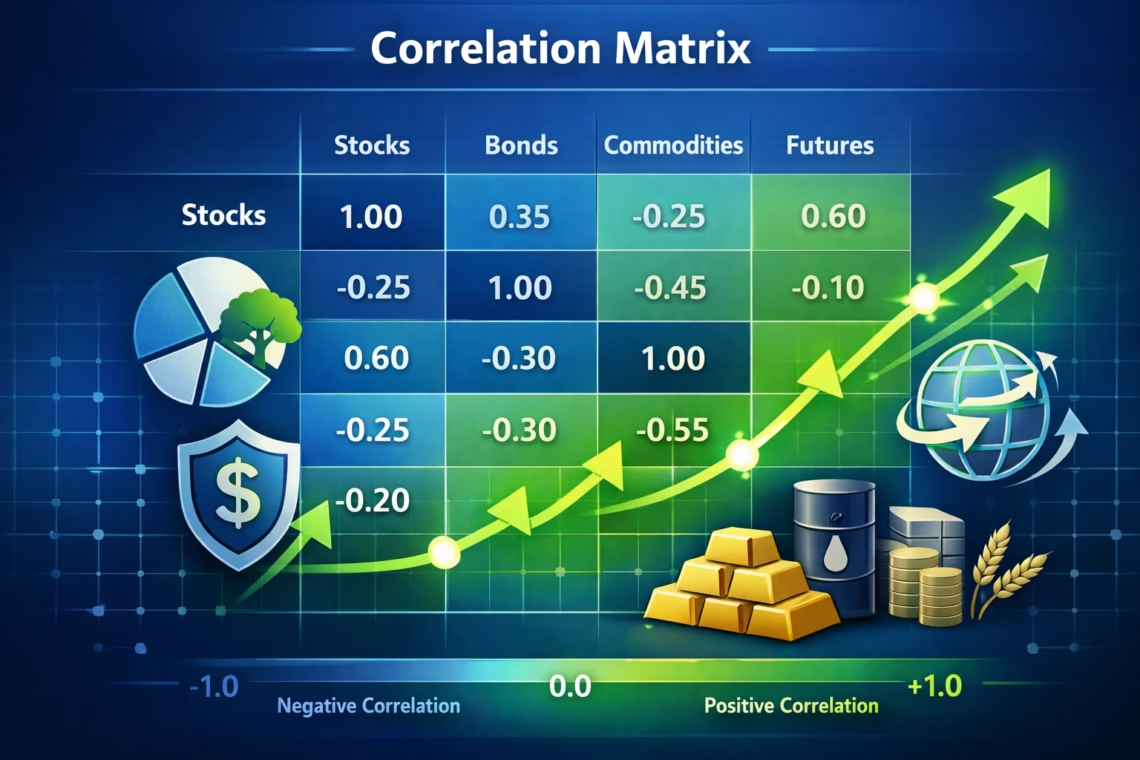
A Correlation-Based Strategy involves analyzing how different assets or strategies move in relation to one another. Correlation coefficients range from -1 (perfect inverse movement) to +1 (perfect positive movement), with 0 indicating no relationship.
In portfolio construction, low or negative correlations enable true diversification—when one asset declines, others may hold steady or rise, smoothing overall volatility. This differs from naive diversification (simply adding more assets), as high correlations can undermine benefits during crises when assets move together.
Recent data shows stock-bond correlations have moderated from positive levels in 2022 to near-zero or slightly negative in late 2025-2026, reviving bonds’ hedging potential amid cooling inflation.
Why Correlation-Based Strategy Matters for Diversification
Diversification reduces unsystematic risk, but its effectiveness hinges on correlations. High correlations dilute benefits, as seen in recent years with tech dominance pushing many equities to move in tandem.
A Correlation-Based Strategy for diversification identifies uncorrelated or negatively correlated assets:
- Equities and bonds (historically low/negative correlation)
- Commodities and stocks
- International vs. US markets
In futures markets, this extends to intermarket relationships—like crude oil and USD/CAD, or gold and AUD/USD—offering hedging opportunities.
Recent developments in 2025-2026 highlight challenges: AI supercycle concentration increased intra-equity correlations, prompting calls for alternatives like gold or market-neutral strategies with low equity ties.
Click Here To Start Futures Trading Automation For Free
Implementing a Correlation-Based Strategy in Futures Trading
Futures traders use Correlation-Based Strategy to spot pairs trades, hedges, or diversified multi-contract setups.
Key tactics:
- Pairs Trading — Exploit temporary divergences in highly correlated pairs (e.g., related commodities).
- Intermarket Analysis — Monitor correlations across stocks, bonds, commodities, currencies.
- Dynamic Rebalancing — Adjust positions as correlations shift (e.g., higher short-term vs. long-term correlations signal momentum or reversal).
In US futures markets (e.g., E-mini S&P 500, Nasdaq-100, crude oil), low-correlation combinations reduce drawdowns.
Tools and Automation: PickMyTrade for Correlation-Based Futures Trading
Executing a Correlation-Based Strategy manually is challenging in fast-moving US futures markets. Automation bridges the gap.
PickMyTrade excels here, offering seamless automation for Tradovate, Rithmic, Interactive Brokers, and more. It enables 24/7 execution of TradingView strategies via webhooks, ideal for correlation monitoring and multi-asset setups.
Traders automate alerts for correlation shifts, execute hedges, or run diversified portfolios across US indices, commodities, and micros. With low-latency replication and risk controls, PickMyTrade supports scaling while maintaining precision—perfect for Correlation-Based Strategy in volatile 2026 conditions.
Recent Updates and Trends in Correlation-Based Strategy (2026 Insights)
As of February 2026:
- Stock-bond correlations have reverted to mildly negative, enhancing traditional diversification.
- AI/tech concentration raises intra-equity correlations, pushing investors toward alternatives and international exposure.
- Futures strategies emphasize intermarket correlations amid tariff volatility and policy shifts.
- Advanced methods like factor-based or relational data for low-correlation portfolios emerge.
Correlations remain unstable—regular monitoring is key.
Conclusion: Elevate Your Trading
A well-executed Correlation-Based Strategy transforms diversification from guesswork to science, delivering smoother returns and lower risk. In US futures, tools like PickMyTrade make implementation accessible and efficient.
Start by analyzing correlations, testing low-correlation combinations, and automating execution—your portfolio will thank you in any market.
FAQs
What is the ideal correlation for diversification?
Aim for correlations below 0.3 (low) or negative for strong diversification benefits.
How often do correlations change?
They shift with economic regimes, crises, or policy—review monthly or quarterly.
Can correlation protect against all risks?
No—it reduces unsystematic risk but not systemic events where correlations spike.
Is Correlation-Based Strategy suitable for beginners?
Yes, start with basic tools; automation like PickMyTrade simplifies it.
Disclaimer:
This content is for informational purposes only and does not constitute financial, investment, or trading advice. Trading and investing in financial markets involve risk, and it is possible to lose some or all of your capital. Always perform your own research and consult with a licensed financial advisor before making any trading decisions. The mention of any proprietary trading firms, brokers, does not constitute an endorsement or partnership. Ensure you understand all terms, conditions, and compliance requirements of the firms and platforms you use.
Also CheckOut: Automate TradingView Indicators with Tradovate Using PickMyTrade