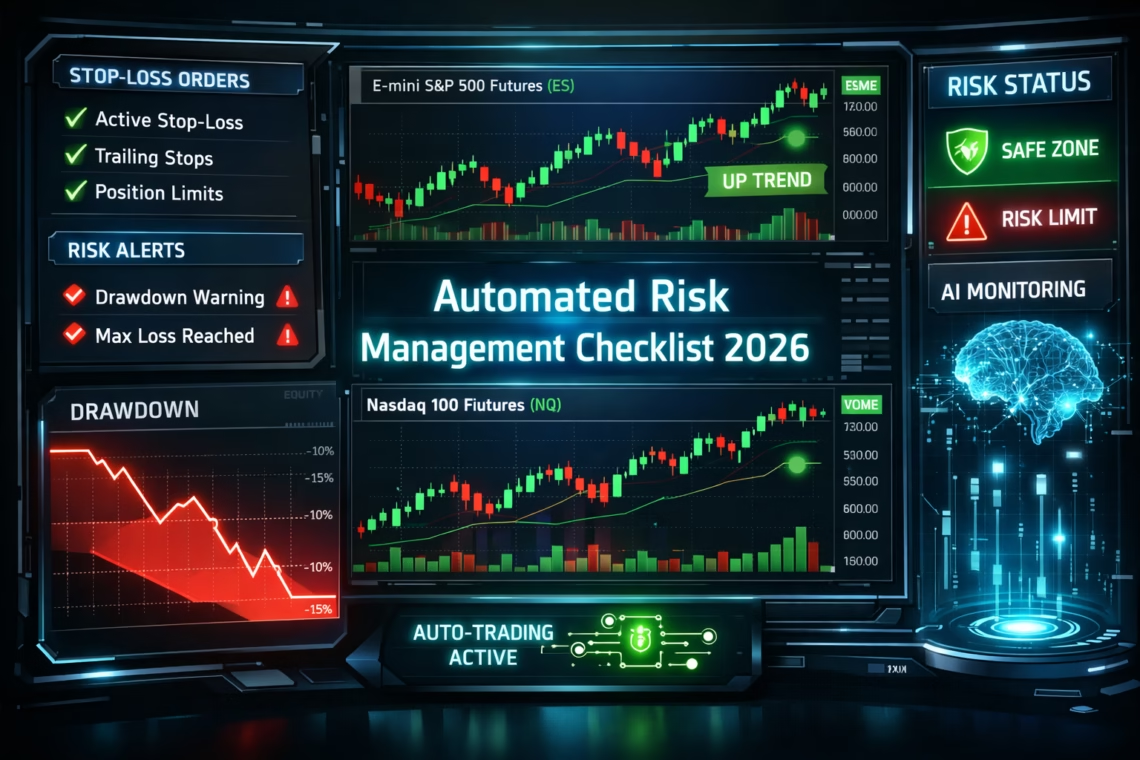
The Automated Risk Management Checklist is essential for traders in volatile markets like futures, where automation minimizes emotional decisions and enforces discipline. In 2026, with AI-driven tools, real-time analytics, and stricter regulations, effective risk controls are more critical than ever.
This comprehensive guide provides an updated Automated Risk Management Checklist tailored for futures trading on US markets. It draws from recent industry best practices, including pre-trade controls, automated stops, and drawdown limits. We’ll also highlight PickMyTrade, a leading automation platform that integrates seamlessly with brokers like Tradovate, Rithmic, and Interactive Brokers for precise, compliant execution in US futures.
Why an Automated Risk Management Checklist Matters in 2026
Futures trading involves high leverage, making risk management non-negotiable. Recent trends show AI adoption surging for predictive risk detection, real-time monitoring, and automated safeguards. FIA’s 2024 best practices (still foundational in 2026) emphasize pre-trade controls to prevent errors, while platforms now incorporate volatility mechanisms and post-trade analysis.
Automation removes biases, ensures consistency, and aligns with CFTC regulations for US markets. Tools like algorithmic stops and position sizing calculators help traders survive drawdowns and scale safely.
Key Components of an Automated Risk Management Checklist
Follow this step-by-step Automated Risk Management Checklist before and during live trading:
- Define Risk Tolerance and Capital Allocation Set your overall risk appetite (e.g., max 1-2% per trade, 5-10% daily drawdown). Automate via platform rules to cap exposure.
- Implement Position Sizing Automation Calculate position size based on account equity, stop distance, and volatility (use ATR). Tools auto-adjust for leverage in futures like ES or NQ.
- Set Automated Stop-Loss and Take-Profit Orders Use bracket orders, trailing stops, or OCO. In 2026, AI-enhanced platforms predict volatility for dynamic stops.
- Establish Daily and Overall Drawdown Limits Enforce auto-liquidation if daily loss hits 3-5% or max drawdown reaches 10-15%. Prop firms and platforms now require this for compliance.
- Incorporate Pre-Trade Risk Checks Verify order size, margin, and filters (e.g., no trades during high-impact news like FOMC). Exchanges provide volatility controls.
- Diversify and Monitor Portfolio Exposure Spread across sectors; automate alerts for concentration risks.
- Enable Kill Switches and Emergency Controls Set time-based or breach-triggered halts to prevent runaway losses.
- Backtest and Stress-Test Strategies Simulate scenarios; refine automation for robustness.
- Review Post-Trade and Audit Logs Analyze executions; adjust based on performance.
- Stay Compliant with Regulations Follow CFTC rules for automated systems in US futures—ensure transparency and auditability.
Click Here To Get A 5 – Day Free Trial of Futures Trading Automation
How PickMyTrade Enhances Your Automated Risk Management Checklist for US Futures Trading
PickMyTrade stands out as a top tool for automating futures on US markets. It connects TradingView strategies to brokers like Tradovate (commission-free), Rithmic (low-latency), Interactive Brokers, and TradeStation.
Key features aligning with the Automated Risk Management Checklist:
- Unlimited strategies and tickers with built-in risk controls (e.g., position sizing, stops).
- 24/7 execution for US indices like ES, NQ, YM.
- Webhook-based automation for precise, emotion-free trades.
- Multi-account support and compliant setup under CFTC guidelines.
- Advanced risk automation, including drawdown monitoring and session controls.
Traders using PickMyTrade report better consistency in volatile US futures, especially for prop firm challenges or live accounts.
Implementing the Automated Trading: Practical Tips
Start small: Backtest on historical data, then paper trade. Integrate tools like PickMyTrade for seamless automation. Monitor in real-time—2026’s AI trends favor predictive alerts over reactive fixes.
Regularly update your checklist amid evolving tech, like AI scenario modeling.
Mastering the Automated Risk Management Checklist protects capital and boosts long-term success in futures trading.
Most Asked FAQs
What is an Automated Risk Management Checklist?
It’s a structured list of automated controls (stops, sizing, limits) to manage trading risks consistently without emotions.
Why is automation important for risk management in futures?
Futures’ leverage amplifies losses; automation enforces rules 24/7, reducing errors in fast markets.
What are the best tools for automated risk management in US futures?
Platforms like PickMyTrade, NinjaTrader, and Interactive Brokers offer strong features for stops, sizing, and drawdown controls.
How much risk should I take per trade?
Typically 1-2% of capital; automate to prevent overrides.
Can automation help with prop firm rules?
Yes—tools like PickMyTrade enforce drawdown limits and compliance for US futures prop challenges.
Disclaimer:
This content is for informational purposes only and does not constitute financial, investment, or trading advice. Trading and investing in financial markets involve risk, and it is possible to lose some or all of your capital. Always perform your own research and consult with a licensed financial advisor before making any trading decisions. The mention of any proprietary trading firms, brokers, does not constitute an endorsement or partnership. Ensure you understand all terms, conditions, and compliance requirements of the firms and platforms you use.
Also, Checkout: Automate TradingView Indicators with Tradovate Using PickMyTrade