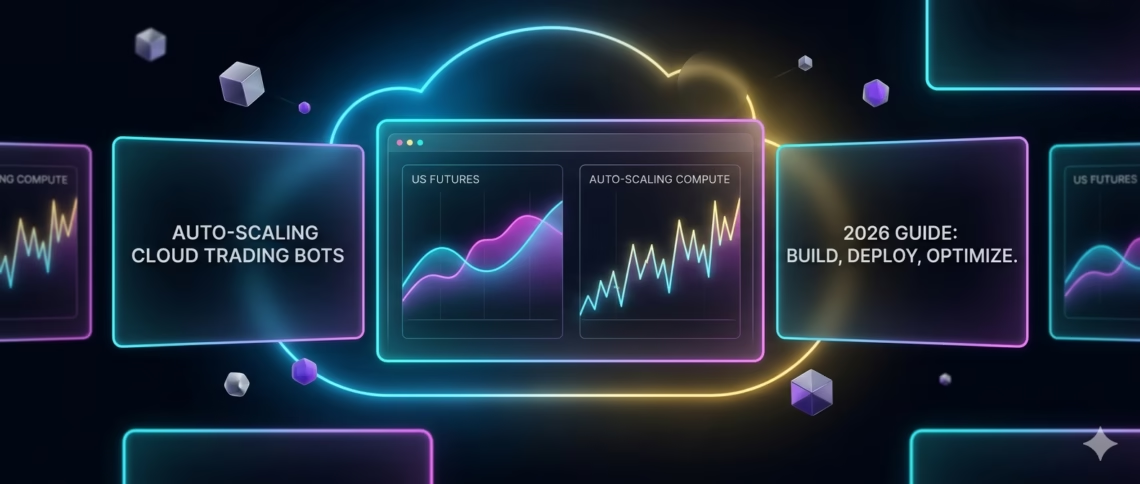
In the fast-paced world of algorithmic trading, auto-scaling cloud trading has emerged as the game-changer for retail and professional traders alike. No more worrying about server crashes during volatile US futures sessions or missed opportunities while your laptop sleeps. With auto-scaling cloud trading, your bots dynamically adjust compute resources in real time—handling spikes in market data, backtesting thousands of strategies, or executing high-frequency trades—while keeping costs low and uptime at 100%.
This 2026-updated guide walks you through everything you need to build, deploy, and optimize an auto-scaling cloud trading bot that delivers consistent results on US markets.
What Is Auto-Scaling Cloud Trading?
Auto-scaling cloud trading refers to deploying trading algorithms on cloud infrastructure that automatically scales resources based on demand. Unlike traditional VPS or local servers, cloud platforms like AWS, Google Cloud, or Azure use tools such as Kubernetes Horizontal Pod Autoscaler (HPA), AWS Auto Scaling Groups, or serverless functions (AWS Lambda/Google Cloud Run) to spin up or down instances instantly.
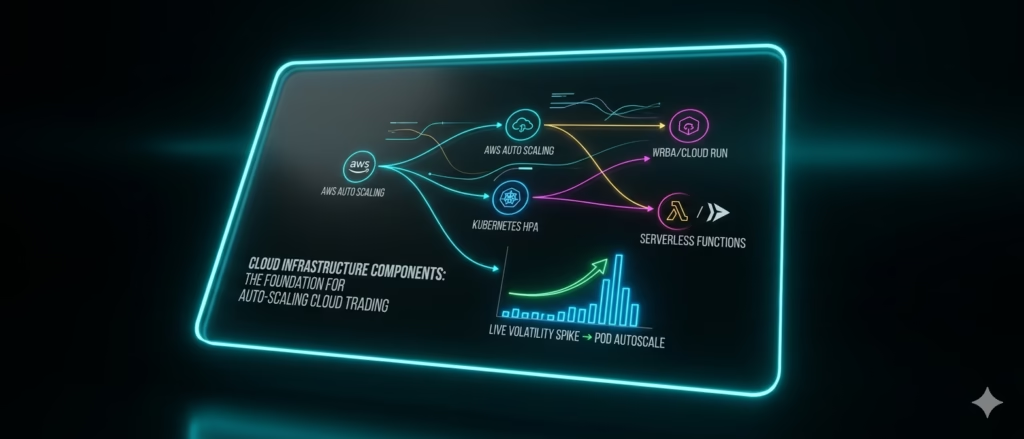
For futures trading, this means your bot can process real-time tick data from CME Group exchanges during high-volatility events (like FOMC announcements) without latency or downtime. As of March 2026, the automated algo trading market has grown to $27.17 billion, driven by cloud-native solutions that deliver scalability, cost-efficiency, and AI integration.
Why Auto-Scaling Cloud Trading Delivers Unmatched Advantages
Traders using auto-scaling cloud trading enjoy:
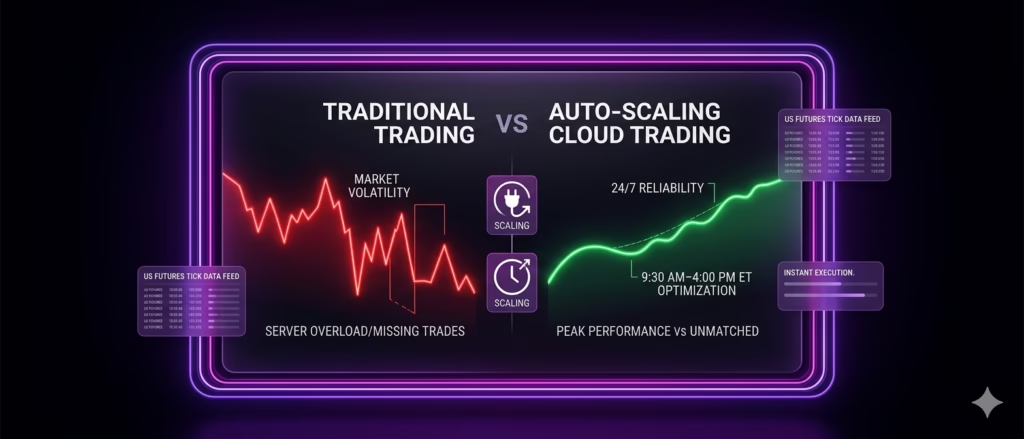
- 24/7 Reliability: Bots run uninterrupted, even during US market hours (9:30 AM–4:00 PM ET for equities/futures).
- Cost Optimization: Pay only for what you use—scale to zero during off-hours with Karpenter or serverless architectures.
- Lightning-Fast Execution: Handle massive data pipelines for machine learning predictions or volume-based strategies.
- Seamless Scaling: From testing one strategy to deploying across dozens of futures contracts (ES, NQ, YM) without manual intervention.
Recent 2025–2026 trends show financial market infrastructure providers (including Nasdaq and London Stock Exchange) migrating critical trading engines to AWS Outposts and hybrid cloud for sub-millisecond performance.
Step-by-Step: Building Your First Auto-Scaling Cloud Trading Bot
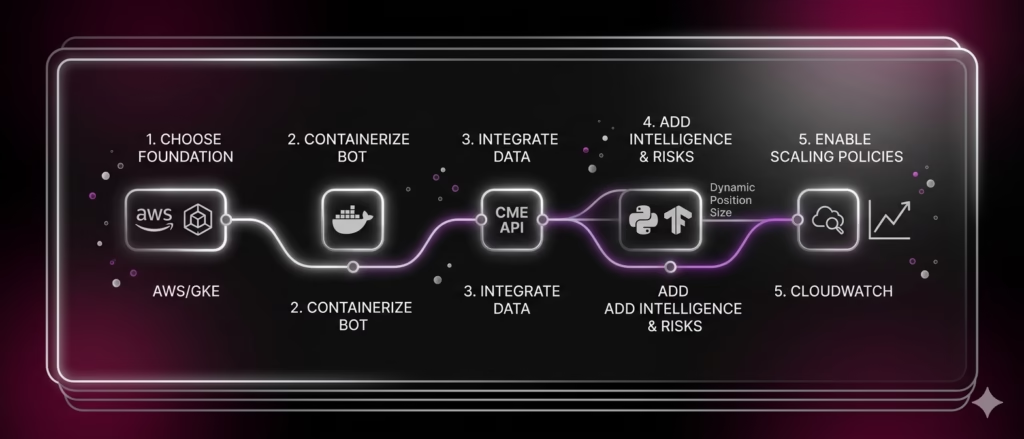
- Choose Your Cloud Foundation AWS or Google Cloud are top picks for traders. Use AWS EC2 Auto Scaling or Google Kubernetes Engine (GKE) with Karpenter for intelligent node provisioning.
- Set Up Core Infrastructure Containerize your bot with Docker. Deploy on Kubernetes for HPA based on CPU/memory or custom metrics (e.g., trade volume spikes). Enable scale-to-zero for idle periods to slash costs by up to 70%.
- Integrate Data Feeds and Execution Pull real-time data via APIs (e.g., CME, Polygon.io). Connect to brokers supporting futures. For US markets, leverage low-latency routing.
- Add Intelligence and Risk Controls Incorporate Python-based strategies with libraries like pandas, TA-Lib, or TensorFlow for AI predictions. Implement dynamic position sizing and stop-losses.
- Enable Auto-Scaling Policies Define rules: Scale pods during high volatility (using CloudWatch or Stackdriver metrics). Test with historical data before going live.
- Monitor and Optimize Use dashboards (Grafana + Prometheus) for real-time insights. AI-driven tools now auto-optimize scaling in 2026 cloud environments.
Supercharge Futures Trading with PickMyTrade Automation on US Markets
For traders focused on US futures (ES, NQ, RTY, etc.), PickMyTrade stands out as a ready-to-deploy auto-scaling cloud trading solution. This cloud-based platform turns your TradingView alerts into fully automated executions on brokers like Tradovate, Rithmic, Interactive Brokers, TradeStation, and TradeLocker—no coding required.
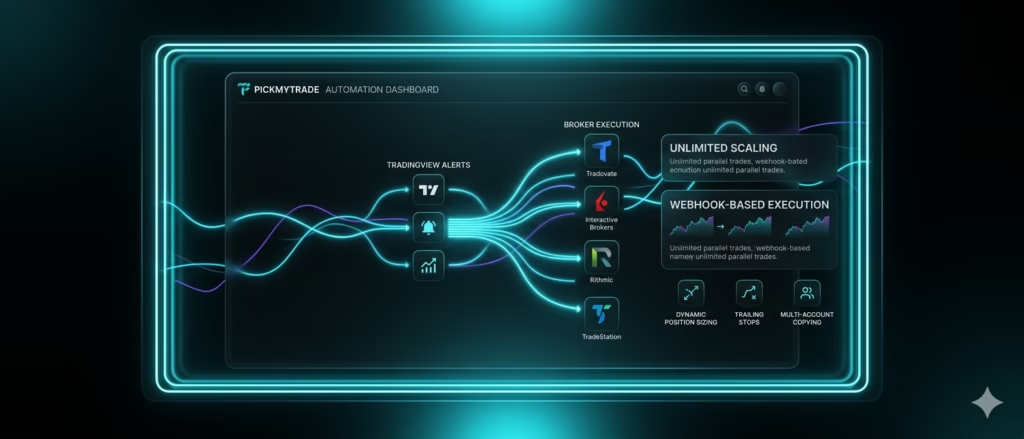
Key PickMyTrade features for auto-scaling cloud trading:
- Unlimited Scaling: Run unlimited strategies, tickers, accounts, and trades on a single plan.
- 24/7 Cloud Execution: Webhook-based automation executes with millisecond precision—even if your TradingView is closed.
- Futures-First Design: Native support for Tradovate’s cloud-based futures platform, plus prop firms (Apex, Blue Guardian, etc.).
- Risk Management Built-In: Auto position sizing, trailing stops, and multi-account copying for seamless scaling across funded accounts.
Traders simply connect their broker, create TradingView alerts, and let PickMyTrade handle the rest. It’s the perfect bridge for beginners scaling into live US futures automation while advanced users layer custom cloud bots on top.
Click Here To Automate Futures Trading
2026 Trends Shaping Auto-Scaling Cloud Trading
- AI-Driven Scaling: Platforms now predict load and pre-scale resources using machine learning.
- Serverless Dominance: Event-driven bots reduce costs for non-24/7 strategies.
- Hybrid Cloud for Latency: On-prem edge + cloud for ultra-low latency futures trading.
- Regulatory-Ready Compliance: Built-in audit logs and transparent algo reporting.
The shift to cloud-native algo trading continues accelerating, with real-time risk analytics and multi-asset support leading the charge.
Best Practices and Potential Risks
- Start small with paper trading.
- Implement circuit breakers for extreme volatility.
- Monitor latency and slippage—critical for futures.
- Use multi-region deployments for redundancy.
- Stay updated: Cloud costs and AI regulations evolve quickly in 2026.
Auto-scaling cloud trading minimizes emotional trading and maximizes uptime, but always backtest thoroughly and never risk more than you can afford.
Ready to Scale Your Trading Edge?
Auto-scaling cloud trading is no longer optional—it’s the standard for profitable, hands-off automation in 2026. Whether you build from scratch with Kubernetes or leverage PickMyTrade for instant futures automation on US markets, the time to act is now.
Most Asked FAQs
What is auto-scaling cloud trading and why is it better than a VPS?
Auto-scaling cloud trading dynamically adjusts resources in real time, offering higher reliability, lower costs during idle periods, and better handling of volatility spikes compared to fixed VPS setups that can crash or waste money.
Is auto-scaling cloud trading suitable for US futures trading?
Yes. It excels for CME futures like ES and NQ, where low latency and 24/7 uptime are critical. Solutions like PickMyTrade make automation simple and scalable for US markets and prop firms.
How much does auto-scaling cloud trading cost in 2026?
Costs vary widely. Serverless setups can start near zero during quiet hours, while full Kubernetes clusters range from $50–$500+/month depending on usage. Intelligent scaling often cuts bills significantly versus always-on servers.
Do I need coding skills to use auto-scaling cloud trading?
Not necessarily. No-code platforms like PickMyTrade let you automate via TradingView alerts. For custom bots, basic Python knowledge helps, but managed cloud services reduce complexity.
Disclaimer:
This content is for informational purposes only and does not constitute financial, investment, or trading advice. Trading and investing in financial markets involve risk, and it is possible to lose some or all of your capital. Always perform your own research and consult with a licensed financial advisor before making any trading decisions. The mention of any proprietary trading firms, brokers, does not constitute an endorsement or partnership. Ensure you understand all terms, conditions, and compliance requirements of the firms and platforms you use.
Also Checkout: Connect Tradovate with Trading view using PickMyTrade