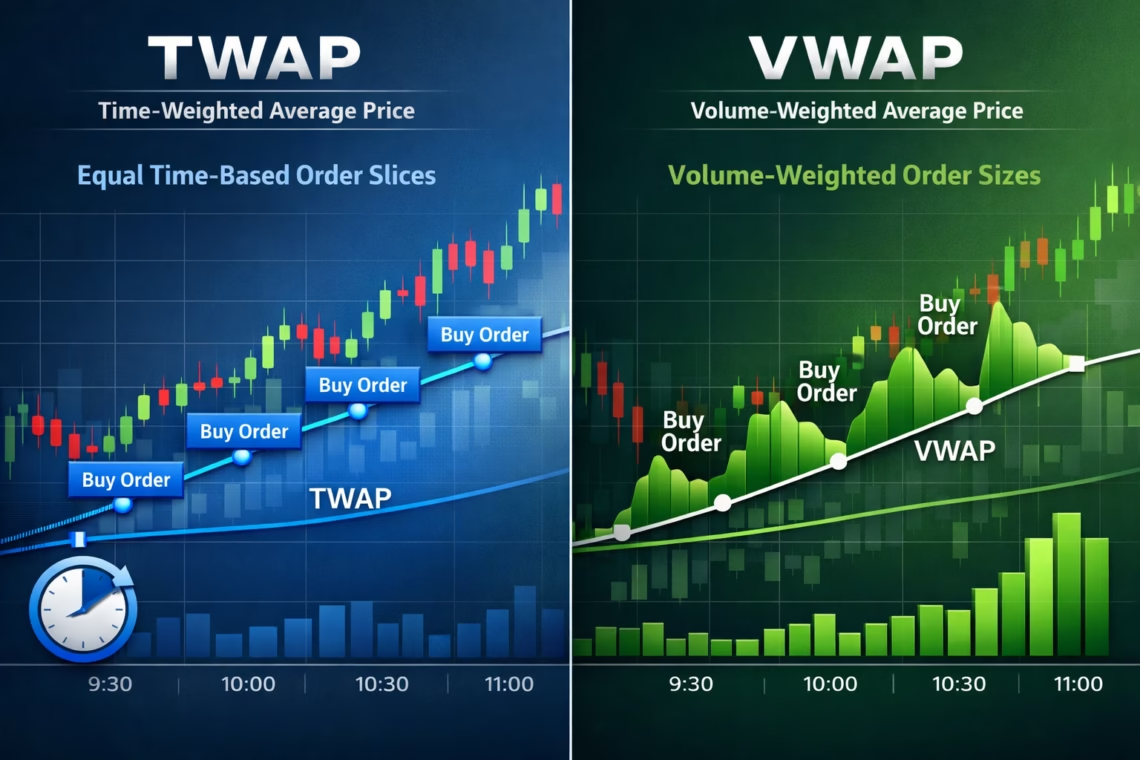
In algorithmic trading, TWAP vs VWAP strategies stand out as essential tools for institutional and retail traders aiming to execute large orders efficiently while minimizing market impact and slippage. These benchmarks help achieve better average prices in stocks, futures, and even crypto markets. As algorithmic adoption surges—with hedge funds heavily relying on these in 2025—understanding TWAP vs VWAP strategies is crucial for optimized execution.
What is VWAP (Volume-Weighted Average Price)?
VWAP calculates the average price of an asset weighted by trading volume throughout a period, typically a trading day. The formula is:
VWAP = (Cumulative (Price × Volume)) / Cumulative Volume
It reflects where most trading activity occurred, making it a popular benchmark for institutional traders like mutual funds and ETFs.
Advantages of VWAP:
- Aligns execution with natural market flow, reducing visibility of large orders.
- Effective in liquid markets with predictable volume patterns.
- Often results in lower slippage during high-volume periods.
Disadvantages:
- Can be predictable and potentially gamed in low-volume scenarios.
- More complex to implement due to volume dependency.
- Higher variance if volume estimates are off.
What is TWAP (Time-Weighted Average Price)?
TWAP averages prices evenly over fixed time intervals, ignoring volume. It divides the order into equal slices executed at regular intervals.
TWAP = (Sum of Prices over Intervals) / Number of Intervals
This creates a steady execution pace.
Advantages of TWAP:
- Simpler and less computationally intensive.
- Ideal for unpredictable or low-volume markets, as it avoids volume-based biases.
- Minimizes detection and front-running risk with uniform pacing.
Disadvantages:
- May execute during low-liquidity periods, increasing impact or slippage.
- Less adaptive to market conditions compared to VWAP.
TWAP vs VWAP: Key Differences Explained
| Aspect | VWAP (Volume-Weighted) | TWAP (Time-Weighted) |
|---|---|---|
| Weighting Basis | Trading volume | Time intervals |
| Execution Style | Adaptive to volume peaks | Evenly distributed over time |
| Market Impact | Lower in high-volume/liquid markets | Lower and more predictable overall |
| Predictability | Less predictable (volume-dependent) | Highly predictable |
| Best for | Liquid stocks, ETFs, high-volume futures | Illiquid assets, crypto, volatile periods |
| Complexity | Higher (requires volume data) | Simpler |
In TWAP vs VWAP strategies, VWAP excels when blending into market activity, while TWAP prioritizes discretion and consistency.
Click Here To Automate Futures Trading
Best Use Cases for TWAP and VWAP in 2025
- VWAP shines in liquid equities, ETFs, and futures like E-mini S&P 500 during peak hours. Recent surveys show 74% of hedge funds using VWAP in 2025 for benchmark alignment and impact reduction.
- TWAP is preferred in low-liquidity scenarios, crypto (e.g., altcoins), or when volume is erratic. Examples include large Bitcoin accumulations or illiquid tokens, where TWAP provided cost savings and stealth execution in recent cases.
Both are widely applied in US markets for futures and stocks, with growing use in algorithmic platforms.
Automate TWAP and VWAP Strategies with PickMyTrade
For traders in US futures markets, automating these strategies enhances efficiency. PickMyTrade offers powerful automation for futures trading on platforms like Tradovate, Rithmic, Interactive Brokers, and TradeStation. It supports signal-driven execution from TradingView, enabling seamless implementation of TWAP-like even pacing or VWAP-inspired volume-aware rules via custom alerts and risk controls.
With PickMyTrade, you can automate 24/7 futures strategies without coding—ideal for scalping, day trading, or large-order execution in volatile US markets. Features include unlimited alerts, multi-account support, and low-latency replication, making it a top choice for applying TWAP vs VWAP strategies in practice. Join thousands automating futures with precision and reduced emotional bias.
Conclusion: Choosing Between TWAP vs VWAP Strategies
The right choice in TWAP vs VWAP strategies depends on liquidity, order size, and goals. Use VWAP for volume-driven markets to match institutional flow; opt for TWAP in unpredictable conditions for steady execution. In 2025’s evolving algo landscape, combining these with tools like PickMyTrade can significantly boost performance in US futures trading.
Frequently Asked Questions (FAQs) on TWAP vs VWAP Strategies
What is the main difference between TWAP and VWAP?
TWAP weights by time for even execution, while VWAP weights by volume to align with market activity.
When should I use TWAP over VWAP?
Use TWAP in low-liquidity, volatile, or unpredictable volume markets like crypto or illiquid stocks to minimize impact.
Is VWAP better for futures trading?
Yes, often—especially in liquid US futures contracts with predictable intraday volume.
Can retail traders use TWAP and VWAP?
Yes, via algorithmic platforms and brokers supporting these order types, or automation tools like PickMyTrade.
How do TWAP and VWAP reduce market impact?
Both split large orders; VWAP hides in volume, TWAP spreads evenly over time.
Disclaimer:
This content is for informational purposes only and does not constitute financial, investment, or trading advice. Trading and investing in financial markets involve risk, and it is possible to lose some or all of your capital. Always perform your own research and consult with a licensed financial advisor before making any trading decisions. The mention of any proprietary trading firms, brokers, does not constitute an endorsement or partnership. Ensure you understand all terms, conditions, and compliance requirements of the firms and platforms you use.
Also Checkout: Automate TradingView Indicators with Tradovate Using PickMyTrade