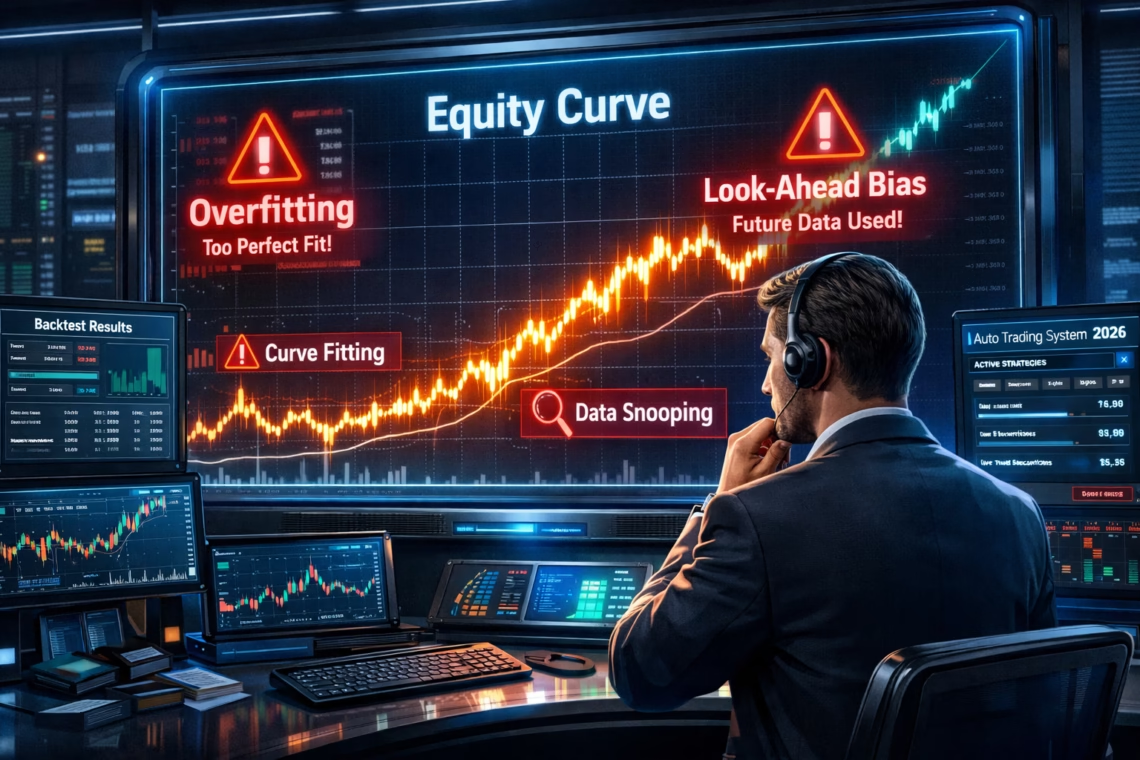
The most common backtesting mistakes traders make often lead to devastating live trading failures. Overfitting (also known as curve fitting) tops the list in recent 2025-2026 discussions, where strategies appear flawless on historical data but crumble in real markets due to memorizing noise rather than capturing true edges. Other frequent backtest errors include look-ahead bias, ignoring transaction costs like slippage and commissions, survivorship bias, and inadequate out-of-sample testing.
Recent insights from 2025 sources emphasize that up to 90% of “profitable” backtests suffer from these issues, especially in evolving markets with increased algo dominance and volatility shifts. Tools like TradingView’s Strategy Tester and automation platforms help mitigate risks when used properly.
Top 10 Most Common Backtest Errors (and How to Avoid Them in 2026)
1. Overfitting / Curve Fitting – The #1 Backtest Error
Curve fitting occurs when traders tweak parameters excessively to match historical data perfectly, capturing random noise instead of robust patterns. This leads to stellar backtest results that fail live.
Avoid it by: Keeping strategies simple, using out-of-sample testing (e.g., walk-forward optimization), and validating across diverse market regimes. Recent 2025-2026 analyses confirm overfitting remains the primary reason strategies die in live trading.
2. Look-Ahead Bias – A Sneaky Backtest Error
Using future information (e.g., today’s close for today’s signal) creates unrealistic results.
Avoid it by: Ensuring all data is available at decision time. Strict point-in-time data handling is crucial in modern backtesting.
3. Ignoring Slippage, Commissions, and Transaction Costs
Backtests often assume perfect fills, inflating profits unrealistically—especially in options, futures, or high-frequency setups.
Avoid it by: Incorporating realistic slippage models and broker fees. 2025 updates highlight this as a top issue in options and futures backtesting.
4. Survivorship Bias in Data
Testing only on surviving assets (e.g., current S&P 500 stocks) ignores delisted failures.
Avoid it by: Using comprehensive datasets including delisted instruments.
Click Here to Automate Futures Trading
5. Inadequate or Poor-Quality Data
Short datasets or ignoring dividends/splits distort equity curves.
Avoid it by: Testing over multi-year periods across bull, bear, and sideways markets.
6. Hindsight Bias and Manual Chart Peeking
Adjusting rules after seeing outcomes.
Avoid it by: Define rules upfront and stick to automated testing.
7. No Out-of-Sample or Walk-Forward Testing
Fitting to the entire dataset without unseen validation.
Avoid it by: Split data (in-sample for development, out-of-sample for confirmation) and use walk-forward for ongoing adaptation.
8. Overlooking Market Impact and Liquidity
Large positions in illiquid assets skew results.
Avoid it by: Simulate position sizing realistically.
9. Data Snooping / P-Hacking
Testing too many variations without adjustments.
Avoid it by: Limit iterations and use statistical corrections.
10. Treating Backtesting as Final Proof
Backtesting isn’t a guarantee—markets change.
Avoid it by: Combine with forward/paper testing and live monitoring.
How PickMyTrade Helps Avoid These Backtest Errors
Platforms like PickMyTrade streamline the transition from backtesting to automated execution, reducing common pitfalls. With seamless TradingView integration, it automates futures trading on brokers like Tradovate, Rithmic, and others—executing strategies 24/7 with precision.
PickMyTrade supports realistic testing by bridging historical backtests to live automation, minimizing manual errors like look-ahead bias through webhook-based execution. Its multi-account and paper mode features aid in forward testing to validate against slippage and real conditions. In 2025-2026 updates, it emphasizes deep historical backtesting and bias prevention for more reliable automated trading.
By using tools like PickMyTrade, traders can move confidently from backtest to live, avoiding classic backtest errors like curve fitting through disciplined automation.
In conclusion, mastering backtesting requires vigilance against these backtest errors. Focus on robustness over perfection—simple, validated strategies with realistic costs outperform over-optimized ones. Start small, test rigorously, and automate wisely for long-term success.
Most Asked FAQs on Backtest Errors
What is the most common backtesting mistake?
Overfitting or curve fitting, where strategies fit historical noise too closely and fail in live markets.
How do I avoid curve fitting in backtesting?
Use simple rules, out-of-sample testing, walk-forward optimization, and avoid excessive parameter tweaking.
Why do backtests look great but fail live?
Common backtest errors like look-ahead bias, ignoring slippage/commissions, and overfitting create illusions of profitability.
Is backtesting still relevant in 2026?
Yes, but combine it with forward testing and automation tools like PickMyTrade to handle modern market dynamics.
Disclaimer:
This content is for informational purposes only and does not constitute financial, investment, or trading advice. Trading and investing in financial markets involve risk, and it is possible to lose some or all of your capital. Always perform your own research and consult with a licensed financial advisor before making any trading decisions. The mention of any proprietary trading firms, brokers, does not constitute an endorsement or partnership. Ensure you understand all terms, conditions, and compliance requirements of the firms and platforms you use.
Also Checkout: Automate TradingView Indicators with Tradovate Using PickMyTrade