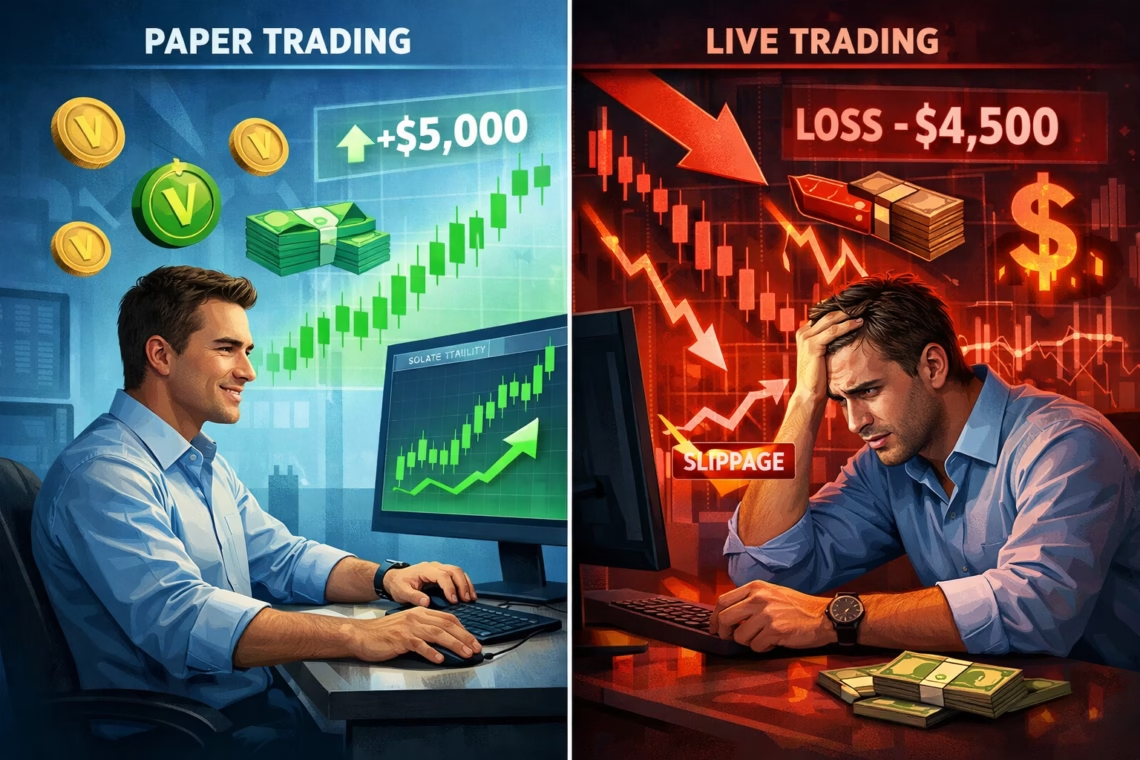
The main reasons paper trading (simulation) wins often fail in live trading stem from key live vs simulation differences. These include psychological pressures, execution realities like slippage and commissions, market liquidity variations, and over-optimization in sim environments. Recent insights from 2025-2026 highlight that even advanced platforms struggle to replicate real stakes, with emotional factors causing the biggest gaps.
Live vs Simulation Differences: Psychological Factors
The largest live vs simulation differences lie in psychology. In paper trading, there’s no real money at risk, so traders feel no fear, greed, or stress. This creates “fake confidence” — strategies appear flawless because losses don’t hurt emotionally. When switching to live trading, the first real loss triggers hesitation, early exits from winners, or holding losers too long.
Experts note that emotions kick in fully with real capital, leading to decisions that deviate from the tested plan. This psychological switch explains why many profitable sim accounts turn unprofitable live.
Live vs Simulation Differences: Execution and Slippage
Execution is another major live vs simulation differences area. Paper trading often assumes perfect fills at ideal prices (e.g., mid bid/ask or better), with no delays or rejections. In live markets, slippage occurs — the difference between expected and actual fill prices — due to volatility, low liquidity, or order delays.
Commissions, spreads widening during news, and partial fills further erode edges. Platforms like NinjaTrader and others emphasize that sim execution rarely matches live realities, especially in fast-moving futures.
Click Here To Automate Trading
Live vs Simulation Differences: Market Conditions and Overfitting
Strategies can overfit to historical or sim data, performing well in controlled environments but failing when markets shift regimes (e.g., volatility spikes). Paper trading doesn’t fully capture competition, order flow impact, or real-time changes.
Backtests and sims may ignore these, leading to fragile strategies that collapse live.
Bridging Live vs Simulation Differences with Automation Tools
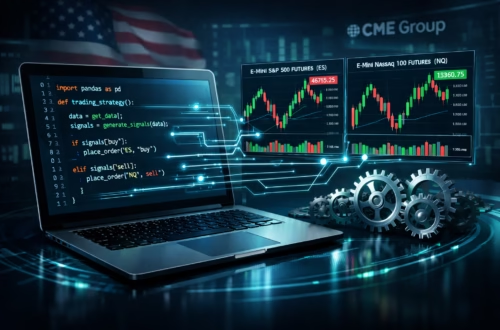
To minimize live vs simulation differences, use tools that bridge the gap. For futures trading on US markets (e.g., CME instruments like ES, NQ), automation platforms help test and execute consistently.
PickMyTrade stands out for automation in futures trading on US markets. It connects TradingView strategies to brokers like Tradovate, Rithmic, Interactive Brokers, and TradeStation for seamless, 24/7 automated execution. This reduces manual errors and emotional interference by turning signals into precise trades with low-latency replication. In 2026, PickMyTrade supports multi-asset automation, including futures, with features for risk management and real-time monitoring — ideal for transitioning from sim to live while addressing execution gaps.
Start with extended paper trading, then automate small live positions to build real experience without full emotional overload.
Final Thoughts
Understanding live vs simulation differences is crucial for long-term success. Paper trading builds skills risk-free, but live trading demands discipline over emotions, realistic execution expectations, and tools to enforce consistency. By acknowledging these gaps and using automation like PickMyTrade for US futures markets, traders can better align sim wins with live profits.
Most Asked FAQs
Why do my paper trading wins disappear in live trading?
Mainly due to psychological pressure (fear/greed), slippage, commissions, and imperfect execution not present in simulation.
How much slippage difference exists between paper and live trading?
Paper often shows minimal or idealized slippage; live can add significant costs in volatile or illiquid conditions, especially futures.
Is paper trading useless because of these differences?
No — it’s essential for strategy testing and skill-building, but treat it as practice, not proof. Transition gradually to live with small sizes.
What's the best way to switch from simulation to live trading?
Test thoroughly in sim, automate where possible, start with micro positions, track real psychology, and scale slowly.
Disclaimer:
This content is for informational purposes only and does not constitute financial, investment, or trading advice. Trading and investing in financial markets involve risk, and it is possible to lose some or all of your capital. Always perform your own research and consult with a licensed financial advisor before making any trading decisions. The mention of any proprietary trading firms, brokers, does not constitute an endorsement or partnership. Ensure you understand all terms, conditions, and compliance requirements of the firms and platforms you use.
Also Check out: Automate TradingView Indicators with Tradovate Using PickMyTrade