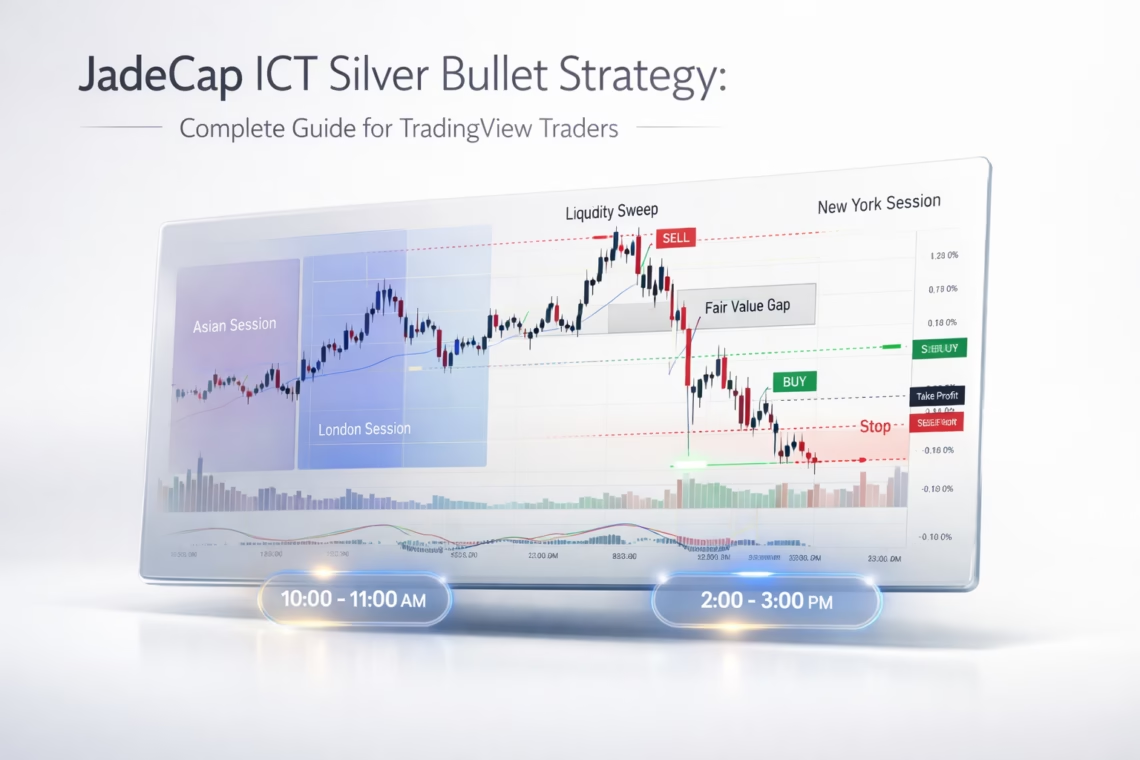
Master Time-Based Liquidity Trading with Fair Value Gaps
Last Updated: February 26, 2024 | Reading Time: 18 minutes
Table of Contents
- What is the JadeCap ICT Silver Bullet Strategy?
- Core ICT Concepts Explained
- Strategy Implementation on TradingView
- Risk Management Framework
- Optimal Markets and Timeframes
- TradingView Configuration Guide
- Common Silver Bullet Patterns
- Performance Optimization Techniques
- Common Mistakes to Avoid
- Advanced ICT Concepts
- Backtesting Protocol
- Frequently Asked Questions
The JadeCap ICT Silver Bullet strategy has become one of the most discussed trading methodologies in the forex, crypto, and indices markets. This comprehensive guide explains how traders can implement this time-based liquidity approach using TradingView’s Pine Script platform, with a focus on Fair Value Gaps (FVGs) and precise execution windows.
TradingView Strategy
You can view and add the JadeCap ICT Silver Bullet Strategy (PickMyTrade) directly on TradingView:
https://www.tradingview.com/script/XEd7YlQe-JadeCap-ICT-Silver-Bullet-Strategy-PickMyTrade/
What is the JadeCap ICT Silver Bullet Strategy?
The Silver Bullet strategy, popularized through ICT (Inner Circle Trader) concepts and explained by traders like Kyle Ng of JadeCapFX, is a precision timing methodology that focuses on specific trading windows during the New York session[1]. Unlike traditional indicator-based approaches, this strategy centers on understanding institutional order flow, liquidity manipulation, and market structure.
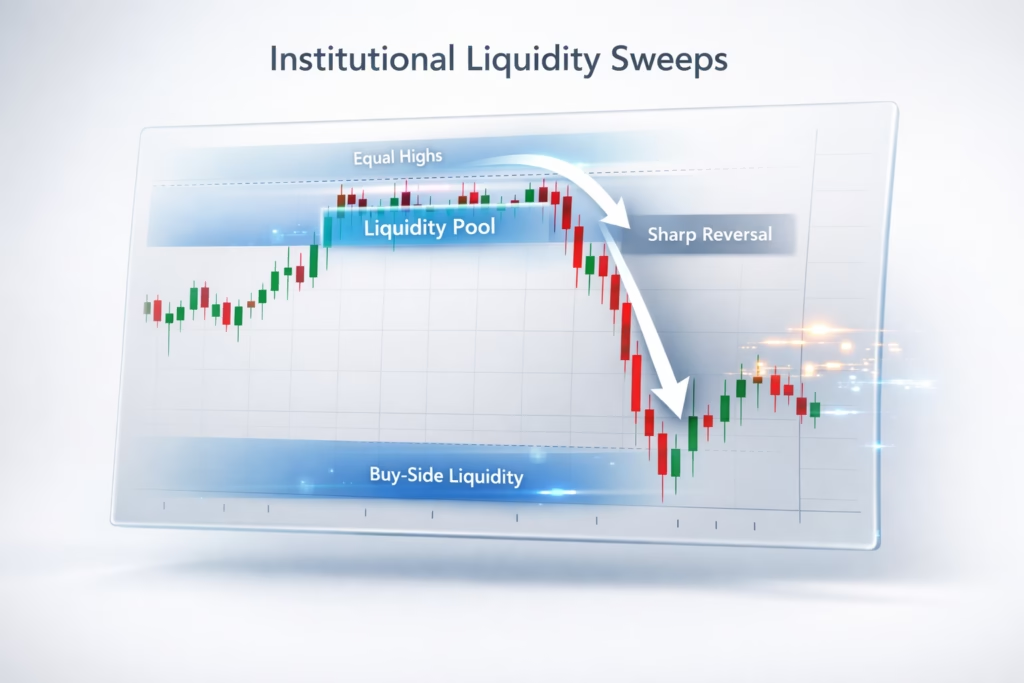
The core philosophy revolves around the concept that institutional traders deliberately sweep liquidity from retail positions before initiating their true directional moves. By identifying these liquidity sweeps and corresponding Fair Value Gaps, traders can position themselves alongside institutional order flow rather than against it[2].
Core ICT Concepts Explained
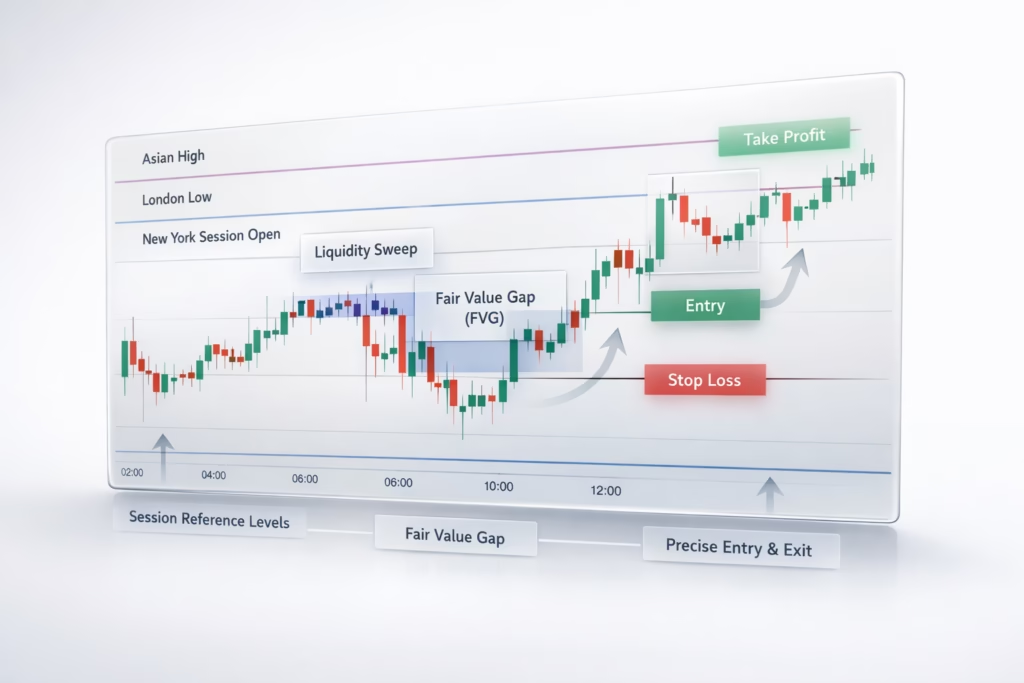
1. Liquidity Pools and Liquidity Sweeps
Liquidity pools represent areas where stop losses and pending orders accumulate. These typically form at obvious technical levels such as:
- Asian session highs and lows (20:00-23:59 EST)
- London session highs and lows (02:00-04:59 EST)
- New York 9 AM reference candle levels
- Previous day highs and lows
A liquidity sweep occurs when price temporarily breaks these levels to trigger stop losses before reversing in the opposite direction. According to CME Group’s liquidity research, this action creates optimal entry conditions for the Silver Bullet setup[3].
2. Fair Value Gaps (FVGs)
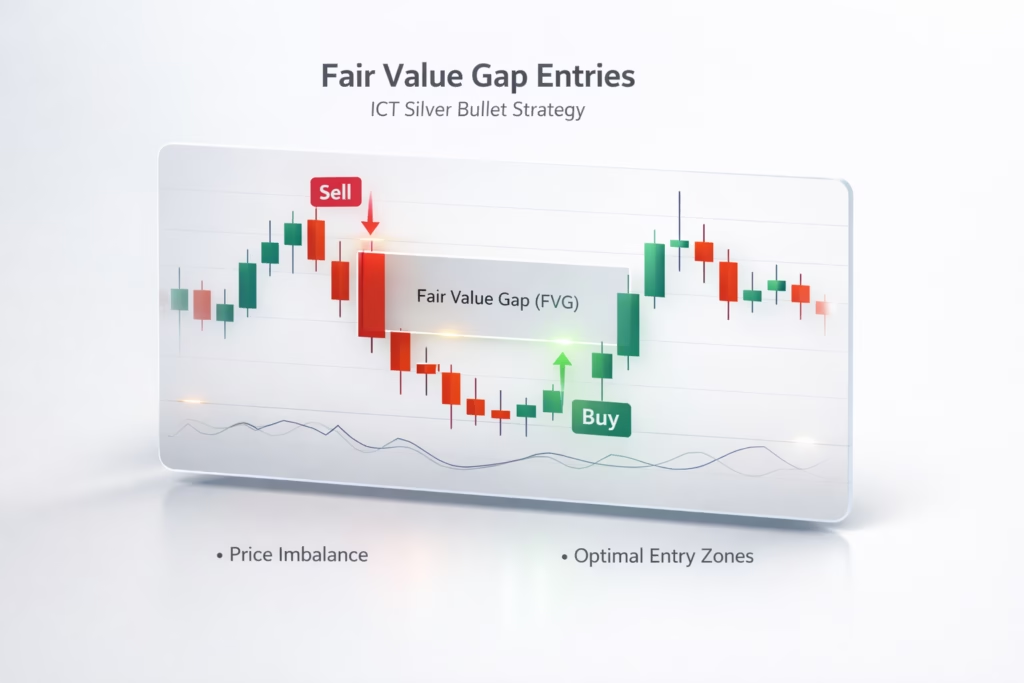
A Fair Value Gap represents a price imbalance where aggressive buying or selling creates a gap in the order flow. In Pine Script terminology:
- Bearish FVG: When
low[2] > high[0](candle 3’s low is above candle 1’s high) - Bullish FVG: When
high[2] < low[0](candle 3’s high is below candle 1’s low)
These gaps often act as institutional entry zones where smart money accumulates or distributes positions. The strategy aims to enter limit orders within these FVG zones after confirming liquidity sweeps.
For a deeper understanding of price gaps, see Investopedia’s explanation of gap trading[4].
3. Time-Based Execution Windows
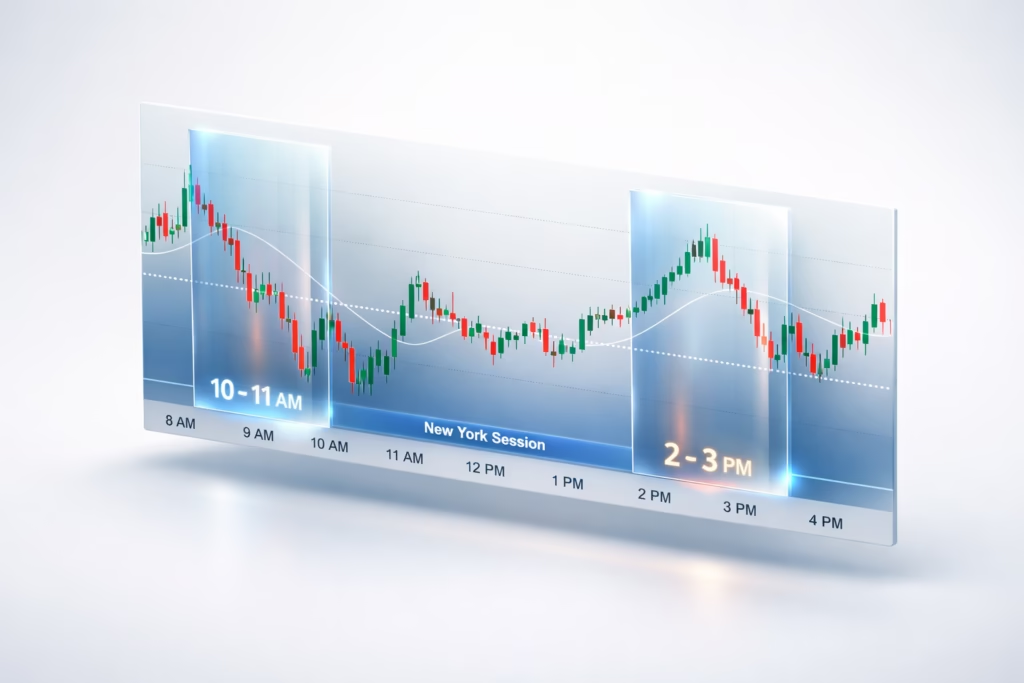
The Silver Bullet methodology emphasizes two specific trading windows during the New York session:
- AM Window: 10:00-11:00 AM EST (morning liquidity run)
- PM Window: 2:00-3:00 PM EST (afternoon continuation)
These windows historically show increased institutional activity, making them prime opportunities for directional moves following liquidity engineering. Learn more about forex trading sessions and their characteristics.
Silver Bullet Strategy Implementation on TradingView
Setup Requirements
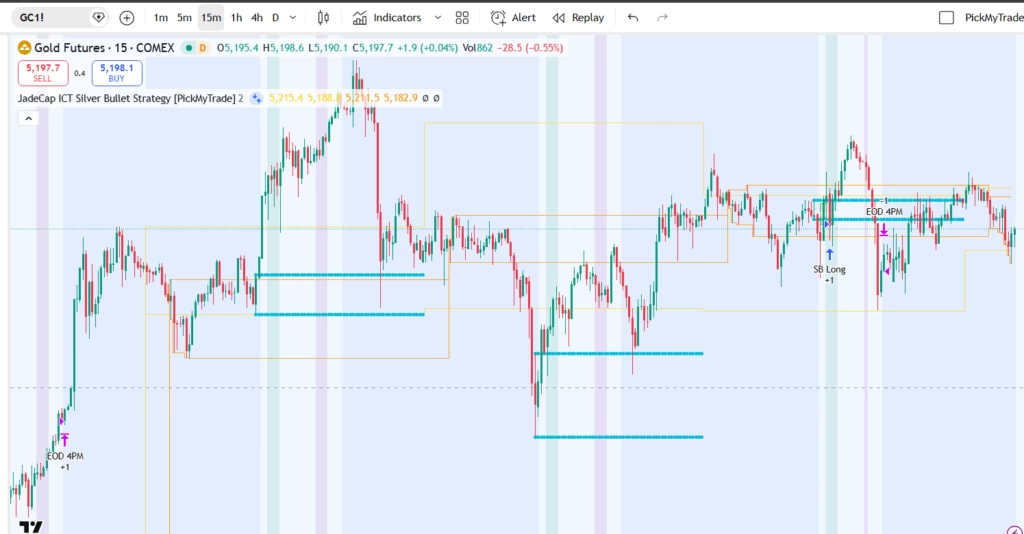
Before a Silver Bullet trade can be executed, specific conditions must align:
Step 1: Identify Reference Levels
The strategy tracks multiple session ranges throughout the 24-hour cycle. The script automatically captures Asian session range (8:00 PM – midnight EST), London session range (2:00 AM – 5:00 AM EST), and the 9 AM New York reference candle. These levels serve as liquidity magnets that price often targets.
Step 2: Wait for Liquidity Sweep
Between midnight and 8:00 PM EST, the script monitors for price to sweep above any reference high (for bearish setups) or below any reference low (for bullish setups). This sweep validates that institutional orders have been triggered and liquidity has been collected.
Step 3: Identify Fair Value Gap
During the 10-11 AM or 2-3 PM execution windows, the strategy scans for three-candle FVG formations. A bearish FVG (after a high sweep) or bullish FVG (after a low sweep) provides the precise entry zone.
Step 4: Execute Limit Order
The strategy places limit orders at the FVG boundaries, specifically at low[2] for bearish setups or high[2] for bullish setups. This ensures entries occur at optimal institutional pricing levels rather than chasing momentum.
Risk Management Framework
Proper risk management separates profitable ICT traders from those who struggle. The Silver Bullet strategy incorporates multiple protective measures[5]:
Stop Loss Placement
- Bearish trades: Stop loss at
high[2](opposite side of FVG) - Bullish trades: Stop loss at
low[2](opposite side of FVG)
This placement protects against FVG invalidation while giving the trade room to develop. If price reaches the stop loss, it indicates the liquidity sweep failed to produce the expected reversal.
Take Profit Strategy
The default configuration uses a 2:1 risk-reward ratio, meaning for every dollar risked, the strategy targets two dollars in profit. This ratio can be adjusted based on market conditions and personal risk tolerance. The calculation is straightforward:
- Calculate stop loss distance from entry price
- Multiply that distance by the risk-reward multiplier
- Place take profit at entry ± (distance × multiplier)
Session Controls
- One trade per window: Prevents overtrading during volatile periods
- Order cancellation: Unfilled limit orders are canceled at window close
- EOD close: Optional forced exit at 4:00 PM EST to avoid overnight risk
Optimal Markets and Timeframes
Best Markets for Silver Bullet Trading
The ICT Silver Bullet strategy performs best in highly liquid markets where institutional activity is concentrated:
- Indices: NQ (Nasdaq), ES (S&P 500), YM (Dow Jones), RTY (Russell 2000)
- Forex majors: EUR/USD, GBP/USD, USD/JPY, USD/CHF
- Crypto: BTC/USD, ETH/USD (on exchanges with sufficient liquidity)
- Commodities: Gold (GC), Crude Oil (CL)
For more information about these instruments, visit the CME Group website.
Recommended Timeframes
The strategy works across multiple timeframes, but specific ranges perform better:
- 1-minute: High frequency, requires quick execution, best for scalpers
- 5-minute: Sweet spot for intraday Silver Bullet setups, reduces noise
- 15-minute: Cleaner signals, fewer false setups, longer holding periods
- 30-minute+: Less suitable as FVG frequency decreases significantly
TradingView Configuration Guide
Strategy Input Parameters
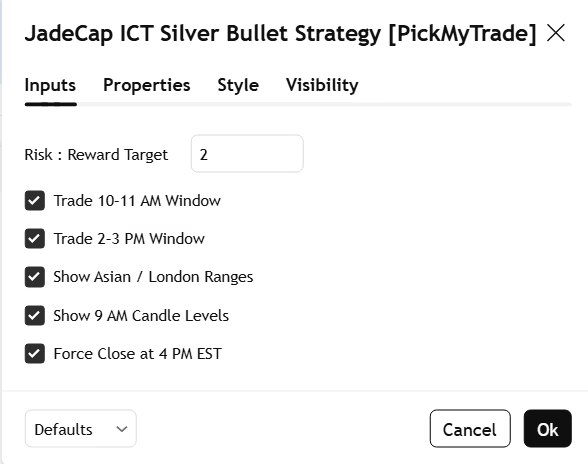
The Pine Script implementation provides several customizable inputs:
| Parameter | Description |
|---|---|
| Risk:Reward Target | Sets the take profit multiplier (default: 2.0, range: 0.5-10.0) |
| Trade 10-11 AM Window | Enable/disable morning execution window |
| Trade 2-3 PM Window | Enable/disable afternoon execution window |
| Show Asian/London Ranges | Display reference level plots on chart |
| Show 9 AM Candle Levels | Display 9 AM high/low markers |
| Force Close at 4 PM EST | Automatically exit all positions at end of day |
Strategy Properties Configuration
For realistic backtesting results, configure the Strategy Properties tab:
- Order Type: Limit orders (already configured in script)
- Commission: $5 per contract (default) or adjust to your broker’s rates
- Slippage: Add 1-3 ticks for realistic execution
- Account Size: Set initial capital to match your trading account
- Pyramiding: 0 (prevents multiple concurrent positions)
Common Silver Bullet Patterns
Pattern 1: Asian Low Sweep into AM Bullish FVG
- Asian range established overnight (8 PM – midnight)
- Price sweeps below Asian low during early NY session (9-10 AM)
- Bullish FVG forms during 10-11 AM window
- Long entry at FVG high (
high[2]) - Stop below FVG low (
low[2]), target 2R above entry
This pattern capitalizes on morning liquidity raids followed by institutional accumulation during the prime AM window.
Pattern 2: London High Sweep into PM Bearish FVG
- London range captured (2-5 AM EST)
- Price sweeps above London high during midday (11 AM – 2 PM)
- Bearish FVG develops during 2-3 PM window
- Short entry at FVG low (
low[2]) - Stop above FVG high (
high[2]), target 2R below entry
This afternoon pattern often represents distribution after morning accumulation phases.
Pattern 3: Multiple Reference Sweep (Higher Probability)
The strongest setups occur when price sweeps multiple reference levels simultaneously. For example:
- Price sweeps both Asian high AND London high
- Then sweeps 9 AM candle high as well
- Bearish FVG forms with maximum liquidity collected
These multi-level sweeps indicate institutional conviction and typically produce the most reliable Silver Bullet trades.
Performance Optimization Techniques
Filter 1: Bias Confirmation
While the base strategy enters trades mechanically, adding higher timeframe bias significantly improves win rates:
- Check daily chart for overall trend direction
- Only take bullish FVGs in uptrends, bearish FVGs in downtrends
- Avoid counter-trend setups during strong directional moves
Filter 2: Order Block Confluence
Order blocks represent the last opposing candle before a strong move. When FVGs align with order blocks, probability increases:
- Identify the last down candle before a strong up move (bullish OB)
- Look for FVGs that overlap with these order block zones
- Prioritize entries when both concepts align
Filter 3: Session Momentum
Monitor how price behaves during the 9-10 AM period before the AM window:
- Strong directional 9 AM candle often predicts session bias
- Choppy consolidation may indicate ranging conditions (reduce size)
- Clean liquidity sweeps with immediate rejection show institutional presence
Common Mistakes to Avoid
Mistake 1: Forcing Trades Without Liquidity Sweeps
The most common error is taking FVG entries without confirmed liquidity sweeps. Remember: the sweep validates institutional activity. An FVG without a sweep is just a price gap, not a Silver Bullet setup. Patience is critical—wait for both conditions to align.
Mistake 2: Trading Outside the Windows
The 10-11 AM and 2-3 PM windows exist for a reason—they coincide with institutional activity periods. Trading FVGs at 8 AM or 5 PM typically produces inferior results. Stick to the designated timeframes or risk entering during low-liquidity periods with poor execution.
Mistake 3: Ignoring Market Context
The strategy works in trending conditions but struggles during major news events, earnings releases, or extreme volatility. Check the economic calendar before trading. FOMC days, Non-Farm Payroll releases, and CPI reports often invalidate normal liquidity patterns.
Mistake 4: Overleveraging Position Size
Even with a 2:1 reward-risk ratio, winning percentage matters. Risk 1-2% of account capital per trade maximum. The strategy’s edge comes from consistency over time, not from aggressive position sizing on individual setups.
Mistake 5: Not Adjusting for Commissions and Slippage
Backtest results can be misleading if you don’t account for real trading costs. On a 5-point stop loss with $5 commission per side ($10 round trip), you’re effectively adding 2 points to your loss. Configure realistic costs in Strategy Properties or risk disappointment in live trading.
Advanced ICT Concepts for Silver Bullet Trading
Kill Zones and Market Maker Profile
The Silver Bullet windows align with ICT’s broader kill zone framework. Understanding the full daily cycle enhances context:
- Asian Kill Zone: 8-11 PM EST (liquidity engineering phase)
- London Kill Zone: 2-5 AM EST (first major institutional activity)
- New York AM Kill Zone: 8-11 AM EST (main trading window)
- New York PM Kill Zone: 1-4 PM EST (continuation or reversal phase)
The Silver Bullet specifically targets the 10-11 AM and 2-3 PM sub-zones where directional bias becomes clear after liquidity collection.
Market Structure Shifts (MSS)
A market structure shift occurs when price breaks a significant swing high (bearish MSS) or swing low (bullish MSS). Incorporating MSS into Silver Bullet trading:
- Wait for MSS before considering Silver Bullet entries
- MSS validates that smart money has changed directional bias
- Combine MSS + liquidity sweep + FVG for highest-probability setups
Optimal Trade Entry (OTE)
The OTE represents Fibonacci retracement levels where institutions prefer to enter:
- 62-79% retracement of the initial impulse move
- Often aligns with FVG zones and order blocks
- Provides additional confluence for Silver Bullet entries
When a Silver Bullet FVG forms within the OTE zone, the setup carries higher probability of success.
Backtesting and Forward Testing Protocol
![Jadecap ICT Silver Bullet Strategy[PickMyTrade] Strategy Report](https://blog.pickmytrade.trade/wp-content/uploads/2026/02/image-4-1024x366.avif)
Step 1: Historical Backtesting
- Test on at least 6-12 months of data
- Include different market conditions (trending, ranging, volatile)
- Record win rate, average win, average loss, profit factor
- Note maximum drawdown and consecutive losses
Be aware that TradingView’s Strategy Tester has limitations. Limit orders may show unrealistic fills at exact FVG levels. Real-world execution often requires price to penetrate deeper into the gap.
Step 2: Paper Trading
Before risking real capital, simulate trades in real-time:
- Trade on a demo/paper account for 30-60 days minimum
- Set alerts in TradingView when FVGs form during windows
- Manually execute orders to understand real-world fill rates
- Document each trade with screenshots and notes
Step 3: Statistical Analysis
Track performance metrics across your test period:
- Win Rate: Percentage of profitable trades (target 45-55%)
- Profit Factor: Gross profit ÷ gross loss (target >1.5)
- Max Drawdown: Largest peak-to-valley decline (keep under 20%)
- Expectancy: Average profit per trade after costs
- Sharpe Ratio: Risk-adjusted return measurement
Step 4: Live Micro-Sizing
Start live trading with minimal size:
- Begin with 0.1-0.25% risk per trade
- Trade for another 30-60 days at micro size
- Verify that live results match simulation
- Gradually scale up only after consistent profitability
Frequently Asked Questions
Q: Can I trade the Silver Bullet strategy on any timeframe?
A: While the strategy can function on various timeframes, the 5-minute and 15-minute charts provide the best balance of signal quality and noise reduction. Lower timeframes (1-minute) generate more setups but higher false signals. Higher timeframes (30-minute+) produce cleaner setups but fewer opportunities.
Q: What win rate should I expect?
A: With proper implementation, expect a 45-60% win rate. The 2:1 reward-risk ratio means you can be profitable even at 40% wins. Focus on proper execution and risk management rather than chasing high win rates.
Q: Do I need tick data or standard TradingView data?
A: Standard OHLC data from TradingView is sufficient. The strategy approximates liquidity sweeps and FVGs using high/low/close data. While tick data would be more precise, the standard data provides reliable enough signals for profitable trading.
Q: Can I automate this strategy with real brokers?
A: TradingView supports automated trading through broker integrations for some platforms. However, verify that your broker allows automated limit orders and properly handles the time-based execution windows. Always test thoroughly on paper accounts first.
Q: What markets work best for Silver Bullet trading?
A: Highly liquid markets with New York session activity perform best. Index futures (ES, NQ), major forex pairs (EUR/USD, GBP/USD), and liquid cryptocurrencies (BTC, ETH) show the most consistent patterns. Avoid illiquid instruments with wide spreads.
Q: Should I trade both the AM and PM windows?
A: Start by mastering one window first. The 10-11 AM session typically provides clearer directional bias. Once consistent with the morning window, add the 2-3 PM session. Trading both windows doubles your opportunities but requires more screen time and discipline.
Q: How do I handle false sweeps?
A: False sweeps (where price sweeps a level but continues instead of reversing) are part of trading. The stop loss placement behind the FVG protects your capital. Accept that 40-55% of setups won’t work and focus on proper risk management to stay profitable overall.
Q: Is this strategy affiliated with ICT or Inner Circle Trader?
A: No. This Pine Script implementation is an educational interpretation of publicly discussed ICT concepts. It is not affiliated with, endorsed by, or connected to Michael Huddleston (ICT), Kyle Ng, or JadeCapFX. Always conduct your own research and testing.
Conclusion: Building Consistency with Silver Bullet Trading
The ICT Silver Bullet strategy offers a systematic approach to capturing institutional order flow during specific time windows. By focusing on liquidity sweeps, Fair Value Gaps, and time-based execution, traders can potentially identify high-probability setups with defined risk parameters.
Success with this methodology requires more than just running the Pine Script strategy on TradingView. Traders must understand the underlying concepts, validate the approach through extensive testing, and maintain disciplined execution. The strategy’s edge comes from consistency over time, not from individual home-run trades.
Key takeaways for implementing the Silver Bullet strategy:
- Liquidity sweeps are non-negotiable—wait for confirmation before entering
- Respect the execution windows; trading outside 10-11 AM or 2-3 PM reduces edge
- Risk management trumps win rate; protect capital with proper stops
- Backtest thoroughly with realistic commissions and slippage
- Paper trade before risking real capital, then start with micro-sizing
- Continuously refine through journaling and performance analysis
The TradingView Pine Script implementation provided offers a foundation for exploring these concepts systematically. However, traders should customize the strategy to their specific markets, risk tolerance, and trading style. No strategy works perfectly in all conditions adaptability and continuous learning remain essential.
Remember: this is an educational tool, not a guaranteed path to profits. Market dynamics change, and strategies that work in one period may underperform in another. Always trade with capital you can afford to lose, maintain appropriate position sizing, and never rely solely on automated systems without understanding the underlying logic.
For those committed to mastering the Silver Bullet methodology, the path forward involves dedication to screen time, meticulous record-keeping, and patient capital growth. The strategy provides a framework; your execution and discipline determine the results.
Important Disclaimers
Educational Purpose Only: This article and the associated Pine Script code are provided for educational and research purposes only. They do not constitute financial advice, investment recommendations, or trading signals.
No Guarantees: Past performance does not guarantee future results. Trading involves substantial risk of loss. You should only trade with capital you can afford to lose.
No Affiliation: This content is not affiliated with, endorsed by, or connected to ICT (Inner Circle Trader), Michael Huddleston, Kyle Ng, JadeCapFX, or any related entities. All concepts discussed are publicly available trading ideas.
Data Limitations: The strategy uses approximations of liquidity sweeps and Fair Value Gaps based on standard OHLC data. Real institutional order flow requires tick-level data and is more complex than these simplified models.
Broker Dependency: Strategy performance varies significantly based on broker execution quality, spreads, commissions, slippage, and market conditions. Always configure realistic trading costs when backtesting.
Responsibility: You are solely responsible for your trading decisions, risk management, and capital allocation. Always conduct your own research and testing. Consider consulting with licensed financial professionals before trading.
Automate Your Trading with PickMyTrade
For Stock, Crypto, Futures, and Options: Visit pickmytrade.io to automate your trading across multiple brokers:
- Rithmic
- TradeStation
- TradeLocker
- Interactive Brokers
- ProjectX
- Matchtrader
- Bybit
- Binance
For Tradovate Users: Visit pickmytrade.trade for seamless Tradovate broker integration
Transform your TradingView strategies into fully automated trading systems with real-time execution. No more manual order entry, no more missed signals.
References & Citations
- TradingView. (2024). Pine Script v6 User Manual. Retrieved from https://www.tradingview.com/pine-script-docs/
- BabyPips. (2024). Understanding Institutional Order Flow. Retrieved from https://www.babypips.com/learn/forex
- CME Group. (2024). Introduction to Market Liquidity. Retrieved from https://www.cmegroup.com/education
- Chen, J. (2024). Gap Trading Strategies. Investopedia. Retrieved from https://www.investopedia.com/terms/g/gap.asp
- Murphy, J. (2023). Technical Analysis of the Financial Markets. New York Institute of Finance.
Related Articles You May Like
- Fabio Valentini Pro Scalper: Advanced Order Flow Trading Strategy for NASDAQ Scalping
- Correlation-Based Strategy: Ultimate Guide to Smart Diversification
- Advanced TradingView Indicator Template: Backtest Any Signal as a Professional Strategy
- Why TradingView Strategy Automation Matters in 2026
- Discover TradingView Paper Trading: Your Gateway to Risk-Free Strategy Mastery
- Trendline Breakout Strategy: How We Turned an Open-Source Trend Script into a Professional Long-Only System