In automated trading, entries often steal the spotlight, but exit optimization truly determines long-term profitability. Poor exits can turn winning trades into losses or leave profits on the table. With markets evolving rapidly in 2025-2026, incorporating advanced exit optimization techniques—like trailing exits—has become essential for algorithmic strategies.
Recent backtests and studies highlight that simple yet adaptive exits outperform complex ones in many scenarios. This guide explores proven methods, recent advancements, and tools to refine your automated exits for maximum edge.
Why Exit Optimization Matters in Automated Trading
Exit optimization focuses on systematically closing positions to lock in gains, limit losses, or adapt to market shifts. Unlike discretionary trading, algorithms enforce discipline, removing emotion.
Studies from thousands of backtests show that exit rules can impact performance more than entries. For instance, comprehensive analyses across multiple markets reveal simple mechanisms like stop-and-reverse often outperform intricate indicator-based exits. In volatile 2025-2026 conditions, effective exit optimization reduces drawdowns while capturing trends.
Key benefits include:
- Protecting capital through predefined rules
- Maximizing profits in trending markets
- Adapting to volatility without manual intervention
Core Exit Strategies for Algorithmic Systems
Effective exit optimization combines multiple approaches tailored to your strategy.
Fixed Stop-Loss and Take-Profit Exits
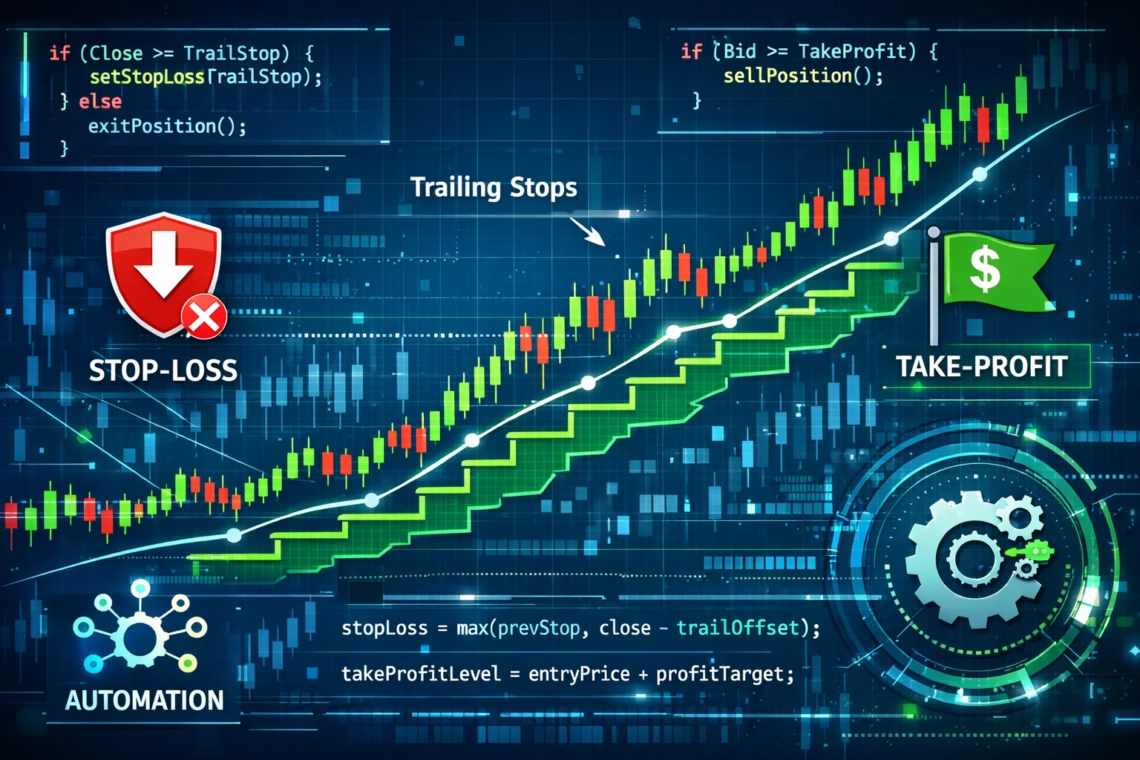
Basic yet powerful: Set a fixed percentage or dollar-based stop-loss to cap losses and take-profit to secure gains. Global exit parameters in platforms automate this across trades.
These provide consistency but lack adaptability in trends.
Trailing Exits: The Power of Trailing Stops
Trailing exits shine in trend-following systems. A trailing stop adjusts dynamically with favorable price moves, locking profits while allowing room for upside.
Recent guides emphasize trailing exits in 2025: Use percentage-based (e.g., 5-10% trail) or ATR-multiples for volatility adjustment. Stepped trailing stops advance in increments, reducing premature exits.
Advancements include trailing stop limits (trigger limit orders) and broker-native features for instant adjustments. In options and futures, trailing exits prevent early cutoffs in volatile swings.
Time-Based and Volatility-Adjusted Exits
Exit after a set period or when volatility spikes (e.g., price jumps via VaR). These suit mean-reversion or intraday algos.
Partial and Scaled Exits
Scale out at multiple levels (e.g., 50% at first target). This secures partial profits while letting winners run.
Click Here To Automate Futures Trading
Recent Advancements in Exit Optimization (2025-2026)
Algo trading evolves with AI and dynamic tools:
- Machine Learning Optimization — Reinforcement learning fine-tunes exits based on real-time data, outperforming traditional methods in speed and adaptability.
- Volatility-Targeted Trailing — Adjust trailing exits via ATR or realized volatility for better drawdown control.
- Adaptive Trailing Stops — Platforms now support stepped or parabolic variants, with AI backtesting refining parameters.
- Hybrid Approaches — Combine trailing with indicators (e.g., MA crossovers) for confirmation.
Backtests confirm simpler exits (e.g., trailing or dollar-based) often beat over-engineered ones in diverse conditions.
Implementing Exit Optimization with PickMyTrade
For seamless automation, PickMyTrade stands out as a no-code platform bridging TradingView strategies to brokers like Tradovate, Rithmic, Interactive Brokers, and more.
PickMyTrade excels in exit optimization:
- Advanced TP/SL setups, including multi-level take-profits and stop-losses
- Trailing exits configuration for dynamic profit protection
- Partial exits and scaling out via single alerts
- Breakeven logic and reverse actions for flexible management
Setup takes minutes: Automate TradingView alerts with trailing exits, partial closes, and risk tools. It supports multi-account execution, making exit optimization effortless for futures and stocks.
Traders automate complex trailing exits without coding, reducing latency and enhancing precision.
Best Practices for Exit Optimization Success
- Backtest rigorously on historical data
- Optimize parameters without overfitting
- Combine exits (e.g., trailing with time-based)
- Monitor live performance and adapt
- Prioritize risk: Never risk more than 1-2% per trade
Mastering exit optimization and trailing exits transforms average algos into consistent performers.
Most Asked FAQs
What is exit optimization in automated trading?
Exit optimization refines how algorithms close positions to maximize profits and minimize losses using rules like stops and trails.
Are trailing exits better than fixed stops?
Trailing exits often outperform in trends by locking gains dynamically, but fixed stops suit ranging markets. Backtests show hybrids work best.
How do trailing exits work in volatile markets?
They adjust based on price highs/lows or ATR, preventing whipsaws. Use wider trails or stepped versions in high volatility.
Can I automate trailing exits without coding?
Yes, platforms like PickMyTrade enable trailing exits, multi-level TP/SL, and partial closes via TradingView alerts.
Disclaimer:
This content is for informational purposes only and does not constitute financial, investment, or trading advice. Trading and investing in financial markets involve risk, and it is possible to lose some or all of your capital. Always perform your own research and consult with a licensed financial advisor before making any trading decisions. The mention of any proprietary trading firms, brokers, does not constitute an endorsement or partnership. Ensure you understand all terms, conditions, and compliance requirements of the firms and platforms you use.
Also Checkout: Automate TradingView Indicators with Tradovate Using PickMyTrade