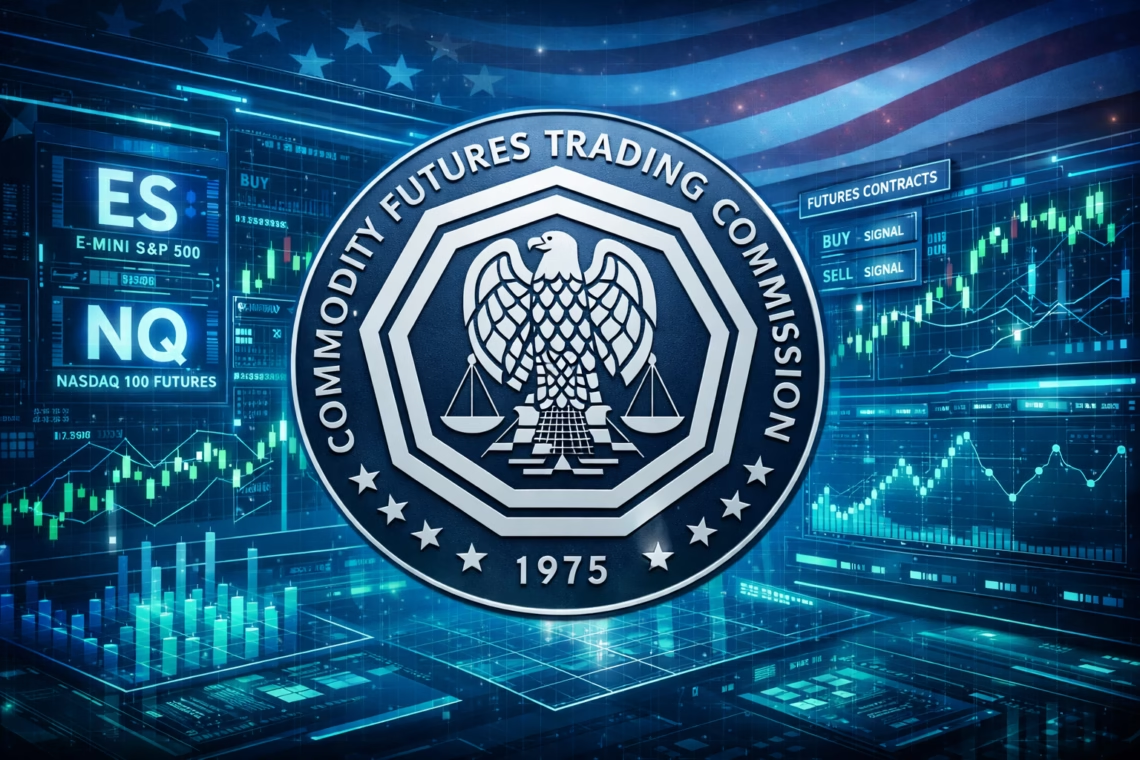
CFTC Regulations form the backbone of oversight for futures markets in the United States, governed primarily by the Commodity Exchange Act (CEA). These rules ensure fair, orderly, and efficient markets, protecting participants from manipulation, excessive risk, and operational failures.
In the realm of automated futures trading, CFTC Regulations address risks from high-speed algorithmic systems. Although the comprehensive “Regulation AT” proposal from 2015 (which aimed to impose pre-trade risk controls, testing standards, and source code access for algorithmic trading entities) was not fully adopted in its original form, core principles persist through existing rules.
Designated Contract Markets (DCMs) must maintain system safeguards under Core Principle 20, including protections against disruptions from automated trading. Clearing members and futures commission merchants (FCMs) implement risk controls for orders, as reinforced in post-2010 reforms. Recent advisories emphasize that AI and algorithmic tools must comply with existing obligations—no new AI-specific rules have emerged, but supervision remains mandatory to prevent issues like erroneous orders or manipulative practices.
Recent Updates to CFTC Regulations Affecting Automated Futures Trading
As of early 2026, CFTC Regulations have seen targeted evolutions rather than sweeping overhauls for automated trading. Key developments include:
- AI and Algorithmic Oversight: A 2024 advisory (reaffirmed in ongoing guidance) reminds market participants that AI-driven trading must adhere to CEA provisions on false reporting, market surveillance, and system safeguards. This applies to order processing, risk management, and surveillance across DCMs, SEFs, and intermediaries.
- Broader Derivatives Reforms: Late 2025 saw final rules on business conduct for swap dealers (effective January 2026), with exceptions for certain transactions. While not directly targeting futures automation, these enhance documentation and risk disclosure—relevant for hybrid automated strategies involving swaps.
- Digital Assets and Collateral: December 2025 guidance and a pilot program allow tokenized assets (e.g., BTC, ETH, stablecoins like USDC) as collateral for futures and swaps, subject to enforceability and risk-based haircuts. This opens new avenues for automated strategies incorporating digital collateral.
- Reporting and Compliance Extensions: Extensions to large trader reporting compliance (now to 2027) provide breathing room for modernizing automated systems that handle reporting.
No major new automated trading-specific rulemaking has been finalized since earlier proposals, but the CFTC focuses on harmonization with the SEC (e.g., Project Crypto) and addressing emerging risks like prediction markets and tokenized assets.
These updates reflect a balanced approach: fostering innovation in automated futures while mitigating flash-crash-like risks through pre-existing controls.
Click here To Automate TradingView Strategy
How CFTC Regulations Shape Automated Futures Strategies
CFTC Regulations require robust pre-trade risk controls (e.g., maximum order sizes, message rates) for entities using automated systems, even without full Regulation AT implementation. This impacts high-frequency and algorithmic traders by mandating testing, monitoring, and kill switches to prevent erroneous trades.
For retail and professional traders, compliance ensures market access without undue burdens, but demands diligence in system design. Violations can lead to enforcement, underscoring the need for transparent, auditable automation.
PickMyTrade: Navigating CFTC Regulations in Automated US Futures Trading
Tools like PickMyTrade exemplify compliant automation in US markets. This platform enables seamless execution of TradingView strategies on brokers such as Tradovate, Rithmic, Interactive Brokers, and TradeStation—specializing in futures with low-latency, 24/7 operation.
PickMyTrade supports unlimited alerts, risk controls, and multi-account management, aligning with CFTC Regulations by facilitating emotion-free, rules-based trading. Traders automate scalping, day trading, or session-based strategies on contracts like ES or NQ, while built-in safeguards help meet risk management expectations.
For those trading US futures markets, PickMyTrade provides a practical way to leverage automation responsibly under current CFTC Regulations, boosting efficiency without compromising compliance.
The Future of Automated Futures Trading
Looking ahead, expect continued focus on digital integration, AI supervision, and cross-agency alignment. CFTC Regulations will likely evolve to address tokenized collateral’s growth and perpetual futures onshoring, ensuring automated trading remains innovative yet safe.
Traders adapting to these frameworks—via tools like PickMyTrade—stand to gain a competitive edge in dynamic US futures markets.
Most Asked FAQs
What are the main CFTC Regulations for automated trading?
CFTC Regulations require risk controls, system safeguards, and compliance with CEA principles to prevent disruptions, though no standalone automated trading rule exists post-Regulation AT proposal.
Have there been recent changes to CFTC Regulations in 2025-2026?
Yes—updates include AI advisory reaffirmations, tokenized collateral pilots (Dec 2025), and reporting extensions, with focus shifting to digital assets and market structure.
How do CFTC Regulations impact retail automated futures trading?
They mandate risk management and prevent manipulative practices; tools must avoid erroneous orders, with oversight ensuring fair access.
Is AI allowed in futures trading under CFTC Regulations?
Yes, but existing rules on surveillance, reporting, and safeguards apply—no new prohibitions, but supervision is essential.
Disclaimer:
This content is for informational purposes only and does not constitute financial, investment, or trading advice. Trading and investing in financial markets involve risk, and it is possible to lose some or all of your capital. Always perform your own research and consult with a licensed financial advisor before making any trading decisions. The mention of any proprietary trading firms, brokers, does not constitute an endorsement or partnership. Ensure you understand all terms, conditions, and compliance requirements of the firms and platforms you use.
Also Checkout: Connect Tradovate with Trading view using PickMyTrade