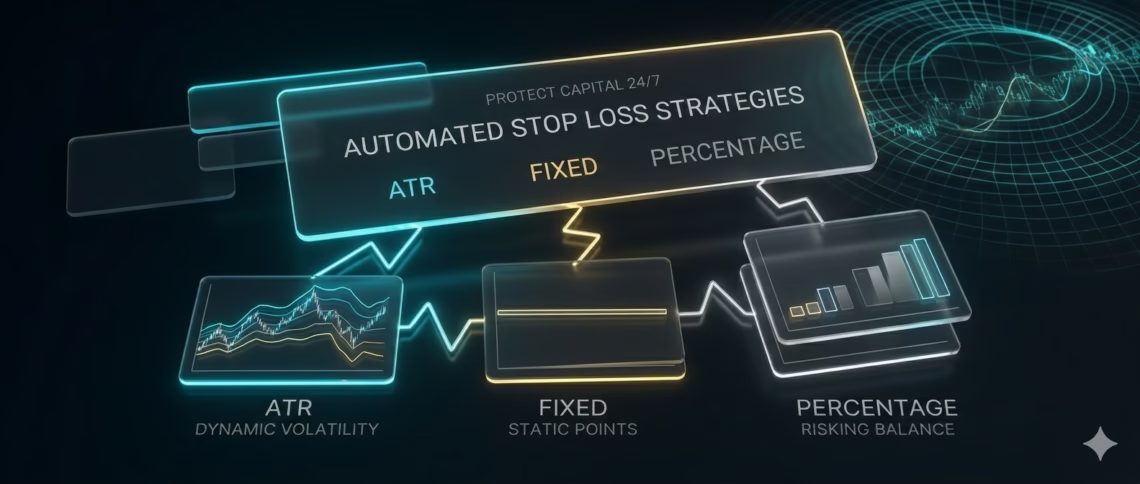
In the fast-moving world of US futures trading, emotions can destroy even the best strategies. Automated Stop Loss Strategies eliminate guesswork by enforcing exits the moment risk thresholds are hit—24/7, without manual intervention.
Whether you trade E-mini S&P 500 (ES), Nasdaq-100 (NQ), or micro contracts, the right automated stop loss protects capital while letting winners run. Today we compare the three most popular approaches: ATR-based, fixed, and percentage-based stops. We’ll examine real-world performance, pros/cons, and how platforms like PickMyTrade make implementation effortless for TradingView-to-Tradovate automation.
Understanding Fixed Stop Loss in Automated Trading
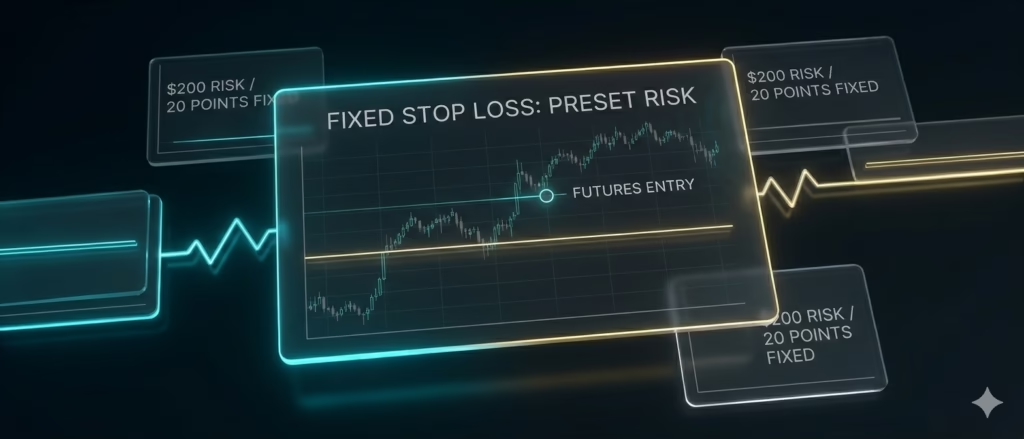
Fixed stop loss sets a predetermined dollar amount, point value, or tick distance from your entry price. For example, you might risk exactly $200 or 20 points on every NQ trade.
Advantages:
- Simple to code and backtest
- Consistent dollar risk per trade
- Ideal for beginners and prop-firm accounts with strict daily loss limits
Disadvantages:
- Ignores changing market volatility
- Too tight during high-volatility news events → premature exits
- Too wide in quiet markets → unnecessary risk
Recent 2025–2026 backtests on futures show fixed stops perform well in range-bound sessions but struggle during volatility spikes common in US index futures.
Percentage-Based Automated Stop Loss Strategies
Percentage stop loss risks a fixed percentage of the entry price—typically 0.5% to 2%—regardless of contract size.
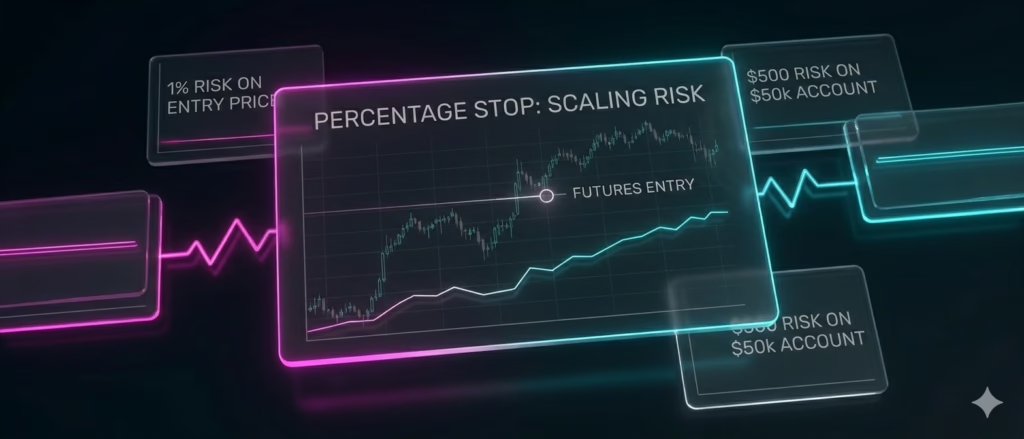
Example: Long NQ at 20,000 with 1% stop → automatic exit at 19,800.
Advantages:
- Scales risk proportionally across different-priced contracts
- Maintains consistent percentage risk even as price levels change
- Easy to combine with position sizing
Disadvantages:
- Still static—doesn’t adapt when volatility suddenly doubles
- Can produce uneven dollar risk on volatile instruments like crude oil futures
Studies and algo trader forums in 2025 consistently note that percentage stops outperform pure fixed-dollar stops in trending markets but underperform ATR methods during choppy volatility.
ATR-Based Automated Stop Loss Strategies (The Volatility Champion)
Average True Range (ATR) measures average price movement over a period (usually 14 bars). An ATR stop loss multiplies this value by a factor (commonly 1.5× to 3×) to set a dynamic buffer.
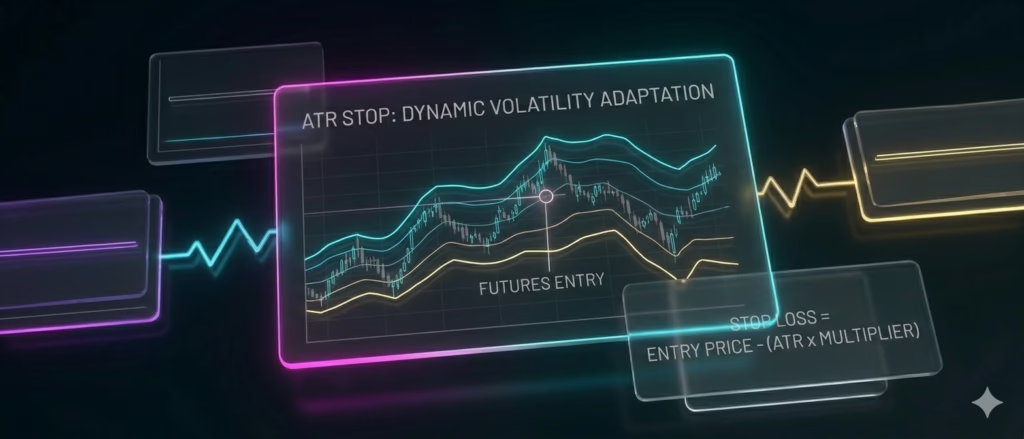
Formula (long position): Stop Loss = Entry Price − (ATR × Multiplier)
Why ATR wins for futures:
- Automatically widens in volatile periods (e.g., FOMC days)
- Tightens in calm markets to protect profits faster
- Reduces emotional “tight-stop” mistakes
2025–2026 research from multiple quant sources confirms ATR-based stops deliver superior risk-adjusted returns in automated futures systems compared to static methods. Trailing ATR variants (where the stop moves with price) further boost win rates in strong trends.
Pro Tip: Use 2×–2.5× ATR for day trading ES/NQ and 3×+ for swing positions.
Click Here To Automate Futures Trading
ATR vs Fixed vs Percentage: Head-to-Head Comparison (2026 Edition)
| Strategy | Volatility Adaptation | Simplicity | Best Market Condition | Typical Futures Performance |
|---|---|---|---|---|
| Fixed | None | Highest | Low-volatility ranges | Consistent but rigid |
| Percentage | Low | High | Trending markets | Good scalability |
| ATR | Excellent | Medium | Any (especially volatile) | Superior risk-reward |
Key takeaway: ATR-based automated stop loss strategies generally outperform in US futures because volatility is the only constant. Many professional algo traders now use hybrid approaches—starting with ATR and layering percentage risk caps.
Automating Stop Loss Strategies with PickMyTrade for US Futures Markets
Implementing these strategies manually is tedious. That’s where PickMyTrade shines as the go-to no-code automation platform for Tradovate futures traders.
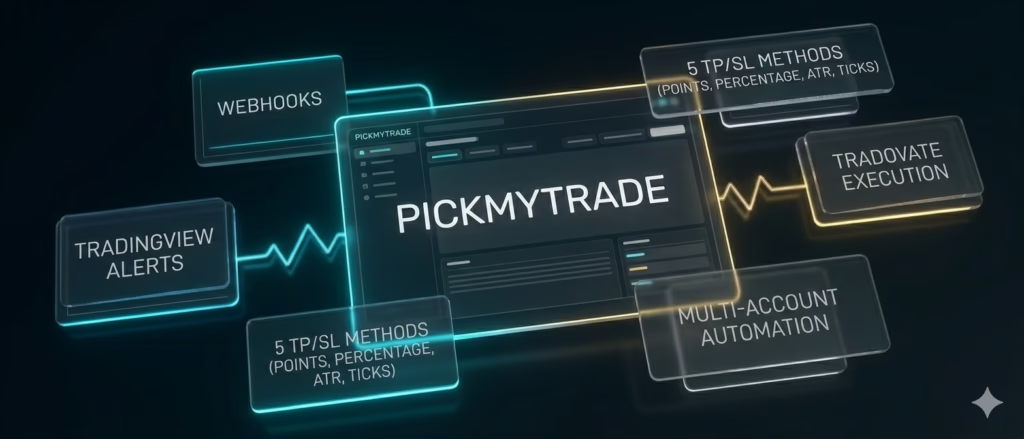
PickMyTrade connects TradingView alerts directly to live or demo Tradovate accounts via webhooks—no API keys, no coding required. Key 2026 features include:
- 5 TP/SL methods: Points (fixed), Percentage, Price levels, Ticks, and advanced Trailing
- Bracket orders with automatic Stop Loss + Take Profit + Trailing
- Dynamic position sizing based on account balance and risk %
- Multi-account automation—run the same strategy across multiple prop-firm accounts simultaneously
- Trailing Stop Loss configurable by dollar, percentage, ticks, or total P/L
Whether you code ATR multipliers in Pine Script or prefer simple fixed stops, PickMyTrade executes your Automated Stop Loss Strategies instantly on US markets—24/7. Traders report cleaner execution, fewer slippage issues, and dramatically improved consistency.
Final Thoughts: Choose the Right Automated Stop Loss Strategy for Your Style
There is no universal “best” stop loss—only the one that matches your timeframe, risk tolerance, and market conditions. For most automated futures traders in 2026, ATR-based strategies offer the smartest balance of protection and flexibility. Combine it with percentage risk rules and automate everything through PickMyTrade, and you have a professional-grade risk engine running while you sleep.
Ready to stop guessing your exits? Test these Automated Stop Loss Strategies in a Tradovate demo today.
Most Asked FAQs
What is the best multiplier for ATR stop loss in futures?
Most traders use 1.5×–3× ATR. Start with 2× for day trading ES/NQ and backtest on your specific contract and timeframe.
Is percentage stop loss better than fixed dollar stop?
Percentage stops scale better across contracts, but fixed-dollar stops can be simpler for consistent risk per trade. ATR usually beats both in volatile futures markets.
How do I automate ATR stop loss on TradingView?
Use PickMyTrade webhooks. Plot ATR in Pine Script, send the calculated stop price via alert placeholders, and let PickMyTrade handle dynamic bracket execution.
Can fixed stops work in high-volatility futures?
They can, but you’ll experience more premature exits. Dynamic ATR stops adapt automatically and preserve more winning trades.
Disclaimer:
This content is for informational purposes only and does not constitute financial, investment, or trading advice. Trading and investing in financial markets involve risk, and it is possible to lose some or all of your capital. Always perform your own research and consult with a licensed financial advisor before making any trading decisions. The mention of any proprietary trading firms, brokers, does not constitute an endorsement or partnership. Ensure you understand all terms, conditions, and compliance requirements of the firms and platforms you use.
Also Checkout: Automate TradingView Indicators with Tradovate Using PickMyTrade