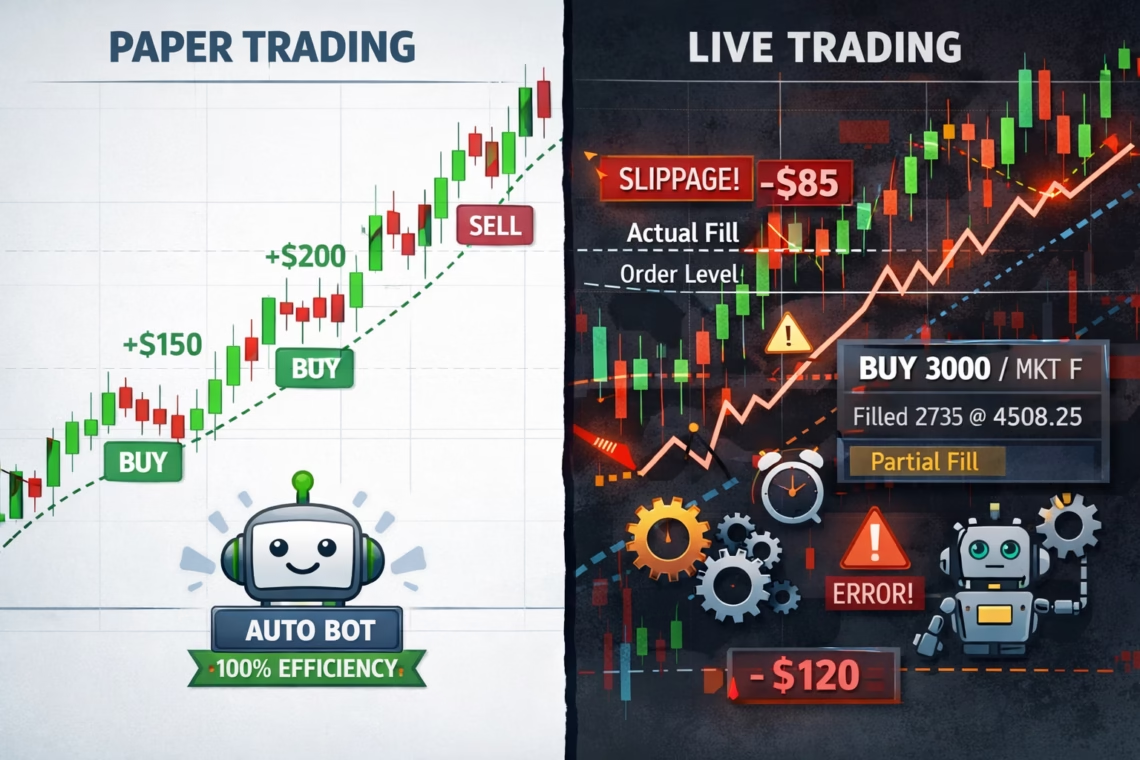
In the fast-paced world of algorithmic trading, many traders start with paper trading to test their bots without financial risk. But when they switch to live trading, the results often surprise them—bots that crushed it in simulations suddenly underperform. Why? The answer lies in the stark contrasts between these environments, especially around paper vs live bots, execution differences, and real fills. As we head into 2026, understanding these gaps is essential for anyone using automated strategies on platforms like TradingView. This guide breaks it down with the latest insights, including 2025 updates, to help you bridge the divide and optimize your trading.
Paper vs Live Bots: The Core Differences
Paper trading simulates market conditions using virtual funds, allowing you to run bots in a risk-free setup. It’s perfect for backtesting strategies and tweaking algorithms. However, paper vs live bots reveals fundamental mismatches that can lead to overconfidence.
In paper mode, bots operate in an idealized world:
- Orders execute instantly at the quoted price.
- No real-world interruptions like network latency or broker delays.
- Unlimited liquidity assumes every trade fills completely.
Live trading flips the script. Bots face actual market dynamics, where emotions, volatility, and external factors play a role. A 2025 study from Alpaca Markets highlighted that paper trading often overestimates performance by 15-30% due to these discrepancies. Traders on platforms like TradingView report similar issues, with bots performing flawlessly in demos but faltering live because of unpredictable elements like market depth and order book changes.
Recent discussions on forums like Reddit emphasize that while paper bots build strategy logic, live bots test resilience under pressure. For instance, a bot designed for high-frequency trades might excel in paper but get bogged down by slippage in live sessions.
Execution Differences in Paper vs Live Trading
One of the biggest pitfalls in paper vs live bots is execution differences. In paper trading, executions are flawless—your bot places an order, and it’s filled at the exact price without hesitation. This simulation doesn’t account for real-market friction.
Key execution differences include:
- Slippage: Live markets can move against you between order placement and fill, especially in volatile assets like crypto or futures. Paper trading ignores this, leading to inflated returns.
- Latency: Bots in live environments deal with API delays, server lags, and internet hiccups. A 2025 TradingView update improved alert syncing by 15%, but live executions still vary by broker.
- Partial Fills: Paper assumes full order completion; live trading might split orders if liquidity is low, altering your bot’s risk management.
- Commissions and Fees: Often overlooked in paper, these eat into profits live, especially for high-volume bots.
Interactive Brokers’ analysis notes that these execution differences can turn a 20% paper profit into a break-even live scenario. For TradingView users, the 2025 pre-market and after-hours support in paper trading helps mimic live conditions better, but it’s still not perfect. Tools like automated alert systems can minimize some gaps, but thorough testing is key.
Real Fills vs Simulated: What Traders Need to Know
At the heart of paper vs live bots discrepancies are real fills versus simulated ones. In paper trading, fills are hypothetical—your bot gets the best possible price without competition. Live real fills, however, depend on actual order books and market participants.
Why the mismatch?
- Liquidity Realities: Simulated fills assume infinite volume, but live markets have finite buyers/sellers. Low-liquidity assets amplify this, as seen in crypto bots where paper ignores thin order books.
- Market Impact: Large bot orders can move prices live, creating self-inflicted slippage—something paper trading rarely models.
- Fill Quality: Paper often uses mid-prices for fills, while live bots might settle for worse due to bid-ask spreads.
A 2025 report from Option Alpha’s community forums revealed that paper bots close at mid-prices 90% of the time, but live ones only 60%, due to counterparty needs. For TradingView bots, this means strategies tested in paper might need recalibration for real fills. Recent 2025 updates to TradingView’s paper simulator, including better futures expiration handling, aim to close this gap by incorporating more realistic fill logic.
Traders transitioning bots should monitor live logs closely. As one Reddit user put it, “Paper teaches strategy; live teaches reality.”
Recent TradingView Updates for Better Bot Testing in 2025
TradingView has evolved significantly by late 2025, making it a top choice for bot developers. Key updates address paper vs live bots challenges:
- Expanded Simulations: Now includes pre-market/after-hours trading and full futures handling, allowing bots to test extended sessions.
- Improved Alert Reliability: October 2025 desktop enhancements reduced symbol mismatches, aiding automated executions.
- Crypto and Options Upgrades: Better support for volatile assets, with over 10,000 traders automating millions of transactions via integrated tools.
These changes, per PickMyTrade’s 2025 reviews, make paper trading more predictive of live performance. However, experts recommend combining them with real-time data feeds for accuracy.
Click Here to Automate Futures Trading
Bridging the Gap with PickMyTrade Automation Trading
To minimize execution differences and align paper vs live bots, consider automation tools like PickMyTrade. This platform seamlessly connects TradingView alerts to live brokers without coding, trusted by over 10,000 traders in 2025 for reliable executions.
PickMyTrade shines in:
- Automated Transitions: Test bots in paper, then go live with zero-delay alerts, reducing latency issues.
- Real Fill Optimization: Integrates with brokers for better handling of real fills, including partial orders and slippage monitoring.
- User-Friendly Automation: Positive 2025 reviews highlight its stability for futures scalping and options trading, making it ideal for bot users.
As a 2025 standout, PickMyTrade helps traders automate strategies while addressing common pitfalls, turning paper successes into live wins.
Tips to Transition Bots from Paper to Live Successfully
Ready to go live? Here’s how to handle paper vs live bots:
- Start small: Use micro-lots to test real fills without big risks.
- Monitor metrics: Track slippage and latency in live runs versus paper.
- Incorporate emotions: Simulate stress by journaling live trades.
- Use hybrid tools: Platforms like PickMyTrade ease the shift.
- Update regularly: Leverage 2025 TradingView features for ongoing refinements.
By addressing these, your bots can thrive in real markets.
In conclusion, mastering paper vs live bots requires recognizing execution differences and real fills as the hidden culprits behind performance gaps. With 2025 updates and tools like PickMyTrade, traders are better equipped than ever. Stay informed, test rigorously, and watch your automated strategies soar.
Most Asked FAQs on Paper vs Live Bots
What are the main execution differences in paper vs live bots?
Paper offers instant, perfect fills; live includes slippage, latency, and partial fills due to real market conditions.
Why do bots perform better in paper trading?
Simulations ignore real-world factors like liquidity and fees, leading to over-optimized results that don’t hold in live trading.
How do real fills differ from simulated ones?
Real fills depend on actual order books and may not complete at desired prices, unlike guaranteed simulated fills.
Can TradingView updates help bridge paper vs live gaps?
Yes, 2025 features like pre-market support and improved alerts make simulations more realistic.
Is PickMyTrade good for automating TradingView bots?
Absolutely—it’s praised in 2025 reviews for seamless live executions without coding.
Disclaimer:
This content is for informational purposes only and does not constitute financial, investment, or trading advice. Trading and investing in financial markets involve risk, and it is possible to lose some or all of your capital. Always perform your own research and consult with a licensed financial advisor before making any trading decisions. The mention of any proprietary trading firms, brokers, does not constitute an endorsement or partnership. Ensure you understand all terms, conditions, and compliance requirements of the firms and platforms you use.
Also Checkout: Measuring Slippage in Automation Execution








Great insight into the differences between paper and live bots. I’ve seen the same thing with my own trading bots—the performance drop when transitioning to live is usually a lot steeper than expected. It’s crucial to account for network delays and liquidity.